-

China's forage germplasm resources achieve innovative utilization
During the 12th Five-Year Plan period, with the support of central government funds, the National Animal Husbandry Station worked closely with universities and research institutes to organize and carry out work on the identification and evaluation of forage germplasm resources, gene mining, germplasm creation, and sharing and utilization, effectively promoting the development of the forage seed industry.
-

Danjiangkou City Deepens the Advancement of Germplasm Resource Survey and Collection Work
First, strengthen leadership and organize meticulously. The bureau established a leading group for the Third National Crop Germplasm Resource Survey and Collection Action, with an office set up under it to take full charge of the germplasm resource survey and collection work, formulated an action implementation plan, clarified tasks and refined responsibilities
-
An Overview of the Current Status of Germplasm Resource Protection and Utilization in China
Since the Seed Law of the People's Republic of China came into effect in 2000, it has played an important role in raising the level of variety breeding, cultivating diverse entities for seed production and operation, and regulating the order of the seed market. However, with the development of the socialist market economy, China's seed production
-
China's total collection and conservation of grass germplasm resources ranks among the top in the world
Grass germplasm resources are an important component of biodiversity, an important national strategic resource, and an important vehicle for environmental protection and ecological development. Over the years, the Ministry of Agriculture has organized grassland management departments at all levels and scientific research and technology extension units to vigorously advance the conservation of grass germplasm resources.
-
National Tobacco Germplasm Resources Sub-platform Officially Inaugurated
Recently, the Tobacco Germplasm Resources Sub-platform of the National Crop Germplasm Resources Platform was officially inaugurated at the Tobacco Research Institute of the Chinese Academy of Agricultural Sciences. The platform has collected, introduced and conserved 1,225 accessions of tobacco germplasm resources from home and abroad, bringing the total number of tobacco germplasm resources in China to 5,267.
-
New wheat variety Shangmai 1619 enters the national germplasm resource bank
At the 47th variety approval meeting of the Shaanxi Province Crop Variety Approval Committee, the new wheat variety Shangmai 1619 successfully passed approval. This is the only wheat variety in the southern Shaanxi region to pass approval, and it has been listed in the national wheat germplasm resource bank. Shangmai 1619 was developed in Shang
-
What walnut germplasm resources are there? An introduction to the main walnut germplasm in China
Walnut, known in China by such aliases as huta, qiangtao and wansuizi, is called Persian walnut, English walnut or European walnut abroad, and is an important nut tree species in the world. Pictured: walnut. Walnut belongs to the genus Juglans in the family Juglandaceae, of which about 10 or more species have cultivation value, native
-
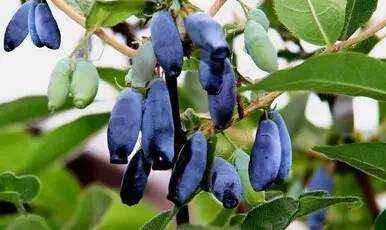
Conservation of Blue Honeysuckle (Lonicera caerulea) Germplasm Resources and Breeding of New Cultivars
Conservation of Blue Honeysuckle (Lonicera caerulea) Germplasm Resources and Breeding of New Cultivars The United States, Japan and Russia were among the earliest countries to carry out the collection, conservation and comprehensive evaluation of blue honeysuckle germplasm resources, and among them Russia conducted this research most systematically, achieving the best results...
-
Introduction to the Cotton "Dong A" Genic Male Sterile Germplasm Resource
In 1972, a male sterile cotton plant was discovered in the field, and after 3 years and 6 seasons of research, the cotton "Dong A" genic male sterile germplasm was successfully developed. Its male sterility trait is mainly controlled by a pair of recessive nuclear genes. It has the characteristics of stable inheritance of male sterility, easy transfer, strong combining ability, a wide range of restorer lines, a population male sterile plant rate of about 50 percent, and 100 percent male sterility per individual plant. It also has good yield potential and wide adaptability. Using the Dong A genic male sterile germplasm, 1 derivative male sterile line was developed. Among them, several derivative male sterile lines were further combined and screened to produce 12 hybrid
-
Noteworthy specific germplasm of wild apricot (Prunus sibirica) in Chaoyang, Liaoning
Abstract: We surveyed apricot germplasm resources in Chaoyang City, Liaoning Province, and identified 11 specific germplasms, including 3 kernel-use germplasms, 4 landscaping germplasms, and 4 germplasms pending further identification. These new germplasms not only enrich the apricot germplasm resources of Liaoning Province, but also lay a material foundation for breeding new cultivars. Keywords: apricot germplasm, kernel use, landscaping. Chaoyang City, Liaoning Province is one of the main apricot production areas in China, with a long history of apricot cultivation. In the past, local wild apricots were mostly propagated by seed, and the genetic differences of wild apricot at the three levels of individual, stand and provenance were fully differentiated and accumulated.
条件筛选