Conservation of Blue Honeysuckle (Lonicera caerulea) Germplasm Resources and Breeding of New Cultivars
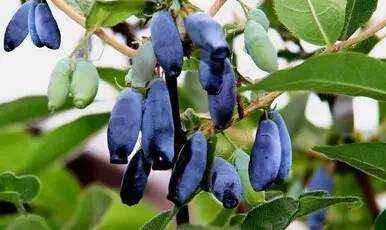
Conservation of Blue Honeysuckle (Lonicera caerulea) Germplasm Resources and Breeding of New Cultivars
The United States, Japan and Russia were among the earliest countries to carry out the collection, conservation and comprehensive evaluation of blue honeysuckle germplasm resources, and among them Russia conducted this research most systematically and achieved the best results; it also established the world's largest blue honeysuckle germplasm resource conservation nursery at the Pavlovsk Experimental Station, formulated a germplasm resource evaluation standard system, and carried out highly effective evaluation work targeting its biological characteristics and agronomic traits. The results showed that all species in the blue honeysuckle subsection can serve as original breeding materials, and among the many wild original materials, the species with the greatest breeding value are mainly distributed on the Kamchatka Peninsula, the Kuril Islands, the southern coastal areas within Russia, and the Altai Mountains.
Since the 1950s, Russia has carried out breeding work on blue honeysuckle, mainly selecting superior plants from wild lines and, on this basis, conducting sexual hybridization experiments, attempting to combine the advantages of different species and subspecies, such as cold resistance, sweet taste and low flower and fruit drop, into a single cultivar through hybridization. A large number of experimental results showed that interspecific or inter-provenance crosses can be made between species with the same chromosome number, and they can produce viable offspring. Interspecific crosses between diploid and tetraploid species can only produce a few seeds, and the seeds have extremely low viability. Russia's current breeding goals are mainly to select and breed superior cultivars with winter hardiness, early maturity, pleasantly sweet-and-sour fruit, high yield, large fruit, uniform ripening, no fruit shattering, and high content of major active substances such as flavonoids. Many superior cultivars have now been bred, and more than 10 cultivars have passed national approval; these cultivars all have the characteristics of high yield, large fruit and cold resistance.
Japan has successively selected a number of superior lines from wild plants, which have characteristics such as large fruit, high yield and good flavor, and they have been widely planted in the Hokkaido region.
China is rich in wild blue honeysuckle germplasm resources. Beihua University in Jilin, Beijing Forestry University, the Yanbian Academy of Forestry Sciences, and Northeast Forestry University have all collected considerable wild blue honeysuckle germplasm resources and established conservation and propagation nurseries. In particular, Northeast Forestry University bred a new cultivar named "Beilei" with large fruit, high yield, cold resistance and uniform ripening. From 1983 to 1990, Wang Yongming collected various wild germplasm resources, and after years of experimental research he and Zhou Xuchang selected and bred a new blue honeysuckle cultivar "Heishuo No. 1" with large fruit, a pleasantly sweet-and-sour taste, cold resistance, uniform ripening and virtually no fruit shattering, which has been certified as an improved variety by Jilin Province under Forest Tree Variety No. 2016-003.