-
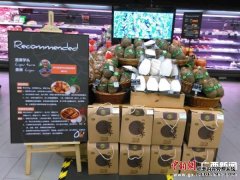
Imperial Palace Tribute Taro from Lipu Hits the Market at Ole' Premium Boutique Supermarket, Aroma Spreads Everywhere
NANNING, Nov. 17 (China News Service) -- Reporter Lin Hao -- Guangxi Lipu taro, long known as a tribute to the imperial palace in days gone by, has recently gone on sale at all national stores of China Resources Vanguard's Ole premium boutique supermarket. It is understood that Lipu taro is a traditional famous and premium specialty of Lipu County, Guilin, Guangxi, and has been cultivated artificially in Lipu County, Guangxi for more than 400 years, with Xiaotingshan being especially well known. Thanks to the unique climate and soil conditions of Lipu County, the Lipu taro grown there is large in size, rich in nutrients, fine in texture, soft and aromatic; the tubers generally weigh 2 to 3 jin, and the large ones can reach more than 10 jin, with quality far superior to taro produced elsewhere. Lipu taro was once chosen as Guangxi's first-choice tribute presented to the imperial court at the year-end grand ceremony, and it reached its peak especially during the Qianlong period of the Qing Dynasty, winning great favor with Emperor Qianlong. With the broadcast of the TV drama "Prime Minister Liu Luoguo" and CCTV's "Traveling Across China" program, Lipu taro became a household name across the country and was designated as the exclusive taro for the 2008 Beijing Olympics.
-

The nursery stock business playbook: where exactly do the profits come from, and where do you win?
This year Xu Yaopeng made money. While others worry about how to sell their nursery stock, he worries that he doesn't have enough to sell! Zhang Jiachao, a veteran nursery stock broker in Dingzhou, Hebei, told a special correspondent for China Landscape Web that his old friend Xu Yaopeng has a real head for business, and that his deals reliably turn a profit. What
-
Where should people-centered urbanization draw its strength from?
According to media reports, with the convening of the first meeting of the inter-ministerial joint conference on advancing new-type urbanization, the "Plan for Adjusting the Criteria for Classifying City Sizes" and other measures will enter the implementation stage. The new city-size standards disclosed in the reports differ both from the wording in the abolished 1989 "City Planning Law"
-
How to Tackle Livestock and Poultry Farming Pollution? Pathways and Countermeasures Analyzed
As people's living standards continue to rise, the demand for livestock and poultry products has also increased year by year. The development of the livestock and poultry farming industry has played an important role in guaranteeing the supply of livestock and poultry products in urban and rural areas, promoting farmers' income growth, and invigorating the rural economy. However, the resulting pollutant emissions
-
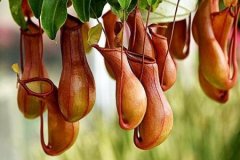
Where Is the Pitcher Plant Native To? Propagation Methods and the Digestion Principle Behind Its Insect-Eating
The main habitat of the pitcher plant is the tropical regions of Asia. Do you know about pitcher plants? Would you like to learn about them? Let's take a look together. How do pitcher plants propagate? Pitcher plants mainly propagate by "cuttings." Taking cuttings of pitcher plants is very easy, and
-
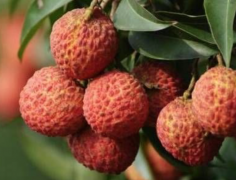
Red Hydrangea Lychee: Seedling Sources, Variety Characteristics and Key Cultivation Techniques
Red Hydrangea Lychee, this lychee comes from Dalang Town, Dongguan City. Its peel color is very red, and the fruit shape is very round, so it is called Red Hydrangea Lychee. So what characteristics does this coffee variety have? Characteristics: late maturing, medium tree vigor, branches slightly weak, fruit short heart-shaped, fruit shoulders raised, fruit stalk relatively thick, fruit apex rounded, flesh yellow-waxy in color, juicy, with a honey flavor, thick peel, bright color, few cracked fruits, high rate of aborted seeds, spherical fruiting. High and stable yield, high edible rate. 100 milliliters of juice contains vitamin C 26.0-30.0 mg, titratable acid 0.15-0.20 g, glucose 12.5 g, sucrose 5.15 g, soluble solids 18.1-21.5%.
-
Where is the place of origin of Sichuan Qingcui plum?
Qingcui plum is also called Bashan crisp plum. Every year at the end of May and the beginning of June, Qingcui plums hit the market, and many growers exclaim over the high economic benefits of this variety. Because of its competitive advantage in the market, many places have begun to plant Sichuan Qingcui plum. So where does Sichuan Qingcui plum come from? Sichuan Qing
-
What melon do black seeds come from? Where are the main producing areas located?
Every time the Chinese New Year comes around, the table is filled with seeds of all colors, such as white seeds, sunflower seeds, black seeds, and so on. What we are talking about today is black seeds, which in the author's hometown are called watermelon seeds, and they come in many flavors. So what melon exactly are black seeds
-
Where do mangoes, the king of tropical fruits, come from? A detailed guide to growing them in pots
Mango, also known as mamuang, is a tropical fruit native to India. It is deeply loved for its rich nutritional elements and delicate flesh, and is known as the "king of tropical fruits." So where do mangoes come from? What are the methods for growing them in pots? 1. Introduction to mango:
-
Where does Gastrodia elata come from? The benefits of drinking it as an infusion and four types of food it can be stewed with
As the saying goes, Gastrodia elata grows immortal legs, which shows that Gastrodia elata can treat numbness in people's legs. Not only that, Gastrodia elata can also relieve pain, improve eyesight, protect the heart, and more, so its medicinal value is extremely high. Many people like to stew it with black-boned chicken, duck, and so on, to achieve physical strengthening
条件筛选