-

Key rice diseases to focus on controlling in Guangdong currently
Bacterial leaf streak, rice blast, sheath blight and bacterial leaf blight are the four major diseases in late rice production in Guangdong, mainly damaging the leaves of plants in the early and middle stages of rice growth. The coastal typhoon-prone rice areas of our province are frequent-occurrence areas of bacterial leaf streak, while hilly and mountainous areas are mainly affected by rice blast and bacterial leaf streak. The occurrence periods, characteristics and control methods of bacterial leaf streak, rice blast and sheath blight are briefly described as follows: Bacterial leaf streak. Rice bacterial leaf streak has shown a spreading trend in Guangdong in recent years. The disease starts at the seedling stage and breaks out severely at the young panicle differentiation stage. Ty
-
Four Major Pests to Focus on Preventing and Controlling in Garlic Cultivation
Garlic has medicinal properties and generally does not contract diseases, so it rarely develops illness, which is already widely known. However, garlic can only suppress the occurrence of certain diseases; it cannot suppress the harm caused by pests. For pests such as aphids, seed maggots, thrips, and leafminers, careful prevention and control should be carried out to ensure garlic quality and improve cultivation benefits: 1. Aphids The aphids that mainly harm garlic include: turnip aphid, cotton aphid, green peach aphid, and mustard aphid, appearing respectively in yellow, green, yellow-green, and some in cherry red. When temperatures are higher, they are more favorable for continued reproduction and
-
Six key management practices to focus on after transplanting spring eggplant in a large arch shed
I. Temperature control For spring eggplant cultivated in a large arch shed, from transplanting until the seedlings recover, the shed should be kept closed to retain heat, keeping the temperature inside the shed at 28°C-30°C during the day and 15°C-20°C at night as much as possible. After the seedlings recover, attention should be paid to ventilation, keeping the shed temperature at 23°C-25°C during the day, generally not exceeding 33°C. II. Fertilizer and water management Under conditions of good soil moisture, water as little as possible before the first eggplant reaches the size of a walnut, to raise soil temperature and prevent flower and fruit drop. When the first eggplant reaches the size of a chicken egg, apply 10 kg of urea per 667 sq m along with watering. After that, appropriately increase the frequency of watering according to soil moisture.
-
For high yield and quality of chili peppers, three key points must be focused on
Gong Zhichang, known as the "Chili Pepper King" in Shouguang City, Shandong Province, believes that yield and quality are the key to achieving high efficiency in chili pepper production, especially when market prices are low. In chili pepper production, Gong Zhichang focused on the following three aspects of management. Prevent plant death and cultivate a well-developed root system. Chili peppers are shallow-rooted plants with an underdeveloped taproot and poor root regeneration capacity. They are susceptible to waterlogging and cannot tolerate drought. They require soil with strong air permeability and are best cultivated on high ridges. High ridge cultivation not only enhances soil air permeability and ensures
-
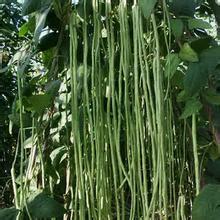
Three key pests to focus on controlling when growing cowpeas
The vigorous growth period of long cowpeas falls in a season of high temperatures and abundant rain, so pests and diseases occur severely. If management cannot keep up, it easily leads to reduced quality and lower yields. In terms of control measures, agricultural control should be the main approach, with chemical control as a supplement, to ensure the quality and safety of the product. 1. Rust disease occurs in August to September, mainly...
-
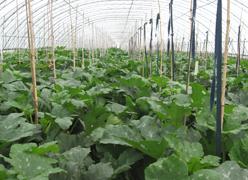
Key recent management focus for zucchini: controlling excessive vigor
Recently, when visiting the countryside, I saw that the zucchini grown in greenhouses by vegetable farmers was generally growing too vigorously, and the plants were setting fruit poorly. When asked why, many vegetable farmers told the reporter: "The weather forecast earlier said this year would be a cold winter, so we thought temperature control alone would be enough to manage plant growth well and avoid excessive vegetative growth. If we also used plant growth regulators, it would very likely seriously affect the growth of the zucchini, so we did not use regulators. But unexpectedly, although the outdoor temperature this year was not high, the weather was clear and fine, and the temperature inside the greenhouse was relatively high, which caused severe excessive growth of the zucchini."
-
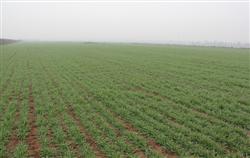
Spring management of wheat focuses on fertilizer and water; fertilization and irrigation must keep pace.
Generally carry out compaction and hoeing, and harrowing when the soil surface is frozen. Harrowing or compaction can break up clods, settle the soil, raise and conserve soil moisture, draw on deep water, and promote root growth and tillering. Through compaction, capillaries form in the soil, and deep soil moisture rises along the capillaries to the upper soil layer, which helps nourish root growth. Early-spring hoeing and harrowing...
-
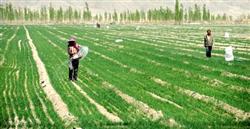
Spring management of wheat: focus on preventing and controlling the four major harms
How to manage the first spring irrigation and fertilization of wheat? The first spring irrigation and spring fertilization have a great impact on wheat yield. For example: if the wheat is too dense, too sparse, or lodging occurs in the later growth stage, it indicates that the timing of the first spring fertilization and irrigation was problematic. Another example: if the wheat stays green and ripens late, and the grains are shriveled and thin, that indicates your spring water and fertilizer use...
-
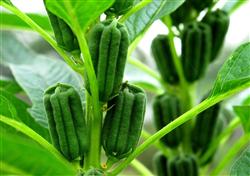
High-yield fertilization techniques for sesame: focus on three key topdressings
Double-stem cultivation involves removing the growing tip of the main stem during the sesame seedling stage and using the axillary buds at the base of the stem to promote the growth of 2 stems similar to the original main stem, turning one plant with one stem into one plant with two stems. This can greatly increase the number of pods and thereby raise yield. Generally, it increases sesame income by about 10 kg per mu. Therefore, double-stem cultivation is a new...
-
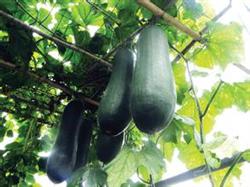
How to Grow Winter Melon for High Yields? Focus on Three Key Steps
Agricultural experts point out that to achieve high yields of winter melon, you should plant at a reasonable density, control diseases and the number of dead seedlings so that the final number of fruit-bearing plants is sufficiently large but not too dense; you should also fertilize reasonably and control various diseases, especially fungal diseases, so that the plants grow vigorously and the winter melon's expansion rate increases; and you should extend the lifespan of the winter melon plants as much as possible, thereby...
条件筛选