-

China's flower sea construction is developing at a spurt; sound development requires a differentiated path
In recent years, although flower sea construction has only just started in China, it has shown a momentum of spurt-style rapid development. Although it has played an important role in promoting the transformation and upgrading of the flower industry as well as the development of leisure agriculture and flower tourism, industry insiders point out: blind
-
Xinhua News Agency: Fragrant flowers accompany spring plowing, busy farming in the spring fields
On February 25, villagers of Gaolong Village, Tieshan Town, Dazu District, Chongqing Municipality, led their oxen through the fields. After the Spring Festival, rapeseed flowers across the vast southern regions gradually release their fragrance, accompanying the people working in the fields. Photo by Xinhua (Luo Guojia). On February 25, in Mingyue
-
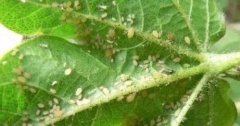
Morphological Characteristics and Damage Symptom Identification of the Cotton Aphid on Flowers
Among the common insect pests of flowers, the cotton aphid causes very serious damage. Let us take a look below at the harmful habits and morphology of the cotton aphid. Damage habits: The cotton aphid is a very common aphid on general herbaceous flowers, occurring on plant buds, young leaves, or flower buds and corollas
-

Roses Command a Premium After Snow: How Much Is a Single Rose at the Flower Shop? Which Is More Expensive, Carnations or Roses?
Everyone surely knows roses. During this year's Valentine's Day, do you know how much roses cost? Reports say roses command a premium after snow; the market price used to be 2 to 3 yuan per stem, but now each stem costs between 8 and 10 yuan. And
-
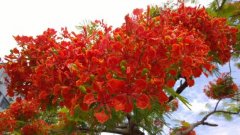
How many times a year does the flame tree bloom? A full analysis of its flower meaning and legend
The flame tree is a very special flower. It blooms twice a year, once from May to June, and once in September, so its flower meaning is related to its blooming period. The flame tree flower is divided into five petals, the flowers are large and fire-like, with red flowers and green leaves, magnificent and splendid
-
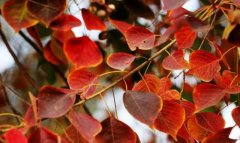
What season does the Chinese tallow tree bloom? Reasons for its curved trunk shape and wood characteristics
The leaves of the Chinese tallow tree change color with the seasons and climate, just like the poinsettia. When the climate gradually turns cool and autumn and winter slowly arrive, the leaves change from emerald green to yellow and orange-red, and then to red or reddish-brown, which is
-
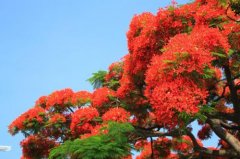
How many times does the flamboyant tree bloom in a year? Is its blooming time in spring?
Do you know the flamboyant tree? This flower is called by many people the flower of parting. Why do they say that? It is because the blooming period of this flower is different. The flamboyant tree does not bloom in spring; its blooming period is from May to July, and it is also a two-season flower, blooming twice a year, one
-
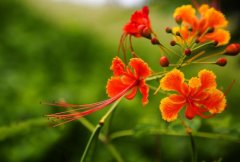
The Flame Tree only blooms twice a year; does it bloom in autumn?
The flame tree (Delonix regia) was introduced in 1897 when seeds were purchased by the Japanese consulate in Bombay, and it was first planted in Tainan; it is an endangered species in the wild, and has now been introduced and cultivated artificially, widely grown as an ornamental tree. In Hong Kong, China it is a common introduced variety of deciduous tree. Later it was also
-
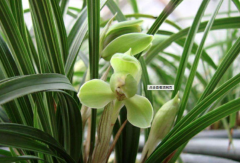
Spring Orchid Variety Recommendation: Characteristics and Qualities of the Kuizi Orchid
The Kuizi orchid is a variety of the spring orchid (Cymbidium goeringii), also known as "Huashi Mei" and "Wulin Diyi Mei"; it is a spring orchid variety selected before the War of Resistance. Its main features are short and round outer three petals, silkworm-moth-shaped column, Liu Hai tongue, emerald-green flower color, low scape, and semi-drooping leaves. Its habits are a preference for coolness and ventilation.
-
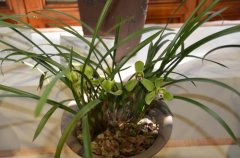
Chunlan 'Wushuangmei' Variety Recommendation, Orchid Characteristics and Photo Introduction
There are many varieties of Chunlan (Cymbidium goeringii), but do you know the variety Chunlan 'Wushuangmei'? This variety was a new species obtained by Xu Zilinmin of Shanghai in the 5th year of the Republic. In the 8th year of the Republic, a certain gentleman from Yuyao purchased this flower for five hundred gold, with two tubes of old and middle grass plus three leaves. When it spread to Wuxi, it was renamed Efengmei.
条件筛选