-

How to Return Rice Straw to the Field? A Detailed Guide to Five Practical Techniques
1. Short-cut rice straw incorporation by plowing technique. Cut the rice straw by hand or machine into lengths of 15-20 cm, and spread it evenly over the paddy field. Generally, the amount of dry rice straw spread per mu is 200-250 kg; if early rice straw is used for return, the amount spread per mu of main field is 1/2 or 2/3 of the total rice straw per mu. After the rice straw is spread, on the basis of the original fertilizer amount, apply an additional 8-12 kg of ammonium bicarbonate or 5-6 kg of urea per mu as base fertilizer; if it is a cold-waterlogged field, apply 15-25 kg of lime per mu in combination to accelerate the softening and rotting of the rice straw. The final
-
Five key points for autumn fingerling management, farmers need to pay attention
Autumn water temperatures are suitable, making it the peak season for fish growth. Fingerling management should focus on the following 5 tasks. 1. Pond clearing. Transfer the fingerlings to a pond that has been cleared and disinfected for rearing. Where water sources and pond rotation are difficult, all fingerlings can be transferred out temporarily for holding, then the original pond disinfected with quicklime at 75-100 kg per 667 sq m of water surface, and the water fertilized by conventional methods. Wait until the drug effect has dissipated before transferring the fingerlings back. 2. Grading. Since larger fingerlings have a big appetite and strong ability to compete for food, if large and small fingerlings are mixed, the small fish will
-
Detailed Explanation of the Five Major Characteristics of the Rice-Rapeseed Combined Planting Model
Rapeseed is an important oil crop in the Yangtze River Basin. Traditional rapeseed cultivation involves raising seedlings and transplanting them. Because raising seedlings and transplanting rapeseed in paddy fields requires large inputs of labor and materials, with low yields and low returns, and crops are easily lost when unsuitable weather occurs, this affects farmers' enthusiasm for planting rapeseed. Changing traditional seedling transplanting to no-till broadcast direct seeding with rice straw mulching simplifies the production process and achieves the goal of cost saving and efficiency improvement. Compared with traditional seedling transplanting, the rice-rapeseed combined model has the following characteristics: First, no-till broadcast direct-seeded rapeseed, per
-
Five myths about drinking tea that cannot be ignored, severe cases can be fatal
In daily life, many people are used to giving strong tea to someone who is drunk to sober them up, and some people believe that tea can cure "all diseases" and can be drunk without any scruples... But today we want to tell you that all of this is bad for your health and is a misunderstanding about drinking tea. Myth one: Strong tea sobers you up. Some people believe that drinking strong tea after alcohol has a "sobering" effect, but this is wrong. After drinking alcohol, the ethanol in the liquor enters the bloodstream through the gastrointestinal tract, is first converted into acetaldehyde in the liver, then into acetic acid, and then breaks down into carbon dioxide and water that are excreted from the body through the kidneys. But if you drink strong tea after alcohol, the caffeine in the tea
-
Five observation points when feeding rabbits
One, look at the rabbit's size. Generally, an adult rabbit weighing about 3.5 kg needs 150-200 g of feed per day; a young rabbit weighing about 1.75 kg needs 100-150 g of feed per day. The ideal moisture level of the feed is when it lightly holds together when squeezed and falls apart when the hand is released. Two, look at whether the rabbit is fat or thin. For fat rabbits, appropriately reduce the amount of concentrated feed and increase green fodder or roughage; for thin rabbits, supplement nutrition and feed more concentrated feed. You can also feed some soaked soybeans, or mash bean dregs, mix them with boiling water, and stir them into the feed for the rabbits. Three, look at whether the feces are dry or wet. If the rabbit's
-
How do you make delicious Suancai Yu (pickled mustard green fish soup)? A five-step cooking method to help you make it easily
Ingredients: Grass carp or common carp, grass carp is best, about one and a half jin in weight is better. One head of pickled mustard greens (the reason I say one head is because pickled mustard greens made from kohlrabi are generally pickled one head at a time). Steps: 1. After cleaning the fish, remove the fish head, slice the fish meat off and cut it into small slices. Chop the fish bones into small sections. If the pot is not big, you can keep the fish head for making fish head soup later. If the pot is big enough, you can cook the fish head together as well. 2. Put the fish bones and fish head together with salt and cooking wine
-
Practical Five-Feeding Methods for Sows During Lactation
① Feeding sows feed fermented with yeast has a good milk-promoting effect. ② Feed green fodder that stimulates lactation, such as sugar beet roots and their leaves, raw potatoes, etc. ③ Wash the sow's afterbirth clean, then boil it into soup and feed it to the sow. ④ Take 40 grams of cowherb seed (Vaccaria hispanica), 30 grams each of akebia stem (Akebia quinata), safflower (Carthamus tinctorius), and common burreed tuber (Sparganium stoloniferum), 50 grams of medicated leaven (Massa Medicata Fermentata), and 20 grams of red peony root (Paeonia lactiflora), mix them, add water, and decoct into a liquid; give 1 dose per day, divided into 2 feedings, for 2 to 3 consecutive days. ⑤ In the early stage of lactation, boil small fish and small shrimp into soup, mix it into the feed, and feed it to the sow; this can significantly increase milk yield, with results seen by the 2nd day.
-
Orchid Watering Methods: Handling Five Key Relationships Well
1. Watering and orchid species. Because each orchid species has different growth habits, its water requirements also vary. Cymbidium ensifolium likes moisture, but waterlogging in the growing medium must be avoided. Cymbidium sinense prefers dry over wet; too much moisture easily causes root rot and plant collapse. Cymbidium kanran has a well-developed root system and strong drought tolerance, so the potting soil should be kept on the dry side. Suxin orchids and leaf-variegated orchids require seven parts dry and three parts wet; too much moisture easily causes degeneration. 2. Watering and orchid pots. Clay pots have a rough texture and strong air permeability, and moisture evaporates easily, so water frequently, water generously, and water thoroughly. Plastic pots have low density and poor air permeability, and moisture is consumed slowly; in summer,
-
-
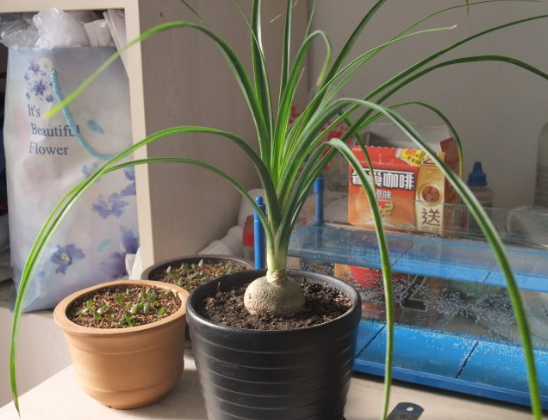
How to grow a ponytail palm? Five key cultivation methods and precautions to master
I. How to grow a ponytail palm 1. Soil Ponytail palm cultivation has high requirements for soil. It is best to choose sandy soil and humus soil with good drainage. Use one part coal cinder mixed with three parts garden soil, plus a small amount of chicken manure as base fertilizer. This basically completes the first step.
条件筛选