How to grow a ponytail palm? Five key cultivation methods and precautions to master
I. How to grow a ponytail palm
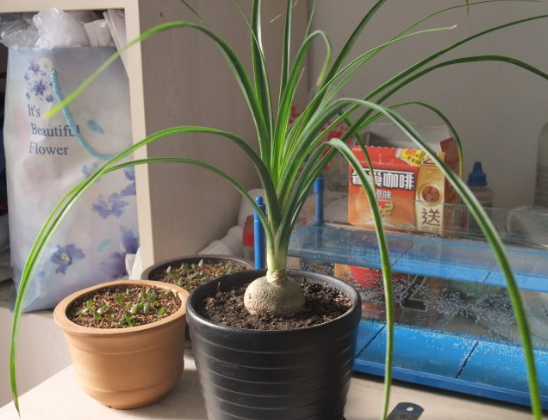
1. Soil
Ponytail palm cultivation has high requirements for soil. It is best to choose sandy soil and humus soil with good drainage. Use one part coal cinder mixed with three parts garden soil, plus a small amount of chicken manure as base fertilizer. This basically completes the first step.
2. Fertilizer
Fertilizer can be said to be an indispensable part of growing a ponytail palm. Apart from winter, the other three seasons are the vigorous growth seasons for the ponytail palm. In these three seasons, it is best to fertilize the ponytail palm once every two to three weeks. Generally, liquid fertilizer or compound fertilizer is sufficient. This can promote the swelling of its base. Also, a reminder: no fertilization is needed in winter.
3. Water
The ponytail palm is a plant with very strong vitality and is especially drought-tolerant. Even if it is not watered for three to five months, it can still grow normally. Remember never to let water accumulate. You must master the right balance and maintain the principle of preferring dry over wet, because overwatering can cause root and stem rot.
4. Humidity
Here, humidity refers to the climate. Regarding how to grow a ponytail palm, climate is also a key factor, because too low humidity will cause adverse reactions in the growth of the ponytail palm, such as dull leaves, yellowing, and leaf drop.
5. Sunlight
As everyone knows, sufficient sunlight is a necessary condition for the growth of most plants, and the ponytail palm is no exception. It likes to grow in places with sufficient sunlight. If there is insufficient sunlight, it will grow very thin, weak, and not robust.
II. Cultivation methods and precautions for the ponytail palm
1. Summer / Pay attention to shading
Although the ponytail palm is a plant that loves sunlight, because the summer weather is dry and the sunlight is too strong, it is best to place the ponytail palm in a semi-shaded area. Spray it appropriately every day, generally 2-3 times a day. If you want to understand the cultivation methods and precautions for the ponytail palm, you must keep this point in mind.
2. Winter / Control water
Winter is the dormant period for the ponytail palm, so there is no need to water it. In this season, it is best to move the ponytail palm indoors for cultivation. If it is inconvenient to place it indoors, you can wrap it with plastic film and open the film at noon to let it breathe.
Hydroponic flower cultivation techniques
Soilless cultivation method for the money tree
The money tree has an elegant posture, a majestic leaf crown, and emerald green leaves. Placed in a family living room, it is both elegant and attractive.
The money tree is a perennial evergreen shrub, native to the Malay Peninsula and the Nanyang Islands. In recent years, through cultivation and selection, it has been widely introduced into urban and rural households in our country. For home cultivation, according to its living habits of liking high temperature and high humidity, and being intolerant of frost and drought, attention should be focused on the following four points:
First, pay attention to sunlight. The money tree likes high temperature, humidity, and sunlight, and cannot be kept in shade for a long time. Therefore, during maintenance and management, it should be placed in a place with sufficient indoor sunlight. When placing it, the leaf surface must face the sunlight. Otherwise, because the leaves are phototropic, the entire branches and leaves will become distorted. In addition, every 3 to 5 days, spray water on the leaves once with a spray bottle. This is not only beneficial to photosynthesis, but also makes the branches and leaves look more beautiful.
Hydroponic method for Madagascar periwinkle
Apocynaceae, Catharanthus genus, also known as five-petal plum.
Biological characteristics: Madagascar periwinkle is native to eastern Africa. It likes a warm, slightly dry, and sunny environment. The suitable growth temperature is 18-24°C from March to July, and 13-18°C from September to March of the following year. The winter temperature should not be lower than 10°C.
Madagascar periwinkle dislikes wetness and fears waterlogging. The pot soil should not be watered too much, as excessive wetness affects growth and development. Especially for plants overwintering indoors, watering should be strictly controlled, and it is better to keep them dry, otherwise they are very prone to freezing. For open-field cultivation, during heavy summer showers, pay attention to timely drainage to avoid waterlogging causing the entire patch to die.
Madagascar periwinkle is a light-loving plant. During the growth period, there must be sufficient sunlight. Then the leaves are dark green and glossy, and the flower colors are bright. If it grows in shade for a long time, the leaves turn yellow and fall off.
It is suitable for fertile and well-drained loam, and tolerates poor soil, but must absolutely avoid alkaline soil. In compacted, poorly aerated clay soil, the result is poor plant growth, yellowing leaves, and no flowering.
Propagation methods: Commonly used are sowing, cuttings, and propagation.
Cultivation management: When the seedlings have 3 pairs of true leaves, transplant them into 10 cm pots, with 3 plants per pot. When the seedlings are 7-8 cm tall, pinch once, and then pinch 2 more times to encourage more branching and more flowering. During the growth period, fertilize once every half month, or use 15-15-30 "Huiyou" special fertilizer for potted flowers. For pot cultivation or flowerbed planting after removing from pots, flowering lasts from late May to early November, more than 5 months. During the flowering period, remove spent flowers at any time to prevent them from becoming moldy and affecting plant growth and ornamental value. August to October is the seed collection period for Madagascar periwinkle. Seeds should be collected as they mature to avoid loss.
Pest and disease control: Leaf rot, rust, and root-knot nematodes are common. For leaf rot, spray with 65% zineb wettable powder at 500 times dilution. For rust, spray with 50% carboxin wettable powder at 2000 times dilution. For root-knot nematodes, spray with 80% dibromochloropropane emulsifiable concentrate at 50 times dilution for control.
Hydroponic method for Euphorbia tirucalli
Euphorbiaceae, Euphorbia genus, also known as triangular spurge. Native to South Africa.
Characteristics
Euphorbia tirucalli is a perennial succulent plant. The stem is erect, 3-4 angled, dark green, with irregular beautiful gray-green markings in the center of the stem. The edges of the angles have tooth-like protrusions, and obovate leaves grow at the protrusions. There are many branches, all growing vertically upward, forming a unique plant shape. The whole plant contains irritating milky sap. Euphorbia tirucalli has a strange shape and rich exotic flavor, and is an excellent choice for tabletop greening decoration.
Habits
Euphorbia tirucalli likes semi-shade, but requires sufficient scattered light. It can tolerate low temperatures of 5 degrees. Euphorbia tirucalli likes dryness and avoids long periods of moisture, yet it is very suitable for hydroponic conditions.
Propagation
Euphorbia tirucalli is usually propagated by cuttings. From May to September, take branches about 10 cm from the mother plant as cuttings for propagation. The cut cuttings should not be inserted immediately, as immediate insertion will cause the cut to rot and lead to failure. The cut of Euphorbia tirucalli will exude milky sap. When cutting, dip it in plant ash or carbon powder, and dry it in a cool place for several days. After the cut is fully dry, then insert it for propagation. It roots very easily.
Key points for hydroponic maintenance
1: If scale insects appear, besides moving it to a ventilated and well-lit place, you can brush off the scale insects with a toothbrush, then spray with 250 times diluted washing powder solution to kill them.
2: The white milky sap in the stem of Euphorbia tirucalli is toxic. Especially be careful not to get it into your eyes.
Methods for obtaining hydroponic materials
Cuttings and root washing. The cut branches should first be dried in a cool, ventilated place for several days. After the cut is dry, then insert them into water, otherwise they will rot. After one month, new roots can grow.
Hydroponic method for good luck plant
Good luck plant, also known as Guanyin grass, is a perennial evergreen herbaceous plant of the Liliaceae family, Reineckea genus. Leaves are clustered, broadly linear, with a concave midvein and tapering tip, 15 to 40 cm long; the stem is creeping and rhizomatous, rooting at the nodes; the flowering period is September to October, flowers are light purple, erect, in terminal spikes about 6 cm long; the fruit is bright red and spherical; it is native to the southwestern region of our country, likes warm and humid environments, is relatively cold-tolerant and shade-tolerant, has low soil requirements, and is highly adaptable. Because the good luck plant has a beautiful plant shape and verdant leaves, if we use its cold tolerance and shade tolerance to place it in various goldfish tanks or other glass containers for hydroponic cultivation, and then place it on a bar counter or tea table, then there is water in the tank, stones in the water, and roots among the stones, clearly visible and mutually revealing. It can be regarded as a delicate and elegant work of art. Below is an introduction to its cultivation method.
I. Material selection. Select plants with dark green leaves, vigorous growth, and no pests or diseases. Carefully dig them out of the soil with a shovel and wash the roots clean. During digging, be careful to dig as deep as possible and bring out as much soil as possible. There are two purposes for this: first, not to damage the roots, which is beneficial to hydroponic cultivation and growth; second, because water is transparent, complete roots can display a unique beauty in the water.
II. Stone pressing. Choose pebbles or Yuhua stones used for paving garden paths, wash them clean, first spread a layer on the bottom of the glass tank, place the good luck plant upright on the stones, then use stones to press its roots firmly so that it does not fall over, and pour clear water into the glass container until the entire root system is completely submerged. The transparency of the water determines that stone pressing should also have a certain aesthetic technique. The author can design it through his or her own creativity to highlight individuality.
III. Management. Because the roots of the good luck plant are soaked in water for a long time, the water tends to develop an odor over time, so the water should be changed frequently, preferably once a week. As for fertilization, regularly add a few drops of nutrient solution or potassium dihydrogen phosphate solution. The good luck plant is relatively shade-tolerant. 1 to 2 hours of fluorescent lamp exposure every evening can meet its photosynthesis needs.
Hydroponic method for cyclamen
Selection of cyclamen and container: Select 1-year-old to 3-year-old cyclamen plants that are free of pests and diseases, growing vigorously, and about to bloom. It is best to use soilless cultivation substrates such as perlite, vermiculite, and wood chips. After a change of environment, they will not damage the roots, will not need to recover from transplanting, and will adapt quickly. The hydroponic container is simple and economical, and in daily life it can serve to reuse waste. Any container that can hold water, such as a fish tank, teacup, beverage box, wine bottle, or vase, is acceptable; transparent containers are best, as the roots, stems, leaves, flowers, and fruits can all be fully viewed. No matter what container is used, its size, height, color, etc. must be coordinated with the cyclamen plant, so that the exquisite, crystal-clear, and elegant charm of hydroponic cyclamen can be displayed.
Hydroponic timing and method: The flowering period of cyclamen is generally from October to June of the following year, so the hydroponic time is generally from September to April of the following year. Remove the selected cyclamen plant from the pot, wash the substrate adhering to the root system with 20°C warm water, and be careful not to damage the roots. Then place it directly into a previously prepared container, with the water level even with the root zone, and at the deepest not exceeding 1/3 of the bulb, so as to avoid bulb rot. Finally, place it in a suitable indoor position, and regularly add water and nutrient solution. After two to three months of hydroponic cultivation, after the flowers fade, take out the plant and plant it in a cultivation substrate to spend the summer.
Water quality and water temperature: The water used for hydroponic cyclamen is best mountain spring water or magnetized water, with clean water quality, not turbid, not precipitating, and containing various trace elements necessary for plants. During the entire hydroponic period, there is no need to change the water. Tap water contains chlorine, which is unfavorable for flower growth, and is prone to turbidity and precipitation, requiring water changes every few days, so it should be avoided as much as possible. The water temperature should be close to the indoor temperature at the time, generally 10°C to 20°C.
Light and indoor temperature: Cyclamen likes a sunny environment. The hydroponic container should be placed on a tabletop or windowsill with sufficient indoor sunlight, and not directly on a radiator. The most suitable indoor temperature is 15°C to 20°C, with the maximum not exceeding 25°C and the minimum not lower than 10°C. Adding nutrient solution: Hydroponic cyclamen also needs regular nutrient supplementation during the flowering period. Generally, every 10 days add 50 ml per plant of 1:100 diluted flowering plant nutrient solution. Mountain spring water should also be used to prepare the nutrient solution. If yellow leaves, small leaves, small flowers, etc. are found, after ruling out root rot, more nutrient solution can be added as appropriate.
Hydroponics of Arrhenatherum elatius
Chinese name: Libang grass
Alias: silver-edge grass
Family and genus: Poaceae
Latin scientific name: Arrhenatherumelatius
Characteristics: perennial herb
Plant height: 50-100 cm tall
Flowering period: summer (June-August)
Cold tolerance: cold-tolerant (above -5°C)
Shade tolerance: sun-loving
Morphological characteristics: underground stems are white and bead-like; aboveground stems are clustered and smooth. Leaves are clustered, linear-lanceolate, 30 cm long, about 1 cm wide, with yellow-white edges. The panicle has a long stalk, about 50 cm, and is branched; spikelets have two flowers, the upper flower bisexual or female, the lower male; flowering period June-July. Native to Europe.
Habits: Extremely robust, cold-tolerant and drought-tolerant, not selective about soil. In midsummer, the aboveground part often withers and goes dormant, then sprouts and grows again in early September.
Propagation and cultivation: Usually divide once every 2-3 years, in spring from March to April or in September after dormancy when new leaves first sprout. Dig up the old plant and separate it. Each division should preferably carry 2-3 new buds and be separated together with the bead-like underground stems. Old plants should be pruned every year, and the leaves should not be too long. When the underground stems are exposed, soil should be banked up in time, so that the clump is vigorous and beautiful. If too much fertilizer is applied or there is excessive nutrient deficiency during cultivation, the white spots on the leaves will disappear and all become green, affecting the ornamental effect.
Hydroponic method for umbrella tree~~~~~
Dragon tree hydroponics: The plants used for hydroponic dragon tree can be obtained by referring to the propagation methods above, or directly from soil cultivation. The specific methods are as follows:
Root-viewing hydroponics: One week before cultivation, sterilize and insecticide them, and select plants with good appearance for cultivation. If hydroponics is carried out according to the cuttings above (for soil-cultivated materials, remove the roots and carry out rapid propagation to promote rooting), it is best to first put the planting basket into it. Wait until the roots grow 5—6 cm long and have not returned to land, then put them into the mutation pool for mutation induction. At the beginning, the nutrient solution concentration should be lower. After the plant adapts to the aquatic growth environment, the concentration can be increased according to the plant, while also reducing oxygenation, and finally stopping oxygenation. When the roots grow enough to be bottled, they can be put into bottles!
Ceramsite planting: Root promotion before potting is the same as for hydroponics. When potting, do not plant the plant too low, as that is bad for the plant's later growth. When the plant's root system grows out of the inner planting pot, it can be sold.
During production, apply a fungicide once a week and spray foliar fertilizer once. For home maintenance, in addition to referring to the product instructions, you should also follow its growth habits: stop fertilizing during the dormant season, place it in a place with strong sunlight. For ceramsite planting in winter and early spring, use less water. If placed in a dark place for too long, the leaves turn yellow and lack vitality, and the tips of the basal leaves are prone to turning black, as if scalded by boiling water. Do not lack water during the growing season.
Three-color dracaena alias: three-color edged dragon tree, rainbow dragon tree, striped cordyline
Family and genus: Agavaceae, Dracaena genus
Morphological characteristics: Evergreen small tree. The stem is thin, upright and straight, up to 3 m tall. Leaves are 15-60 cm long and 1-2 cm wide, sword-shaped. The green leaves have milky white, yellow-white, and red stripes. It is a uniquely distinctive variety in the Dracaena genus.
Distribution and habits: Native to Madagascar.
Likes a warm, humid environment with bright scattered light. Relatively shade-tolerant, avoids direct strong light. The suitable growth temperature is 18-28 degrees. The overwintering temperature must be above 10 degrees.
Propagation method: cuttings
Key points for hydroponics:
1) Hydroponics by water cuttings roots easily, and the water roots are white and highly ornamental. Changing the water is the key to success. Especially when just inserted, changing the water every other day can increase its nutrient content. After the root system grows and adapts to hydroponic cultivation, water can be changed or added once a week or once a month according to the season.
2) When the water temperature in summer is above 35 degrees, the root system is prone to rot. At this time, stop using nutrient solution and only use clear water for cultivation, and increase the frequency of water changes to keep the water quality clear.
3) Place it in a bright indoor position. Generally, change the water once a month in autumn and winter. If using a transparent container for hydroponics, while changing the water, wipe off the substances attached to the container with a soft cloth to make it transparent, so that the beauty of the plant's root system can be better displayed. After changing the water, add a few drops of commercially sold nutrient solution or add some potassium dihydrogen phosphate diluted 1000 times to the water, so as to supply the nutrients needed for plant growth. If foliar fertilizer or 1000 times potassium dihydrogen phosphate is sprayed as extra-root topdressing during the growing season, it can make it grow thicker and stronger.
Can remove: toluene, xylene, benzene, trichloroethylene, formaldehyde
Hydroponic method for snake plant
Snake plant is a perennial herb with creeping rhizomes. Leaves are clustered, usually 2-6 in a bundle, upright, leathery, thick, with a short tip at the apex, dark green, with light gray-green horizontal stripes. It is named for its markings resembling tiger skin. Height exceeds 80 cm, width 3-7 cm. It blooms in spring and summer, with spikes, small flowers in bundles of 3-8, white or light green, fragrant.
Snake plant likes a warm climate. The suitable growth temperature is 20-30 degrees. It is not cold-tolerant. Below 13 degrees, growth stops. The overwintering temperature should not be lower than 8 degrees. When the temperature is too low, it often rots from the base, causing the death of the entire plant.
Snake plant likes light, but in summer direct sunlight should be prevented. It is very shade-tolerant and can be displayed in shady places for a long time.
Snake plant is a desert plant and can endure harsh environmental conditions.
Propagation is usually by division. Division is usually carried out in spring and autumn in combination with repotting. Take the plant out of the pot, separate the daughter plants from the mother plant with a sharp knife, and try to avoid damaging the root system, so that the separated daughter plants carry as many roots as possible. After separation, place the daughter plants in a dark indoor place to prevent rain, and control watering to avoid rot at the cut. Only after new leaves grow can they be transferred to normal maintenance.
When mass-propagating snake plants, cuttings can be used. Cuttings are carried out from May to July. Select healthy and plump leaves, cut them into 5-7 cm sections, or use whole-leaf cuttings. The cut leaves should be placed in a dry, cool place for several days. After the cut is dry, insert them vertically or obliquely into the medium, with the insertion depth being 1/3 or 1/2 of the section length. After insertion, water thoroughly once. When taking cuttings, remember the top and bottom orientation of the cuttings. If inserted upside down, they will not root. At 15-20 degrees, in about one month they will root from the base or grow rhizomes and gradually grow into new plants. When the young seedlings grow 2-3 leaves, they can be potted for final planting.
Do not add too much water, soaking all the roots. Let a small section of root remain exposed above the water surface so it can absorb oxygen. After water roots grow, you can add a little nutrient solution~~~~ change the water every three or four days in summer, and every six or seven days in winter~~~ depending on how cloudy the water is~~~~~~~ generally woody flowers are harder to hydroponically grow, so you must be patient~~~~~~~~
Key points for hydroponic hydrangea
Scientific name: Hydrangeamacrophylla
Aliases: hydrangea, douqiu, yin hydrangea, grass hydrangea, ziyang flower
Family and genus: Saxifragaceae, Hydrangea genus
Plant characteristics: Hydrangea is native to the Yangtze River Basin and provinces south of it in our country. The natural plant height is 1 to 2 m, and the potted height is mostly controlled at 30 to 50 cm. Leaves are opposite, obovate or elliptical, with serrated edges. The corymb is terminal, 20 cm in diameter, nearly spherical, with few and small fertile flowers, and many and large sterile flowers. The flower color is variable, initially white, gradually turning blue or pink. The natural flowering period is May to July. It is a deciduous small shrub with emerald green leaves, bright flower colors, and a long ornamental period, and is deeply loved by people.
Ecological habits: Hydrangea likes a warm and humid environment. The suitable growth temperature is 18°C to 28°C, and in winter not lower than 5°C. Light should be semi-shaded; if too strong, the leaves will be scorched and curled. It likes loose and fertile soil and has a high water demand, but avoids water accumulation. It is relatively resistant to harmful gases such as sulfur dioxide.
Common cultivated varieties: Hydrangea macrophylla (V. hortensica): flowers are all sterile, sepals ovate. Blue-edged hydrangea (V. coerulea Wils): flowers bisexual, dark blue, marginal flowers blue or white. Ziyang flower (V. otaksa Bailey): flowers sterile, inflorescence large, diameter up to 20 cm, leaves thick, round spherical inflorescence, blue or light red, mostly used in gardens. Silver hydrangea (V. maculata Wils): divided into fertile and sterile types, leaves relatively narrow and small, with white edges, used for foliage viewing.
Propagation methods: Hydrangea can be propagated by division, layering, cuttings, and other methods.
In a greenhouse, cuttings can be taken throughout the year. Generally in May to June, in combination with early spring pruning and post-flowering shaping. Select semi-lignified branches free of pests and diseases, each 10 to 15 cm long, retaining 2 to 3 nodes and 1 to 2 top leaves, and insert them into a seedbed with river sand or vermiculite as the substrate, with appropriate shading. Keep the substrate moist, with air humidity above 80%, and rooting begins in about 18 days. After that, gradually reduce the frequency of spraying, increase light, and transplant in about 1 month.
Cultivation management: After the cuttings root, pot them in time. Hydrangea likes loose, fertile, well-drained soil. Usually prepare it with leaf mold, garden soil, and organic fertilizer in a 4:4:2 ratio. For large-scale production, it is advisable to prepare it with peat, perlite, and organic fertilizer in a 6:2:2 ratio, and disinfect thoroughly before use.
Fertilization: Hydrangea likes fertilizer. Generally, apply organic fertilizer once every half month. In the early growth stage, more nitrogen fertilizer is needed; during flower bud differentiation and bud formation, more phosphorus and potassium fertilizer is needed. You can also spray 0.1% to 0.2% potassium dihydrogen phosphate on the leaves 2 to 3 times. Stop fertilizing after the buds show color.
Watering: The transpiration of hydrangea leaves is very large, so it must be watered in time. Even short-term water deficiency and wilting can cause dry leaf edges and necrotic flowers. Especially in summer, shading and cooling must be used to reduce transpiration, and air humidity above 60% must be maintained. In addition, the flower color of hydrangea is affected by soil pH. It is usually blue in an acidic environment and red in an alkaline environment. Therefore, the pH of the water should be determined according to the desired flower color.
Temperature: Hydrangea is not tolerant of high temperatures and requires a temperature between 15°C and 25°C. High temperatures will make the plant shorter, fade the flower color, and reduce quality. After the buds show color, keep the temperature at 10°C to 12°C to improve flower color and play a role in freshness preservation.
Light: Hydrangea is shade-tolerant. Direct sunlight can cause sunburn, so shading is needed. Usually during the growth period, 60% shading is needed. After the inflorescence shows color, appropriate shading is also needed to avoid fading of flower color and loss of luster.
Pruning: Hydrangea has strong sprouting ability, and many vegetative branches will sprout from the base of the plant. To reduce nutrient consumption, remove them in time. If old branches need to be replaced, healthy vegetative branches can be selected as reserve branches. After flowering, cut back in time, retaining 2 to 3 healthy buds to promote new branches.
Flowering regulation: To make hydrangea bloom during Spring Festival, select healthy 3- to 5-year-old plants, treat them at low temperature of 2°C to 4°C for 14 days, then move them into a greenhouse for heating, maintaining 10°C to 20°C. They can bloom in 50 to 60 days. Pay attention to frequent ventilation, maintain good light conditions and relatively high air humidity, and apply organic liquid fertilizer once every half month until flowering.
Pest and disease control: Hydrangea has few pests, mostly aphids, spider mites, etc., which can be controlled by spraying systemic pesticides while ensuring good ventilation. Common diseases are mostly leaf diseases, such as white rot, gray mold, leaf spot, etc. Therefore, pesticides should be sprayed regularly for prevention. After disease is found, pesticides must be sprayed in time. Severely diseased leaves can be removed and burned.
Introduction to jade plant
[Aliases] Sedum tree, swallow plant, emerald tree, live-forever.
[Scientific name] Crassulaarborescens
[Family and genus] Crassulaceae, Crassula genus.
[Morphology] Evergreen succulent plant, plant height 45-75 cm, stem semi-lignified. Single leaves opposite, leaves thick and fleshy, broadly elliptical, entire, 3-5 cm long, 1-3 cm wide, dark green, glossy. After exposure to light, the leaf edges turn red. Horticultural varieties include variegated-leaf and colored-leaf types.
[Habits] Native to South Africa. Likes warmth, tolerates drought, likes light, also tolerates semi-shade, and grows best under bright scattered light. Likes fertile, loose, well-drained and breathable sandy loam.
[Propagation] Cutting propagation. Both stem cuttings and leaf cuttings root easily, and water cuttings can also survive. The cutting time is from May to September. Take 5-10 cm branches or 1 leaf and insert them into plain sandy soil. Pay attention to moisture retention. Roots can develop after one week.
[Cultivation] Use 2 parts garden soil, 1 part leaf mold, plus an appropriate amount of river sand to make the potting soil. After potting, water the young seedlings thoroughly and place them in a shaded place. After they survive, place them in a bright place and do not let direct sunlight hit them. In summer, pay attention to coolness and ventilation. To make the plant shape full and compact, fertilizer and water should not be too heavy at ordinary times, and the pot soil should alternate between dry and wet. In late autumn, move indoors for warmth, and the room temperature should be above 7°C. Do not water too much in winter. Repot and change soil once every spring.
Although the jade plant is easy to propagate, easy to plant, and easy to manage, it is still common to see jade plants on some residents' balconies looking elegant in spring, summer, and autumn, but once winter passes they become wilted and lose color, and may even become bare. This is mainly because growers only see the easy-to-cultivate side of the jade plant and ignore its fragile side. After entering severe cold, they still place it on an open balcony and let it suffer from cold wind and freezing, causing the jade plant to suffer freezing damage. After freezing damage, the fleshy leaves and tender stems of the jade plant begin to show wounds as if scalded by boiling water, then gradually soften, shrivel, and finally fall off. In severe cases, only the bare main stem remains.
Therefore, doing a good job of overwintering potted jade plants on balconies is very important. The following aspects should be mainly grasped:
1. Move the pot indoors in time. After entering winter, move the jade plant to an indoor place where 7°C to 10°C can be maintained for warmth. On warmer days, at noon, the jade plant can be moved to the balcony to bathe in sunlight, and moved back indoors at night.
2. Control the dryness and moisture of the potting soil. In winter, keep the potting soil on the slightly dry side, and mist the leaves with a fine spray from time to time to replenish moisture. Under normal circumstances, there is no need to water the potting soil directly.
3. Move it into a warm shed for insulation. If conditions permit, the pot can be moved into a warm shed; if not, a plastic film cover can also be used, but pay attention to the humidity inside the cover. If too much moisture is found, remove the cover in time to ventilate, so as to prevent the leaves from rotting.
4. If the jade plant has already suffered cold damage due to earlier mistakes in frost protection measures, do not easily discard the plant. As long as the frost-killed leaves and tender branches are removed and the plump main stem is kept, and fertilizer is applied appropriately the following spring, new branches and leaves can still sprout from the main stem. Generally, after 1 to 2 years of cultivation, it can develop into a perfect jade plant again.
Jade plant hydroponics:
You can choose to take cuttings from the branches of the mother jade plant in spring, summer or autumn. One week before cutting, sterilize, disinfect and treat for pests. After the cuttings are inserted, keep the substrate at a certain humidity; at the beginning, misting and shading are needed. After the callus tissue grows below, reduce misting, or do not mist at all, otherwise the leaves are prone to dropping and rotting. Once the roots grow 2~3 cm, they can be put on the hydroponic seedling bed for hydroponic root forcing.
[Use] Indoor decoration, suitable for embellishing halls. Note: The related foliage plant in the same genus, jade plant's relative Crassula portulacea, also known as thick-leaved stonecrop (Crassula portulacea), has obovate leaves, and its cultivation method is the same as that of the jade plant.
You can also grow plants hydroponically without nutrient solution~~~ For example, spider plants will grow very well without nutrient solution~ You can also put two compound fertilizer granules in~~~~~ Or soak nutritional soil in water and take the clear liquid on top, which can also be used as nutrient solution~~~~~ Nutrient solution can be bought at flower shops~~~~~~~~~~
Hydroponic watermelon peel must be done in spring or autumn. Hydroponics in winter will definitely die. The leaves of watermelon peel are best inserted in soil; for hydroponics, choose ones with roots. At the beginning, change the water frequently. After roots grow, you can add nutrient solution~~~~~~~~~~~~
My parlor palm has already grown very well, thank you, OP! I am a lazy person, and there is another way to reduce the number of water changes: just add 3 drops of Amway Loxin to the water. It is very effective, but each bottle of water is different in amount, so everyone should start by adding a small amount and gradually figure it out.
Hydroponic fleeceflower root
Let me pour a little cold water on this:
1. Not all flowers can be grown hydroponically
2. It is not that washing the roots of originally soil-grown flowers and putting them in water is hydroponics, and that they can all survive
3. Raising fish and flower roots in water compete for oxygen and both suffer. Fish excrement quickly spoils the water, easily causing root rot and fish illness. It is only an advertising effect.
4. Light passing through a glass bottle causes algae to grow, competing for oxygen and covering the surface of flower roots, suffocating the roots
5. Fibrous roots crowded together in water are prone to oxygen deficiency, turning black and dying.
Hydroponic peace lily
Let me also talk about the production process of hydroponic products at my base:
Select superior mother plants——remove from pots and rinse roots——cut roots or cut the base——disinfect and treat for rooting——plant in planting cups (expanded clay planting)——force roots on a rooting bed——induce changes on a hydroponic bed——harden seedlings for sale (management during this period is computer-assisted management)
True hydroponic flowers are not as simple as washing roots and soaking them in water. The cultivation process of hydroponic flowers is very complex, going through a whole series of steps such as washing roots---trimming roots----disinfecting----planting----forcing roots----inducing roots, and the time required ranges from 10 to 20 days to half a year.
One hundred thousand whys of succulent plant cultivation?
1. How do you grow string of pearls (jade beads)?A perennial evergreen creeping succulent herbaceous plant, in the plant kingdom, Asteraceae, genus Senecio, native to the arid subtropical regions of southwestern Africa. Flowering period: December to January of the following year. After three to four years it can grow to more than one meter long. In October it blooms small white or brown flowers; the buds are red thin strips. Watering should prefer dryness over moisture. When the weather is dry, misting can be done. It relatively prefers partial shade. The ratio of soil to sand is about 1:3. It likes warmth and humidity, is relatively cold-tolerant and heat-tolerant, and the optimum temperature is about 20°C~28°C. Growth is slow at both high and low temperatures, especially in high-temperature environments above 30°C where it almost goes dormant, so watering and fertilizing should be reduced, otherwise root rot easily occurs. In the vigorous growing seasons of spring and autumn, "apply light fertilizer frequently." Spraying 1-3‰ nitrogen fertilizer and potassium dihydrogen phosphate on the leaves often helps make the beads more emerald green and plump, improving ornamental value.
2. How do you grow string of hearts?
Apocynaceae, genus Ceropegia, distributed in South Africa and Zimbabwe. The plant is vine-like, can creep on the ground or hang down, and can reach about 90-120 cm at most. It likes warmth. When light is sufficient, it grows luxuriantly, and it grows even better under scattered light. In summer, avoid direct strong sunlight from 11 a.m. to 4 p.m. It likes slightly moist soil and is also relatively drought-tolerant, so the potting soil should preferably be half dry and half wet, alternating between dry and wet. In winter, water once every 10~15 days, keeping the potting soil slightly moist. The suitable temperature is 15~28°C. Spring and autumn are the vigorous growing periods of string of hearts. If the summer temperature exceeds 32°C, growth stagnates, and appropriate shading and ventilation are needed to lower the temperature. In winter, below 8°C, it begins to drop leaves and wither. String of hearts does not need too much fertilizer. Apply compound fertilizer three to four times a year (apply light fertilizer frequently). When repotting, add some base fertilizer appropriately depending on pot size, and repot once every two years.
3. How do you grow Sedum rubrotinctum?
Crassulaceae, genus Sedum [Sedum rubrotinctum], with leaves like a baby's fingers, showing a beautiful green color during the propagation period from spring to summer. In autumn and winter, the leaves begin to turn red, and under a sunny and dry environment they can become even redder. If there is insufficient sunlight, the plant's stems will elongate. It can send out roots from fallen leaves, making it simple to grow. Water only after the soil has completely dried, and avoid exposure to blazing sun in summer. When winter temperatures are low, reduce watering as well. The flowers are yellow and star-shaped, opening in spring. Sedum rubrotinctum likes warmth and an environment with a pronounced day-night temperature difference. It has strong adaptability to temperature and can grow well between 10°C and 28°C. In autumn and winter, as temperatures drop and light intensifies, the fleshy leaves gradually turn red, so artificial cooling during cultivation can increase ornamental value. In winter, room temperature should not be lower than 5°C. Sedum rubrotinctum likes light, and throughout the growing period it should receive full light. However, summer exposure can cause sunburn on the leaves, so appropriate shading or half-day sun is acceptable, and direct blazing sun at noon should be avoided. Sedum rubrotinctum grows slowly and is drought-tolerant, so it should not be given heavy fertilizer or heavy water. Water when the soil is dry and water thoroughly, but when winter room temperature is relatively low, reduce the amount and frequency of watering. Generally apply organic liquid fertilizer once a month. In summer, pay attention to maintaining good ventilation. Sedum rubrotinctum grows relatively slowly. Generally after 3 years of cultivation the plant shape begins to become messy, so pruning should be done in advance. Propagation method: usually by cuttings, either stem cuttings or leaf cuttings. For stem cuttings, use pruned branches, cut them into 5 cm stem sections, preferably air-dry them in a cool place for 3 to 5 days, and insert them into the seedling bed after the cut surface is slightly dry. For leaf cuttings, remove complete leaves from the stem (be careful not to damage the leaves), let them sit for 3 days, then insert them. This method has a high propagation rate and is suitable for mass propagation, but the plants take shape more slowly. Disease control: Sedum rubrotinctum has relatively few diseases, but occasionally leaf spot and stem rot occur. Leaf spot is mainly caused by poor ventilation and relatively high air humidity. Systemic fungicides can be used for control. Improving ventilation is key to preventing leaf spot. Stem rot is mostly caused by an overly humid environment in winter. Healthy upper stem sections of the plant should be cut for propagation, while avoiding excessive and frequent watering in winter, keeping the potting soil slightly dry.
4. How do you grow Sempervivum tectorum?
Sempervivum tectorum has a habit: when it has aged, its old lower leaves wither, and this is still normal. If they all turn yellow, then it is sick. If the roots are rotten, that indicates overwatering; if the roots are good, that means it has not been watered for an extremely long time. In the former case it will surely die; in the latter case, water it a little and it will slowly revive.
If the first and second layers of leaves spread widely apart, it is caused by poor light. Place it near a window and it will grow neatly. Sempervivum tectorum was once all the rage in Shanghai. It is especially gorgeous in winter! On the contrary, in summer it enters dormancy; if watered relatively heavily, it will either die or wilt, so the small middle leaves also show no growth.
5. What are the functions of the roots, stems and leaves of succulent plants?
I will explain it briefly in a simple, easy-to-understand way: roots, stems, leaves.
First, the function of roots -- absorb organic nutrients from the soil: nitrogen, phosphorus, potassium and other trace elements and water, and hold the plant body firm. Loose potting soil: retains water, prevents root rot, and benefits root growth.
Second, the function of stems -- transport nutrients produced and absorbed above and below, and support the plant body.
Third, the function of leaves -- succulent leaves have four special functions:
1. Warehouse, storing water and nutrients.
2. Manufacture chemical fertilizers through photosynthesis.
3. The leaf surface has a thin waxy layer that prevents water evaporation.
4. Respiration. The leaf surface is covered with many tiny closable stomata, divided into two groups. One group works during the day, releasing oxygen and taking in carbon dioxide, and closes at night. One group works at night, releasing oxygen and taking in carbon dioxide, and closes during the day. This function is not possessed by other plants (except a few). Therefore, placing cacti and succulents indoors day and night also has the effect of purifying the air.
Another function is that they also take in those harmful gases as side food.
6. How should the soil for succulent plants be mixed?
Soil is one of the keys to growing succulents well. Because succulents like slightly acidic soil, while Shanghai's surface soil is slightly alkaline, and in addition has poor nutrition and is compacted, it is not suitable for growing delicate succulents. From nearly ten years of exploration: peat soil and grass peat soil are best. Peat soil is expensive and genuine material is scarce, so I no longer use it. The original grass peat soil was acidic soil (medium acid), and one half rice husk ash (rice husk ash is still slightly alkaline soil) had to be used to neutralize it into slightly acidic soil. This is the basic life soil for growing succulents! Then mix in a small amount of perlite (to loosen the soil), vermiculite (trace elements), bone meal (phosphorus and potassium fertilizer), etc., to blend into succulent soil. Among the small amounts mentioned above, perlite should be a little more. But! The texture of grass peat soil has now changed, and I once suffered a big loss because of it! The succulents almost could not grow well. After several experiments I finally found the reason: the original grass peat soil was locally produced and locally fermented, but now it is gone. It is all artificially crushed grass piled up and slightly decomposed before being sold. It has changed from acidic to slightly acidic, close to slightly alkaline! So mixing in rice husk ash ruined it! Now it is fine not to add it. Growing succulents well is the top priority for growers. As for what family and what genus, I will not specifically study that, as there is no time, but I am still not careless with the ones I have! Now some beginner succulent growers also talk endlessly about what family and what genus. I think they should learn and ask more about what is good. After basically mastering cultivation skills, it is not too late to learn. There is now a new succulent soil formula in society, introduced from Japan. It uses kanuma soil, akadama soil, granular grass peat soil (or granular sphagnum soil), and clivia granular soil (to reduce cost) mixed into a new soil. Now everyone is rushing to learn it! But it is not omnipotent. Using foreign things for Chinese purposes is good, but it must be used appropriately and flexibly. For those deep-rooted succulents it is excellent! For example, among the Haworthia, it is most suitable for H. retusa, H. truncata, H. maughanii, and H. cooperi. I think if a small amount of imported grass peat soil were added to this soil, it would be even more perfect, because the original soil leaks out immediately when watered! You would have to water once every day, isn't that annoying? With the latter method, twice a week is enough. Other succulents with fibrous roots must not imitate this. In fact, every place has its own unique features. Being able to grow succulents well makes it good soil. On land, rivers all gather and flow into the great
sea!
7. When is the best time to change the soil for cactus?
If the acidity or alkalinity of the potting soil does not meet the needs of the cactus, it can be adjusted. If a cactus has been planted for a long time and excess other impurities remain in the potting soil, causing the ball to shrink, then the soil must be changed! Therefore, the best times to change soil are March and September. Moreover, the old soil removed cannot be used again!
8. Which varieties are suitable for beginner succulent growers?
People who are new to growing succulents generally like Crassulaceae, but in Crassulaceae, Aeonium arboreum 'Zwartkop', Pachyphytum oviferum, Echeveria 'Chihuahuaensis', Graptoveria 'Titubans', Sempervivum tectorum, Aeonium 'Mingjing', Kalanchoe tomentosa, and Aeonium decorum grow in spring and autumn, and in winter they are dazzlingly gorgeous! But in the scorching summer they either die or wilt! The reason is that beginners give them no water at all in summer and also place them in unventilated places, so they either die of dryness or suffocate to death! To grow Crassulaceae well, in summer water appropriately or mist a little in the evening, place them in a ventilated place, avoid direct sunlight, and they can safely pass the summer!
I suggest beginners first try growing the hard-leaved group in Liliaceae: First, Haworthia, [rosette-shaped], for example: Haworthia fasciata, Haworthia attenuata, Haworthia reinwardtii, etc. Second, Gasteria, [ingot-shaped], for example: Gasteria 'Hime-ingot', Gasteria 'Zibao', Gasteria, Gasteria 'Mochou', etc. Special features: hard leaves, able to endure both moisture and drought! They basically do not go dormant in summer.
9. Why is it so difficult for Aeonium arboreum 'Zwartkop' to get through summer?
This summer, my Aeonium arboreum 'Zwartkop' almost suffered complete annihilation, which was expected. Although I took preventive measures, opening the front and back doors of the greenhouse wide, rolling up and down the long plastic films on both sides, and covering the greenhouse top with extra-dense black plastic shade netting, greenhouse cultivation is different from home cultivation. Mine is in full sun, and the highest noon temperature reached about 50°C! In addition, Aeonium arboreum 'Zwartkop' is a succulent that fears dryness and high temperatures. In summer all its leaves fall off, leaving only bare stems! Most bare stems turned gray, wilted and rotted away. The hard stems that remained only slowly grew leaves in late autumn, that is, now. At present, I am in a period of intensified cuttings. But why could it get through midsummer five years ago using the old method, while now it cannot? This connects to another issue: aging of succulents, which will be explained in a special topic later.
In addition, Cotyledon tomentosa is a sun-loving succulent.
Aeonium arboreum 'Zwartkop'
Cotyledon tomentosa
10. Why should succulent plants be given light fertilizer frequently?
For plants, especially for succulent plants, why use "light fertilizer applied frequently"? This brings us to the growth cycle of succulents: First, the greater the daily temperature difference, the faster they grow. Second, watering after the potting soil has dried completely is also a growth boost (just like a person thirsty and eager to drink water). If at this time you add some organic fertilizer solution to the watering can, stir it, and apply it to the thoroughly dry planting pot, the succulent will be excited! It will certainly thank its owner and repay with its own beautiful body. Spring and autumn are generally the growing seasons for succulents and fertilizer can be applied, but those dormant in summer must not be fertilized! Conversely, those that grow in summer, such as Euphorbiaceae, should be fertilized more! Winter-growing succulents such as Saussurea involucrata should not forget fertilization! Absolutely do not fertilize those in a wilted state! Pull them out, trim the roots, and change the potting soil.
11. What are the fertilization methods?
The first method: fertilize after the soil dries. First apply fertilizer water, and after the fertilizer water has fully seeped into the soil, then water with an appropriate amount of clear water, which is best. Another method: mix fertilizer water with clear water and water together, which is also acceptable. Fertilize Lithops before flowering, that is, in mid-October, and fertilize Conophytum at the end of September.
12. What is the most critical thing for growing succulent plants well?
The main thing is to learn how to water. Water once the potting soil dries. It is best not to water thoroughly all at once [the safe practice]. Place it in a sunny spot near a window. The genus Frithia in Aizoaceae is a succulent that fears water and likes sun. Generally do not water much; just mist the body once every two or three days.
13. How should you water succulent plants when transplanting?
The roots of a newly transplanted plant are inevitably damaged. If you water thoroughly, the possibility of infection is very high! If it has already rotted, take it out quickly, remove unhealthy roots, let it sit for a week and then plant it again, and just mist the surface a little. Generally it is best to plant in slightly moist soil. In addition, regarding the ratio of mixed soil: peat soil 3, kanuma soil 1, orchid stone 1, vermiculite 0.5, perlite 0.5, plant ash 0.2 is good. It can be used for planting any succulent.
14. How did the names of succulent plants come about?
The naming of succulents, aside from personal names, place names, etc., is mostly based on form and color, such as: Qianfoshou (thousand Buddha hands, resembling many fingers). Various jade bead curtains (after taking shape, resembling bead curtains hanging from doors and windows). Yachiyo (a Japanese person or place name). Teyelian (the front end of the leaf is concave). Huoji (in winter the leaves are fire-red). Tebbailian (meaning especially large; when formed it reaches 25 cm). Hongzhiyu (in winter, hong indicates rainbow and red, yu indicates small jade). Qiandaitianzhisong (Qiandaitian is a Japanese place name; song indicates the appearance of an old Japanese Osaka pine trunk). Baihui (a personal name; leaves round and curled). Empress's Hat (a hat is called a straw hat in Japan; after forming it can reach 30 cm, and the curled top and the large red leaves form something like a crown that only an empress could wear).
15. How should succulent plants be handled after dormancy?
For succulents that have gone through dormancy, there are two methods:
First, for those that have not yet awakened, water quickly! Place them in a spot with better sunlight so they quickly recover their vitality.
Second, for those that have already awakened, repot, trim the roots, let them dry for a week, then plant them into a pot with new soil. After some time, this succulent will be incredibly beautiful!
16. Do succulent plants need frequent root pruning?
Succulent plants are not the same as orchids. It is best to prune the roots once a year and change to new soil once a year. Because old roots have poor absorption capacity and are prone to rotting, and the nutrients needed in the old soil have already been absorbed, while excess unnecessary impurities will affect growth. After dormancy, most succulent roots have aged or shrunk, so this is a good time for root pruning and repotting. The longer old soil remains in the pot, the worse it gets; freshly mixed nutrient soil becomes better the longer it sits.
17. What are the three major conditions for growing succulent plants well?
To cultivate succulent plants to perfection, three conditions are needed:
First, natural environment: a place with sufficient sunlight in all four seasons.
Second, fertile, permeable, neutral calcareous soil.
Third, human management must be appropriate: temperature and humidity must be controlled, soil preparation must be suitable, the soil must be sterilized and the surface treated for pests, roots must be trimmed and soil changed from time to time, and light fertilizer must be applied frequently.
You said it is "always shriveled, neither dying nor growing." This is because the roots are unhealthy or the potting soil carries pathogens and has no fertilizer. The solution: take the ball out, trim away old and rotten roots, let it dry in a cool place for ten days, then plant it into a new pot of soil. Because root growth is slow in late autumn, it will certainly grow vigorously next year! 18. How do succulent plants get through summer, and how should they be watered?
For plants dormant in summer, mist a little in the evening; for semi-dormant ones, water a little less; for non-dormant ones, water thoroughly.
In this way, during the day, no matter whether they are under blazing sun or high temperature, they can endure it! Because at night they all get the water they each need.
For fully dormant ones, here is an example: a snake goes into a hole to hibernate in winter, consuming the nutrients and water stored in its body, and the water is often insufficient, while the humidity in the hole helps it.
First, clarify a concept
1. Summer: Summer refers to when the daily average temperature remains above 22°C for 5 consecutive days. This is the hottest season of the year.
2. Dormancy: The phenomenon in which life activities temporarily stop due to unfavorable environment, and when environmental conditions improve, growth can immediately resume.
Second, pay attention to the problem of getting through summer
In cultivating succulent plants, people generally find it difficult to safely get some species with summer dormancy habits through the summer. Some may think: summer dormancy and winter dormancy are the same, just do not fertilize and reduce watering. In fact, management during summer dormancy is much more complicated.
First, because species differ and climates vary among cultivation areas, it is very difficult to uniformly determine when species of a given genus enter dormancy. One can only rely on careful observation during cultivation and accumulated experience. This is different from the management of winter-dormant species. During winter dormancy, management can generally be unified. Even if the plant has not entered dormancy and water is cut off early to force it into dormancy, there is not much harm; if it has already gone dormant and is given one watering, then as long as attention is paid to keeping it warm there will not be much of a problem.
After the summer solstice, the third geng day counts as the first fu. For most succulent plants, from "Summer Solstice" to "End of Heat" among the twenty-four solar terms is the most unbearable period of the year. "Summer Solstice" is usually regarded as the day summer truly begins, and many succulent plants begin to enter their annual dormancy period. If water is cut off early before they enter dormancy, because the temperature is high at that time and evaporation is great, they may wither; for some species that complete the alternation of old and new leaves during dormancy, if water is cut off early, it will affect the differentiation of new buds and force the old leaves to wither ahead of time. This will affect the alternation of old and new leaves and cause the entire plant to die. If the plant has already entered dormancy and is then watered and fertilized, it will cause rot. Therefore, only by correctly grasping the dormancy period can management during summer dormancy be done well.
Third, treat different types differently
To get your succulents safely through summer, you must first figure out whether they belong to the winter-growing type, summer-growing type, or spring-autumn-growing type, and then arrange different care methods according to their habits. (1) Common summer-growing type (referring to varieties that do not go dormant in summer and grow vigorously) succulent plants 1. Cactaceae: most cactus family plants belong to the summer-growing type 2. Euphorbiaceae: most Euphorbiaceae plants belong to the summer-growing type (I have Euphorbia 'Hime-kirin', Euphorbia aeruginosa, Euphorbia crispata) 3. Kalanchoe: common ones include Kalanchoe luciae, Kalanchoe rhombopilosa, Kalanchoe manginii, Kalanchoe 'Jindie', Kalanchoe tomentosa 'Black', Kalanchoe tomentosa 'White', Kalanchoe thyrsiflora, Kalanchoe tomentosa, Kalanchoe beharensis, etc. 4. Crassula: common ones include Crassula rupestris, Crassula 'Cuizhu', Crassula falcata, Crassula ovata, Crassula 'Huoji', Crassula muscosa, Crassula 'Luori Zhiyan', etc. 5. Orostachys: common ones include Orostachys malacophylla, Orostachys 'Phoenix', Orostachys 'Fuji', Orostachys iwarenge, Orostachys 'Yannianhua', Orostachys spinosa, etc. 6. Agave: common ones include Agave americana, Agave 'Leishen', Agave 'Princess Leishen', Agave 'Chuishang', Agave 'Princess Yuki no Yuki', etc. 7. Stapelia: common ones include Stapelia flavopurpurea, Stapelia 'Jianlongjiao', Stapelia gigantea, Stapelia 'Axiuluo', Stapelia 'Chigao Niujiao', etc. 8. Ceropegia: common ones include Ceropegia woodii, Ceropegia 'Lüyu', etc. 9. Beaucarnea: Beaucarnea recurvata 10. Sansevieria: Sansevieria trifasciata 11. Aloe: Aloe arborescens, Aloe nobilis, etc. 12. Sempervivum: Sempervivum 'Baihui', Sempervivum 'Juanjuan', etc. 13. Echeveria: Saussurea involucrata, Echeveria 'Black Prince', Echeveria 'Chihuahuaensis', Echeveria 'Huangli', Graptoveria 'Titubans', Echeveria 'Hongsi', Echeveria 'Yamato', Echeveria 'White Peony' (summer-spring-autumn type), etc. 14. Adenium: Adenium obesum, Adenium somalense 15. Pachypodium: Pachypodium lamerei, Pachypodium 'Guangtang', Pachypodium densiflorum, Pachypodium 'Huimeixu Xiao', Pachypodium 'Tianma Kong', etc. 16. Plumeria: Plumeria obtusa 'Yellow' 17. Alluaudia: Alluaudia procera, Alluaudia ascendens, Alluaudia 'Cangyanlong' 18. Pedilanthus: Pedilanthus tithymaloides, Pedilanthus 'Da Yinlong', Pedilanthus 'Hua Yinlong', etc. 19. Cissus: Cissus quadrangularis 20. Anacampseros: Anacampseros 'Chuixue Zhi Song', Anacampseros 'Chunmeng Dianjin', Anacampseros 'Hua Chuixue', etc. 21. Portulacaria: Portulacaria afra, Portulacaria afra 'Variegata', Portulacaria 'Purple Rice Grain', etc. 22. Portulaca: Portulaca pilosa, Portulaca 'Wildfire', Portulaca 'White Wizard', etc. 23. Stapelia: Stapelia variegata, Stapelia gigantea, Stapelia grandiflora, Stapelia 'Yaoxingjiao', etc. 24. Delosperma: Delosperma echinatum, Delosperma 'Lihuang', Delosperma 'Zhuangluan Yu' 25. Fenestraria: Frithia 'Qunyu', Frithia pulchra 26. Titanopsis: Titanopsis 'Jing Wuji', Titanopsis 'Yuanye Fugen Cao' 27. Dorstenia: Dorstenia gigas, Dorstenia 'Zhenye Liushan' 28. Commelina: Commelina communis, etc. 29. Glottiphyllum: Glottiphyllum 'Ji Hong Xiao Song', Bergeranthus 'Baifengju' (Aizoaceae, genus Bergeranthus), Senecio 'Blue Chalksticks', Pachyphytum 'Peach Beauty', Pachyphytum oviferum, Echeveria 'Hongzhilian' are all plants without an obvious dormancy period. Echeveria 'White Peony' is a hybrid in Crassulaceae, belongs to the summer-growing type, and goes dormant in winter.
(2) Management of "summer-growing type" succulent plants
Light: "Summer-growing type" succulent plants should be given sufficient sunlight. If light is insufficient, not only will the plant become leggy, it will also affect flowering. For certain cactus family and Euphorbiaceae varieties whose plants are columnar or spherical, it will cause the fleshy stems to suddenly become thinner, seriously affecting appearance, and once this happens it is very difficult to restore the original state; for foliage-type succulent plants, it will cause the plant shape to become loose and the leaf color dull. In particular, for some varieties whose leaf color is red or whose leaf surface has patterns or white powder, the fleshy leaves may also turn green and the patterns or white powder on the leaf surface may decrease or even disappear. Therefore, it is best to place the plants outdoors in a place with sufficient light and good ventilation for cultivation; but for some delicate varieties, from June to August it is still necessary to avoid strong direct sunlight around noon, so as to prevent strong light from scorching the epidermis. Plants that have long been placed indoors or cultivated in other places with insufficient light should also not suddenly be taken into strong light. They should first be kept in partial shade for a period, then moved to a place with stronger light, allowing them to gradually adapt to the environment. Temperature: Although "summer-growing type" succulent plants like high-temperature environments, when summer temperatures remain above 38°C, attention must still be paid to ventilation and cooling. For greenhouse ground-planted plants, the plastic film around the greenhouse can be opened to facilitate ventilation and cooling, while plastic film should still be left on top to prevent rain, and a shade net should be placed over the plastic film to help lower the temperature. If conditions permit, an exhaust fan or electric fan can also be installed in the greenhouse to strengthen ventilation and avoid plant rot caused by stuffy, hot and humid conditions. For some valuable varieties, white or light-colored stones can also be laid on the surface of the potting soil to reflect sunlight and prevent the potting soil from absorbing too much heat. Cactus under direct sunlight can promote ball growth and produce more flower buds; but in summer, blazing sun exposure is unfavorable to cactus. At this time the ball can be moved under a corridor or onto a windowsill to prevent the ball from being scorched by the blazing sun.
Watering: For growing "summer-growing type" plants, water fully, but do not let water accumulate. During the rainy season, pay attention to drainage and flood prevention to avoid root rot caused by soil water accumulation. It should be pointed out that although growing succulent plants are drought-tolerant, they do not like drought. If water is lacking for a long time during the growing season, although the plant will not die, growth will be extremely slow or even stop, and its appearance will also be poor. Therefore, sufficient water must be given during the growing season. The best time to water is early morning; evening is also acceptable, but avoid watering at noon during high temperatures. Specially mentioned cactus watering method: Summer is the peak growing season for cactus, and water demand increases day by day, so watering must be frequent. Watering should preferably be done in the morning and evening, because morning and evening temperatures are lower, and artificially increasing humidity brings it close to the humidity of its place of origin. At hot noon, absolutely do not water with very cold water. At this time, because the ball has been exposed to strong light for a long time, the surface temperature of the ball rises; if watered with very cold water, it is easy to cause burns to the ball. If the potting soil is too dry at noon, also use water whose temperature is similar to the surrounding air to spray the pot surface; the pot surface only needs to be slightly moist. If too much water is sprayed, the hot mud in the pot can also scald the roots of the ball. When spraying, do not spray water on the top of the ball or on grafted parts, so as to avoid water accumulation and rot at the sunken top of the ball and the grafted parts.
Fertilization: "Summer-growing type" succulent plants can, according to variety differences during the growing season, be given a fully decomposed dilute liquid fertilizer or a "low-nitrogen, high-phosphorus and potassium" compound fertilizer once every 10 to 15 days. Newly planted plants should not be fertilized within one month, and plants with weaker growth should also not be fertilized. For most succulent plants, fertilizer can be applied once every half month; for slow-growing varieties, once a month; and for some extremely slow-growing varieties, fertilization may even be unnecessary. Do not water for a few days before fertilizing. After the potting soil is basically dry, first loosen the soil the day before, then fertilize the next day, to facilitate absorption by the plant roots. Because, except for a few varieties such as Pereskia, the root osmotic pressure of most succulent plants is very low, the concentration of the fertilizer solution must not be too high. The type of fertilizer should vary according to the plant variety and growth stage. Generally, at the seedling stage, and for leaf-heavy succulent green plants, the amount of nitrogen fertilizer applied can be somewhat greater, while for plants at the flower bud differentiation stage and flowering and fruiting stage, as well as varieties whose plants are spherical or columnar and whose leaf color is red, yellow or other non-green colors, more phosphorus and potassium fertilizer should be applied. Stem-like succulent plants should be given more potassium fertilizer. For organic fertilizer, you can choose water-fermented soybean cake, sesame cake, as well as chicken and pigeon manure, bone meal, etc. No matter what kind of fertilizer, it must be fully decomposed and diluted with water before use. Among inorganic fertilizers, urea, potassium dihydrogen phosphate, superphosphate, and various compound fertilizers and special fertilizers sold on the market can also be used when the plants grow vigorously, but the concentration should be low and the frequency should be small, otherwise it will cause soil compaction and affect plant growth, making the loss outweigh the gain. However, undecomposed eggshells, soybean milk, fresh milk, etc., as well as salty meat soup and bones, must not be used. When fertilizing, be careful not to splash fertilizer solution onto the plants. Specially mentioned cactus fertilization method: Many people think that cacti grow in the barren desert and semi-desert regions of their place of origin and do not need fertilization. In fact, home-cultivated cacti, like other flowers, need fertilizer. In their vigorous growing summer, they precisely need a large amount of nutrients as supplement, so a dilute fertilizer solution rich in nitrogen, phosphorus and potassium should be applied 1?2 times per week. Do not apply chemical fertilizer, so as to avoid burning the ball due to poor control of ingredients.
Specially mentioned cactus pest and disease prevention method: Home-cultivated cacti generally are placed in places that are not spacious, with hot and humid air and poor ventilation, and are prone to damage by red spiders, scale insects and whiteflies, causing the plant to completely lose ornamental value. If red spider damage is found, use 25% omethoate diluted 1000 times with water to spray and kill them. If there are scale insects or whiteflies, manual capture and killing can be used. When the damaged part cannot turn green again, if the damaged part is relatively low, the top of the ball can be cut off and regrafted; if the top is damaged, then truncate the top to encourage the base to sprout offsets, so as to preserve the species for propagation.
(3) Common "winter-growing type" and "spring-autumn type" (that is, dormant in summer and growing in winter, spring and autumn) succulent plants
1. Haworthia: common ones include Haworthia fasciata, Haworthia cymbiformis, Haworthia cooperi, Haworthia retusa, Haworthia 'Jincheng', Haworthia 'Longlin', Haworthia truncata, Haworthia maughanii, etc.
2. Bowiea: common ones include Bowiea volubilis (mine is Bowiea 'Xiao Cang Jiao Dian'), etc.
3. Gasteria: common ones include Gasteria 'Hu Zhi Juan', Gasteria 'Zibao', Gasteria 'Woniu', Gasteria 'Zhaoji', Gasteria 'Konglong', Gasteria 'Liuli Dian', etc. 4. Crassula: common ones include Crassula marnieriana, Crassula 'Ba', Crassula 'Yuchun', Crassula 'Qianzhi Ta' (green tower), Crassula 'Duxing', Crassula 'Lü Qianhui', Crassula 'Xing Yinü', Crassula 'Longgong Cheng', Crassula 'Lique', etc. 5. Sedum (spring-autumn type): common ones include Sedum adolphi, Sempervivum tectorum, Sedum morganianum, Sedum 'Yinü Xin', Sedum pachyphyllum, Sedum rubrotinctum, Sedum makinoi, etc. 6. Aeonium (spring-autumn type): Aeonium 'Canlan', Aeonium 'Huaye Hanyueye', Aeonium 'Airan Jin', Aeonium 'Mingjing', Aeonium decorum, Aeonium 'Xiying', Aeonium arboreum 'Zwartkop', Graptoveria 'Jinhuangxing', etc. 7. Lithops: common ones include Lithops, Lithops 'Huawen Yu', Lithops 'Rilun Yu', Lithops 'Zhuxian Yu', Lithops 'Li Furen', etc. 8. Conophytum: Conophytum 'Shaojiang', Conophytum 'Jiguang', Conophytum 'Guangyuan Shi', Conophytum 'Tianshi' 9. Pleiospilos (spring-autumn type): common ones include Pleiospilos nelii, Pleiospilos 'Qingluan', Pleiospilos 'Fengluan', etc. 10. Glottiphyllum (spring-autumn type): common ones include Glottiphyllum 'Anlü', Glottiphyllum 'Zaoyinü', Glottiphyllum 'Zhehe', etc. 11. Adromischus (spring-autumn type): Adromischus cristatus, Adromischus 'Shenxiang Qu', Adromischus 'Yusuo Jin', etc. 12. Cotyledon (spring-autumn type): Cotyledon tomentosa, Cotyledon 'Xubo Zhi Guang', Cotyledon 'Funiang', Cotyledon undulata, etc. 13. Cotyledon: Cotyledon 'Afang Gong', Cotyledon 'Qifeng Jin', Cotyledon 'Shan Shanhu' 14. Graptopetalum (spring-autumn type): Graptopetalum 'Meili Lian', Graptopetalum paraguayense, Graptopetalum 'Bie Luzhu' 15. Anacampseros: Anacampseros 'Yincan', Anacampseros 'Xue Chang'e', Anacampseros 'Renjin', Anacampseros 'Quncan' 16. Faucaria: Faucaria 'Qunbo', Faucaria 'Sihai Bo', Faucaria 'Huangbo', Faucaria 'Nubo', Faucaria 'Xuebo', Faucaria 'Daxue Xibo' 17. Bergeranthus: Bergeranthus 18. Rhombophyllum: Rhombophyllum dolabriforme, etc. 19. Frithia: Frithia pulchra 20. Titanopsis: Titanopsis calcarea, Titanopsis 'Tiannü Guan', Titanopsis 'Tiannü Zan' 21. Dinteranthus: Dinteranthus 'Lingyao Yu', Dinteranthus 'Nanman Yu' 22. Pleiospilos (spring-autumn type): Pleiospilos 'Xiao Song Bo', Pleiospilos 'Xibao', Pleiospilos 'Zi Huangxing', etc. 23. Glottiphyllum (spring-autumn type): Glottiphyllum 'Baolü', etc. 24. Hereroa plant (spring-autumn-winter type): Hereroa 25. Portulacaria: Portulacaria afra 'Jinqian Mu' (suitable for 20~32°C temperatures), which should be a short summer dormancy type. 26. Asteraceae, genus Senecio (spring-autumn-winter type): Senecio 'Qibao Shu'. Those not marked as (spring-autumn type) are all winter type. Ruschia, Psilocaulon, Senecio rowleyanus are spring-autumn type. In addition: Senecio 'Blue Chalksticks', Pachyphytum 'Peach Beauty', Pachyphytum oviferum are all plants without an obvious dormancy period.
(4) Summer management of common winter-growing type and spring-autumn type succulent plants. Light: Winter-growing type succulent plants basically stop growing in summer, so avoid direct sunlight, but they also cannot be placed in a place without light, otherwise they may become leggy and their appearance will be affected. It is recommended to place them on a windowsill facing southwest, or in a bright place without direct sunlight, and pay attention to ventilation. Temperature: Although the place of origin of succulent plants is in hot regions, if the temperature remains above 35°C, attention must still be paid to ventilation and cooling. If it is home cultivation, it should be placed indoors and the air should be kept circulating. When people are at home, the windows can be opened, and when no one is home, it is best to leave a gap in the windows. In addition, laying a layer of volcanic stone on the surface of the potting soil can also help lower the temperature.
Watering: Succulent plants most fear water accumulation. Especially in summer, growers feel that the water in the soil dries quickly, so they water frequently, causing the roots to remain wet for a long time and rot, with little chance of recovery. In fact, summer air humidity is high. Although the soil surface appears dry, the bottom is still not thoroughly dry, especially in southern regions. For winter-growing type succulent plants, watering should be strictly controlled in summer, and when temperatures remain above 35°C, cutting off water can be considered. Even if watering, only use a pressure spray bottle to wet the soil surface, avoiding leaving water droplets on the leaves. If obvious water droplets remain on the leaves, they should be blown away to prevent the droplets from concentrating strong light and scorching the leaves. For extremely fleshy-leaved varieties in Aizoaceae such as Lithops, Conophytum, Dinteranthus, and Pleiospilos, in early to mid-May a little water can still be given, but after June watering must be strictly controlled, and water can even be cut off completely, so as to prevent plant rot.
Fourth, summary of getting through summer
In short, if you want your succulent plants to safely pass the summer, after figuring out whether your succulents belong to the "winter-growing type," "spring-autumn type," or "summer-growing type," treat them differently. "Winter-growing type" and "spring-autumn type" succulent plants begin to go dormant after summer arrives, and these plants are the ones that need key care; although "summer-growing type" succulents continue growing as usual, attention must still be paid to avoiding direct sunlight at noon, ensuring ventilation and cooling during high-temperature weather, and preventing water accumulation when watering, which can cause root rot. In short, for the succulents to healthily endure the summer, besides careful observation and attentive care, there is still a lot of homework to do.
For succulent plants whose type as winter-growing or summer-growing cannot be determined, as long as you follow the three key points of avoiding blazing sun, controlling watering, and ensuring ventilation, you can also achieve complete safety.
Summer-growing type plants go dormant in winter, winter-growing type plants go dormant in summer, and spring-autumn type plants grow obviously in spring and autumn and go dormant to varying degrees in severe winter and midsummer. When watering dormant plants, do it in moderation, and do not pour water into the growing point. For plants with fuzz, white powder, or highly fleshy texture, do not spray them.
Special note: Because everyone's cultivation soil, cultivation location, temperature and humidity differ, the planting methods need to be adjusted and grasped by each person and cannot be copied exactly. The above information was compiled by Mr. Ai Ruhe over a great deal of time and is for reference only. Corrections are welcome. Wishing all flower friends luxuriant flowers and leaves and a garden full of fragrance.
How do you judge when succulent plants enter dormancy?
Plants usually show: no growth within the season, little change in appearance, slow response to water and fertilizer, shrinking, and susceptibility to rot. Once the climate environment changes (mainly temperature changes), they continue growing. At this time, if it is not due to disease or other factors, then they have entered dormancy. Dormancy is mainly judged by cultivation experience. Personal planting factors often differ, and dormancy conditions also differ. Plants dormant in the north often grow in the south. With ventilation and cooling or heating and humidifying, plants may also not go dormant. During the dormancy period, one must rely on constantly exploring during cultivation to improve planting experience. For example, Lithops enter summer dormancy in June in the Jianghuai region, while some types such as Lithops 'Qu Yu' and Lithops 'Xiao Wen Yu' do not go dormant in summer. This is experience gained through cultivation. However, it is often only after losing plants that one discovers this, which is also one of the reasons everyone needs to communicate more.
Second, plants that go dormant in their place of origin will usually also go dormant, and dormancy can be judged through collecting information. Generally speaking, when the temperature exceeds or falls below the plant's growth and tolerance limits, dormancy is needed. This is also one of the reasons why it is necessary to understand some basic knowledge about succulent plants and their classification. For example, the place of origin and environment can tell us the differences in cultivation environment. When the environment and climate change, pay attention to their changes so as to judge the dormancy period. Classification knowledge lets us, while understanding that one variety has dormancy habits, judge whether plants of this genus or even this family also have dormancy habits. Then, during cultivation, when encountering such situations, one must also proceed carefully. When going through a one-year growth cycle, it becomes easier to judge and avoid unnecessary losses! For example, succulent plants native to southeastern South Africa and Madagascar mostly go dormant. Pachypodium 'Guangtang' originates from that region and will go dormant. Does the same genus Pachypodium 'Bawang Shu' also go dormant? You must pay attention. Through cultivation we know that actually Pachypodium 'Bawang Shu' is a semi-dormant plant. And with ventilation and shade, as long as the temperature is not too high, it can still grow. Therefore, botanical and classification knowledge is very important when growing succulent plants! Some plants, during dormancy, show almost no change on the surface of the plant, so it simply cannot be seen from the plant's characteristics, and one may even see phenomena such as the growing point turning green, so one must be even more careful and must not take things for granted or be blindly optimistic! It is even more necessary to first understand their growth habits!
In short, through continuous accumulation of cultivation experience and mutual learning, knowledge in this area can be increased. It is precisely because, besides the beauty and distinctive appearance of succulent plants themselves, the differences and certain difficulty in cultivating and growing them are what attract people so much, from curiosity and challenge, to paying attention to these exotic plants! When you gain knowledge and experience from cultivation and watch them grow sturdily and healthily, that is also the greatest satisfaction and joy!
19. Overwintering methods for home cultivation of succulent plants and cactus:
First, basic conditions for overwintering: the more sunlight the better; temperature above 1°C at the lowest, and best above 15°C during the day. The humidity of the potting soil follows the watering principle: water when the soil is dry, but it is best not to water thoroughly. Another method: on a clear morning, spray clear water on the plant body. Shanghai's winter is damp and cold, which does not matter; just do not make the humidity of the small artificial environment of the setup too high!
Second, introduce several overwintering methods:
(1) General indoor method: Place along the windowsill inside the window, or place a wider board or glass sheet inside an enclosed balcony, or use stepped tiers, low in front and gradually higher toward the back, so that it is clear at a glance and neat and beautiful. This style is best placed on the east side of the balcony, where the light duration is longer than on the west side. To increase the temperature inside the pot and the spatial humidity, and to guard against attacks by cold wind when windows are opened, disposable thin plastic cups can be used as covers over the pots; for large pots, a large cola bottle can be cut in half in the middle and only the upper part used as a cover.
(2) Glass tank facility cultivation method: 1. Use a glass fish tank for cultivation: according to your own available cultivation space, prepare several tanks of different sizes. Put 2 cm of coarse yellow sand at the bottom of the tank, lay several slender strips of glass on top, and place the pots on top without sticking to the sand. Cover the tank with glass. If there is a very clear day, a chopstick can be placed horizontally to prop it open to prevent high temperature from damaging the plant body.
2. Make a relatively large special glass house yourself: customize the size of the house according to the space you can place it in. For example: length 1 m, width 0.5 m, height 0.4 m. On the upper edge of the 0.5 m width, at the front 0.25 m, it is best to have a 25-degree slope (to receive more sunlight). On the front of the house, make three movable sliding doors, in order to conveniently put pots in and take them out and to leave moving gaps to release hot air. It is best to glue a middle partition glass panel vertically in the middle of the 1 m tank length, and above it glue two left and right horizontal glass panels 8 cm wide (flower pots can be placed on top to fully use the space inside the house). Similarly: above the other two long sides of the long house, one wide 8 cm long horizontal glass strip can also be glued on each side (there are four such panels in total). On the bottom plane of the glass house, lay a highly water-absorbent hair-like thick soft plastic film (filter film for tropical fish tanks), and then lay a layer of window screen on top (to prevent pots from sticking to the bottom). This completes it. Effects: raises temperature and humidity, allows many pots to be placed in the same space, and is elegant and beautiful.
(3) Foam box facility cultivation method: Use one square foam box, or two or three fastened together, placed flat together, with four square wooden strips set upright at the four corners, then fasten four long square wooden strips to the corner square wooden strips (best to make it lower on the sunny side, as this allows it to receive more light), then surround it with plastic film, leaving at the pot-access point a movable plastic door that can be pulled down and closed. On the bottom face of the square or long foam box, put in mixed soil and press it firm, then also lay window screen on top (to prevent soil from sticking to the pot bottom). This is the simplest method when entering winter. (4) Outdoor cultivation method: Outside the window, build a flower stand that can hold a square (or long) foam box, then make a glass tank with one movable side that can fit exactly into the square (or long) foam box. At night, put a foam box as tall and deep as the one below over the outside of the glass tank, and it must fit flush with the surface of the foam box below, so that outside cold air cannot enter. By this method it can safely get through outside temperatures of minus two or three degrees. Note: For method (4) above, pay attention: the bottom of the sliding door of the inner glass tank should be slightly one cm higher than the surface of the foam box below, because the bottom of the sliding door needs to hold thicker mixed soil, the purpose being to store heat during the day and get through the cold of the night. When it is especially cold, add more heat. (2, 3) A heater can be installed inside the facility to raise the temperature so that succulents can also grow normally in winter. Succulent plant viewing
"Shule Shuhe" is a magical fertilizer; it has a fertilizing effect and also the function of health care and rejuvenation. For details, inquire at 186*****223; buying through the platform enjoys discounts.
==How to share and follow the account==
How can more friends see this article?
Answer: Click the button in the upper right corner -- share to Moments -- then all your friends can see this article!
How do you follow this account?
Answer: 1. Click the blue text "Garden Maintenance and Plant Protection" under the title to follow; 2. Click the button in the upper right corner -- then click View Official Account; 3. Search "ylyhyzb" in Add Friends and you can add me. 4. Directly click the QR code, scan it and add. After that, you can receive wonderful content every day.