-
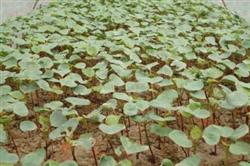
To grow strong cotton seedlings, the seedbed must be protected against five major threats
Common problems in cotton nutrient-cup seedbeds are mainly manifested as drought, waterlogging, disease, fertilizer burn, herbicide damage, and cold damage to seedlings, heat injury to seedlings, and spindly seedlings. The preventive measures are as follows: The moisture content of the cup soil should be moderate. The nutrient-cup seedbed should be located where both drainage and irrigation are convenient. The ideal moisture content of the cup soil is such that it forms a ball when squeezed by hand and breaks apart when dropped to the ground. ...
-
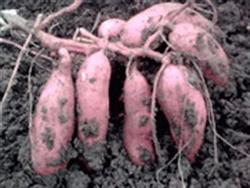
Five key measures for high-yield sweet potato cultivation
Select fine varieties with high-quality sweet potato slips. High-quality slips can not only improve the survival rate of transplanting and promote early tuber formation, but also significantly increase sweet potato yield. Generally, they can increase yield by more than 10% compared with weaker slips. When purchasing sweet potato slips, three aspects should generally be considered: appearance, height, and weight. High-quality sweet potato slips generally have large and thick leaves, dark green leaf color...
-
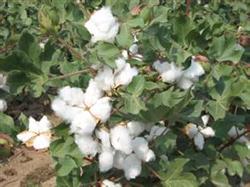
Detailed explanation of the high-density cotton cultivation model with five rows per film
Management of cotton during the boll-opening stage focuses on "four skillful practices" (skillfully managing fertilizer and water, skillfully pruning, skillfully picking rotten bolls, and skillfully promoting ripening). 1. Skillfully manage fertilizer and water to promote nutrient translocation. First, foliar topdressing. For cotton fields where leaves lose greenness too early and show fertilizer deficiency and premature aging, spray 50-60 kg per mu of 1%-2% urea solution on the leaves to extend leaf...
-
Five key steps for transplanting rapeseed on stubble fields
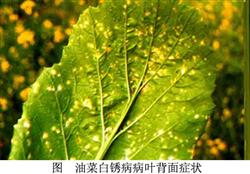
1. Symptom characteristics. Rapeseed white rust mainly infects leaves, stems, flower stalks and floral organs. The symptoms on leaves and stems are characterized by blister-like lesions. The blister surface is white or milky white, slightly raised, small (ranging from 1 to 3 mm), and numerous; after rupturing, it releases a white powdery substance (the sign of disease), eventually causing the leaves to turn yellow and drop early....
-
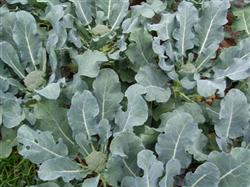
Five key techniques for open-field cultivation of broccoli in spring
When broccoli for export is grown in open fields in spring, its growth and development take place in a season of gradually rising temperatures and increasingly severe pests and diseases. In cultivation, as long as the five key points are handled well, high yields and high efficiency can be achieved, and the requirements of foreign buyers can also be met. 1. Sowing at the right time. For spring open-field broccoli, varieties with strong resistance, tolerance to high temperatures, and tight, uniform heads can be used, such as Hei Lu and Dongjing Lu...
-
Five key points for raising onion seedlings: master the technique to grow strong seedlings
1. Choose superior varieties. In production, purple-skinned varieties such as Ziyu No. 1, Ziyu No. 2, Zixing, and Shuanghuanhong can be selected. These varieties have the characteristics of strong pungency, high yield, excellent quality, and suitability for export. These varieties generally yield about 5000 kg per mu, and high-yielding plots can reach 7500 kg per mu. 2...
-
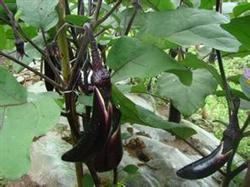
Five principles to follow when pruning leaves from eggplant
First, consider the variety when pruning leaves. For eggplant varieties with strong branching ability and lush foliage, more leaves can be pruned; for eggplant varieties with poor branching ability and sparse foliage, fewer leaves should be pruned or none at all. Second, consider plant vigor when pruning leaves. Plants with excessive density and lush growth can have more leaves pruned to keep the foliage sparse and even; plants grown at wider spacing with good ventilation and light penetration...
-
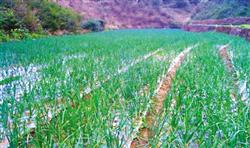
Five key steps for raising onion seedlings
Onions have the characteristics of low input, high yield, simple management and high returns, making them an ideal vegetable variety for vegetable growers to carry out commercial production and increase income. Early September is the best time for raising onion seedlings. The relevant key technical points for raising seedlings are introduced below. Seed selection: In production, purple-skinned varieties such as Ziyu No. 1, Ziyu...
-
Five key steps for raising onion seedlings in autumn
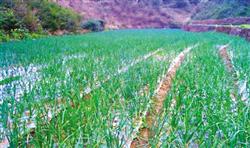
Onions have the characteristics of low input, high yield, simple management and high efficiency, making them an ideal vegetable variety for vegetable growers to carry out commercial production and increase income. Early September is the best time for raising onion seedlings. The relevant key technical points for seedling raising are introduced below. Seed selection: In production, purple-skinned varieties such as Ziyu No. 1, Ziyu...
-
High returns from using the five-change planting method for overwintering cucumbers
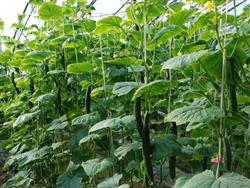
Change dense planting of seedlings to rational sparse planting. In winter, temperatures are low and light is weak, so crop photosynthesis is relatively poor, and only rational sparse planting can achieve high yields. If plants are too dense, they will also grow tall and spindly as they compete for light, and the fruit-setting rate will decline. Poor ventilation also makes them prone to infection by multiple diseases, and dense leaves make spraying difficult. Once the disease spreads, it is very hard to cure completely. Flat beds...
条件筛选