-
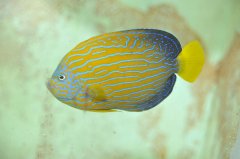
Breakthrough in Artificial Breeding of Blue-banded Angelfish Fry, Creating Value While Balancing Ecology
Brilliant colors and dazzling postures, with schools of fish swimming gracefully underwater, are extraordinarily therapeutic, and have also made the ornamental aquarium industry a star industry under trends such as the stay-at-home economy and physical and mental stress relief; according to the Food and Agriculture Organization of the United Nations (FAO)
-
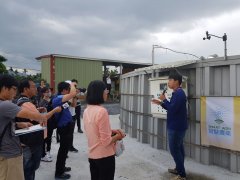
Fish fry farmers build a new model of smart aquaculture, inviting industry peers for demonstration and exchange
The Council of Agriculture of the Executive Yuan has entered its third year of promoting smart agriculture, and to date multiple industry-grounded highlights have gradually unfolded. On May 17, at Shengdiao Aquaculture Technology in Pingtung, the "Smart Aquaculture Fishery Industry Highlight Achievement Observation" was held, with the team from the Fisheries Research Institute joining hands with the excellent smart agriculture demonstration operator - Shengdiao Aquaculture Technology - to jointly unfold industry-grounded achievements, allowing more industry peers to step into the aquaculture site to exchange views on its planned and developed smart ecological aquaculture system, share the keys to maintaining good aquaculture water quality, and learn about a more efficient, energy-saving smart aquaculture model.
-

The mandarin fish farming cycle is divided into 3 stages: fry rearing, fingerling rearing and grow-out farming
Abstract The mandarin fish farming cycle is mainly divided into the fry rearing stage, the fingerling rearing stage and the grow-out farming stage. Fry rearing stage: artificial induced spawning and artificial incubation are carried out. Fingerling rearing stage: after the mandarin fish fry hatch out of the membrane, a sieve net should be used to screen out the egg membrane, dead eggs and other debris, and then
-
When is the right time to stock crayfish fry? An introduction to fry breeding methods
In our daily lives, shrimp is a fairly common and frequently eaten aquatic product, and it has many varieties. As everyone knows, shrimp has extremely high nutritional value, and eating it regularly can supplement the nutrients the human body needs; moreover, its flesh is tender and delicious, making it deeply loved by everyone. As
-
Crayfish Fry Breeding Techniques and Purchasing Channel Introduction
The crayfish's body shape closely resembles that of a shrimp, and its carapace is extremely hard. Moreover, the crayfish has very strong adaptability. Especially during its breeding period, it particularly likes to dig burrows. The crayfish is an omnivorous animal. It likes to eat the mud at the bottom of the water, or dead
-
How to Raise Tropical Fish Fry: How to Raise Fry So They Grow Faster
Fish keeping is a fairly common activity nowadays. Whether the fish are kept as ornamentals or for food, there are many techniques involved in raising them. If the methods are not used properly, many problems can arise, and in serious cases they can even lead to
-
What to do when a parrot fish lays eggs, and how many days until the fry hatch?
Many people keep ornamental fish at home, but there are so many varieties of ornamental fish that people are not particularly familiar with the fish they do not often see in daily life, and the parrot fish is one of these. Some people who keep parrot fish find that they have laid eggs and think they can hatch out
-
How to stock fry in cage culture of yellow catfish
I) Preparation before stocking fry 1. Preparation of cages of different specifications Cages of corresponding specifications should be prepared according to the size of the fry to be stocked. If the stocking size is 2 cm, second- or third-stage fry cages and second-stage grow-out cages should be prepared; for fry of 5 cm, second-stage fingerling and second-stage grow-out cages should be prepared
-
Practical Experience Sharing on Temporary Rearing of Yellow Catfish Fry
The temporary rearing and cultivation stage of yellow catfish fry refers to the brief process in which newly hatched larvae that cannot swim freely are cultivated with careful nursing methods into individuals that can swim and feed on their own. The temporary rearing and cultivation of fry is also called larval-stage temporary rearing. (1) Facility conditions The fry's
-
Key Technical Points for Fry Rearing in Yellow Catfish Aquaculture
Rearing yellow catfish fry (commonly known as "water flowers") with a body length of 1.5-1.2 cm to fry of 5-6 cm in size (known as "fire-flake fingerlings") takes about half a month. The rearing methods at this stage include pond rearing, flowing-water tank rearing and net-cage rearing. Compared with fingerling rearing
条件筛选