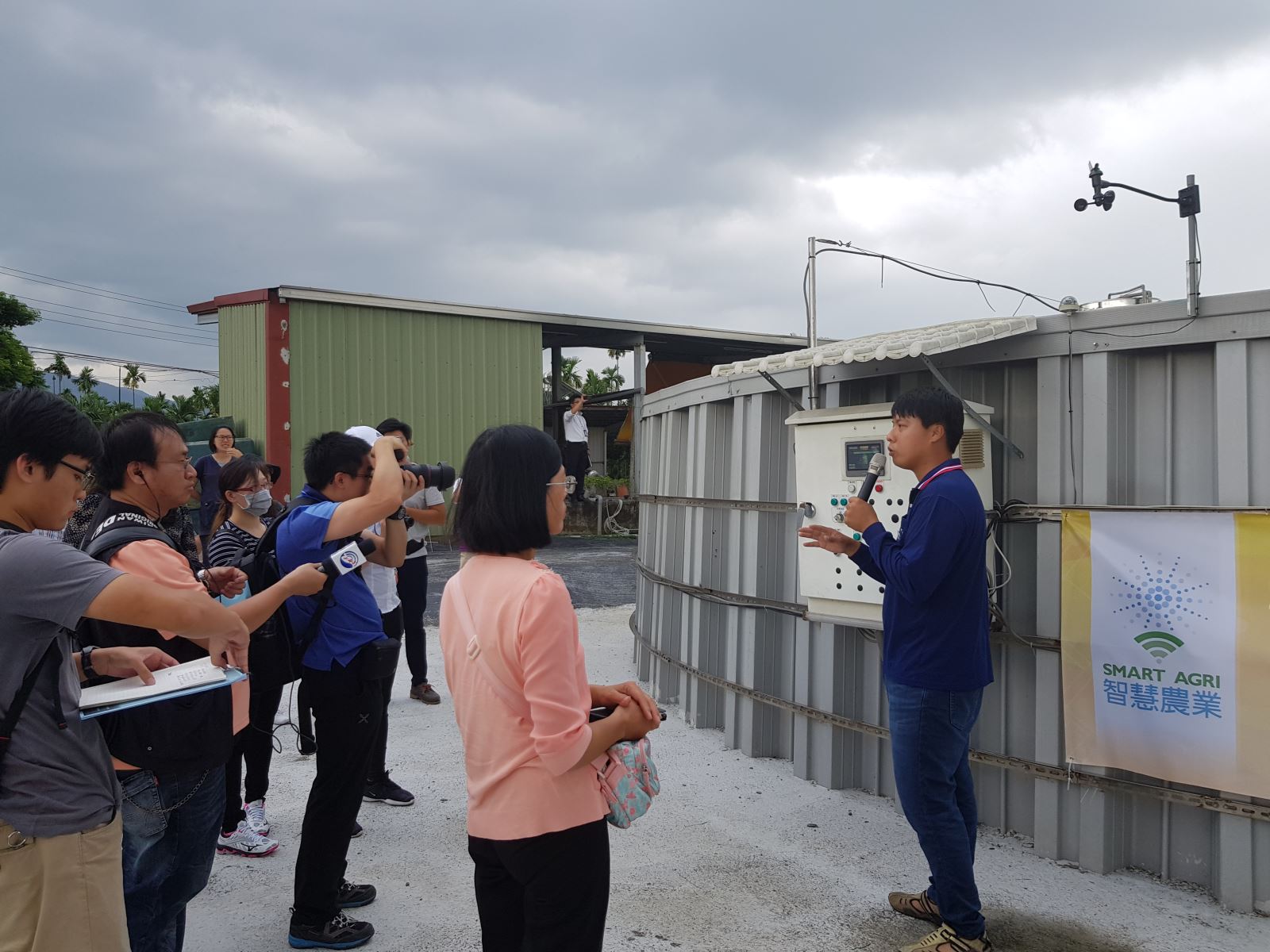
Fish fry farmers build a new model of smart aquaculture, inviting industry peers for demonstration and exchange
The Council of Agriculture of the Executive Yuan has entered its third year of promoting smart agriculture, and to date multiple industry-grounded highlights have gradually unfolded. On May 17, at Shengdiao Aquaculture Technology in Pingtung, the "Smart Aquaculture Fishery Industry Highlight Achievement Observation" was held, with the team from the Fisheries Research Institute joining hands with the excellent smart agriculture demonstration operator - Shengdiao Aquaculture Technology - to jointly unfold industry-grounded achievements, allowing more industry peers to step into the aquaculture site to exchange views on its planned and developed smart ecological aquaculture system, share the keys to maintaining good aquaculture water quality, and learn about a more efficient, energy-saving smart aquaculture model.
Smart aquaculture invested in improving industry issues
According to analysis of world fisheries and aquaculture, global aquaculture output is expected to grow to 100 million tonnes by 2025, accounting for nearly one-half of global fishery supply. However, most aquaculture development in our country is open-air aquaculture, making it highly vulnerable to external climate and environmental influences, and it likewise faces issues such as an aging industry workforce and labor shortages. Since 2017, the Council of Agriculture of the Executive Yuan has invested in a smart agriculture plan, thinking jointly with industry, academia, and research from the perspective of the industrial chain to find better solutions.
The Fisheries Research Institute stated that, through the problems actually discovered on more industry fronts, it introduces information and communications technology to develop smart aquaculture technology and labor-saving aquaculture machinery to solve the problems facing the industry, while integrating resources with high efficiency, and the government continues to provide industry technology matchmaking resources, gradually steering the industry from past reliance on experiential judgment toward scientific management. Through this highlight observation and exchange, the good, concrete, and more convenient practices of excellent operators will be made known to more fishermen, in order to promote the diffusion of industry R&D applications, and it is hoped that this can facilitate the promotion of a smart aquaculture alliance, leading more aspiring fishermen to invest in industry applications.
Excellent demonstration operator makes flexible use of new technology to create a new aquaculture model
Shengdiao Aquaculture Technology, upholding its past successful technology transfer from the Fisheries Research Institute for pure seawater-bred tilapia fry technology, began participating in the smart agriculture industry participation subsidy program in 2017, continuously investing in tilapia genetic selection and breeding technology, and using molecular marker technology for broodstock lineage identification, which is more conducive to breed management and tracking the aquaculture performance of offspring, in order to improve overall aquaculture efficiency. At this highlight observation, Huang Yisheng, the second-generation successor of Shengdiao, explained the smart aquaculture facility system invested in, using combinable detachable plastic-steel sheet piles to build HDPE ecological aquaculture ponds, which combine the advantages of soil protection, water retention, and reduced seepage, and can isolate soil heavy metal pollution sources. The aquaculture ponds also combine sensing technology to collect biological and environmental parameters, including: water temperature, dissolved oxygen, pH value, conductivity, atmospheric pressure, etc., for intelligent water quality monitoring, and are paired with a water level monitoring and warning system, using big data to replace past rules of thumb. In addition, the operator demonstrated on site its own patented movable aerator linkage equipment, which can increase the dissolved oxygen area of the aquaculture pond and stabilize water quality. Combined overall with the application of the smart aquaculture facility system, it can save 13% electricity, moving toward aquaculture management in a more scientific and precise manner.
The Fisheries Research Institute explained that it hopes that through this smart aquaculture fishery industry highlight observation, the experience of how operators can create new industry opportunities through industry-academia-research cooperation will be shared with more fishermen, and industry peers will be led on an on-site visit to understand how to apply technological resources for fish pond water quality monitoring and aquaculture pond renovation, sharing without reservation the efforts invested on the front line of the industrial chain, so that aquaculture fisheries can all smoothly transform and move toward future sustainable operation.