-
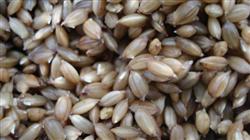
How can rice white-tip nematode disease be controlled effectively?
After the Beginning of Spring, some areas in the south begin preparing to raise rice seedlings, so Zhongdiwang has compiled the four key points of rice seedling raising, listed in detail below for netizens' reference. Key point one, treatment of rice seeds: to improve the germination rate of rice, the seeds should be sun-dried before sowing, then treated with Baike (25% prochloraz)...
-
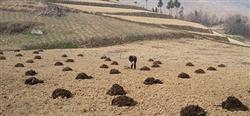
How can fertilization be done effectively during pumpkin cultivation?
How should pumpkin be fertilized for good results? What are the fertilizer requirements of pumpkin? We also ask experienced gardeners to help explain. Eating pumpkin can help eliminate carcinogens and prevent cancer, because pumpkin contains a large amount of zinc, which benefits skin and nail health, and the antioxidant beta-carotene has eye-protecting and heart-protecting effects...
-
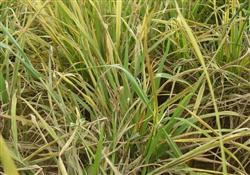
How can premature senescence be effectively prevented in rice cultivation?
What causes premature senescence in rice? How can premature senescence be prevented when growing rice? Is there any fellow gardener who knows about this and can help explain? Premature senescence in rice can lead to a major reduction in yield. Farming Network has compiled the causes of premature senescence in rice and the control methods, listed below for fellow gardeners' reference. Causes of premature senescence in rice: premature senescence...
-
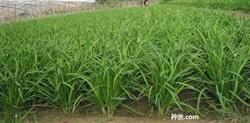
How can herbicides be used effectively in chive fields?
How should herbicides be used in chive fields? When is the best time to apply herbicides when growing chives? We invite experienced netizens to help explain. Chives are a perennial root vegetable with strong adaptability, cold and heat tolerance, and are cultivated everywhere across China. In many areas of the south they can be produced year-round, but weed control in chives is a common headache for growers...
-

How can hollow celery be effectively prevented and controlled?
What causes hollow celery? How is hollow celery prevented and controlled? We ask experienced readers to help explain. Hollow celery is mainly caused by the parenchyma tissue of the leaf stalk near the pith rupturing and shrinking, which enlarges the pith cavity and forms the hollow. Once hollow, celery has more fiber, poorer quality and lower yield, and its market...
-
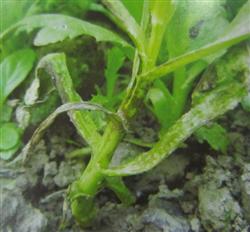
How to effectively prevent and control anthracnose in garland chrysanthemum cultivation?
What harm does garland chrysanthemum anthracnose cause? How do you prevent and control anthracnose when growing garland chrysanthemum? We also ask netizens to help share. Zhongdi Web has compiled the harm and control methods of garland chrysanthemum anthracnose, listed below for netizens' reference. Harm of garland chrysanthemum anthracnose: Anthracnose in garland chrysanthemum mainly harms the leaves and stems. When leaves are infected...
-
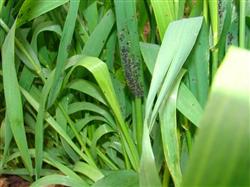
How to effectively control aphids in sorghum cultivation?
What is the best way to control sorghum aphids? Please provide an introduction to effective control methods. Sorghum aphids are a major pest on sorghum, mostly pale yellow in body color, with a few purplish red; they gather on the undersides of leaves to cause damage, gradually spreading from the lower leaves to the middle and upper leaves, sucking sap and seriously harming the growth and development of sorghum....
-
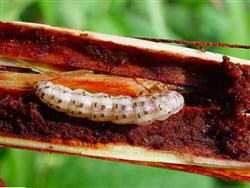
How can sorghum stem borers be controlled effectively?
How can sorghum stem borers be controlled well? Please provide guidance on methods to control sorghum stem borers. They are the main pests damaging sorghum and corn. Sorghum stem borers overwinter as mature larvae inside sorghum and corn stalks, and a few also overwinter in corn cobs. Adults are phototactic; in spring they mostly lay eggs during the whorl stage, while in summer they lay eggs during the corn tasseling...
-
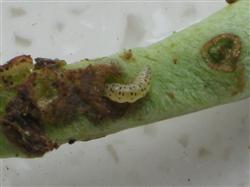
How to effectively control pod borers in bean cultivation
How to control pod borers during bean cultivation? Please explain the control methods. The adult pod borer lays eggs on the tender leaves of the plant, and after 5-7 days, the hatched larvae bore into the pods and feed on the beans. Once larvae older than the 3rd instar have bored into the pods, spraying pesticides can hardly kill them. Therefore, to control this pest, fertilizer and water management should be strengthened...
-
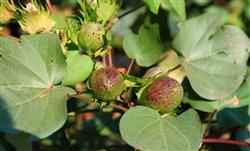
How to fertilize cotton effectively in the mid-to-late stage?
How to fertilize cotton well in the mid-to-late stage? Please introduce. In the mid-to-late stage of cotton, you can refer to the following fertilization methods: 1. Increasing the application of cotton boll fertilizer is of great significance. Every year from August to September is the season when cotton sets a large number of bolls. In order to set more bolls and large bolls, and to achieve full bolls on the lower and middle branches and bolls covering the top, it is necessary to seize the opportunity to apply sufficient cotton boll fertilizer. First...
条件筛选