-
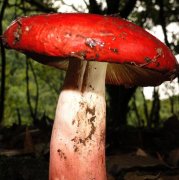
What are the effects and functions of Wuyishan, Nanping and Yunnan red mushrooms?
Red mushrooms cannot be cultivated artificially, so there are no artificially grown red mushrooms. Judging from the places they pass through, the areas that produce more red mushrooms are the Nanping area of Fujian, as well as the central and southern parts of Yunnan. There are slight differences between the two places. Fujian has four distinct seasons, and red mushrooms begin to appear before spring and summer, while Yunnan is divided into a rainy season and a dry season, and once the rainy season begins, mushrooms are produced. Mountain villagers generally take them to small markets to sell, at about 200 per kilogram (Yunnan uses kilograms), and when dried they become about 400-600. This thing still needs to be bought from mountain villagers you know well. Many bought online are the ones others have picked over, and the quality is a bit poor.<br /> <img alt="red mushroom" src="/uploads/allimg/190730/1-1ZI0163Q4946.jpg" style="height: 501px; width: 500px;" /><br /> <br /> Wuyishan is a world natural and cultural heritage site, with a pleasant climate, fertile soil, and sweet water quality. It is the place with the best-preserved biodiversity in the world, rich in all kinds of wild mushrooms, and one of the best edible mushroom producing areas in the world. <div> Red mushrooms are a rare mountain delicacy and a natural nutritious fine product, and have the reputation of “king of mushrooms”. They selectively grow in primitive hardwood broad-leaved forests in special places, are collected purely wild, and the yield is extremely low, so “things are precious when they are rare”, and their nutritional value and dietary therapy value are especially high. Nutritional value: pure natural wild red mushrooms contain rich vitamin B, D, E, and also contain niacin, which is rare in other foods, as well as trace elements such as iron, zinc, selenium, and manganese. Red mushrooms are known for being mellow and delicious, fresh and refreshing, and for their clear red soup color.</div> <div> </div> <div> Recommended ways to eat: 1. For “postpartum confinement” use: 1 liang of camellia oil, 2 liang of minced old ginger, 2 local eggs, stir-fry over high heat for a few minutes, add 1 liang of brown sugar, 2 liang of dried red mushrooms, and stew in soup with 1 silkie chicken (or 0 chicken from the countryside) and eat. 2. For tonifying deficiency and kidney deficiency with waist pain: 5 local eggs, 4 liang of dried red mushrooms, 2 liang of longan, 1 liang of brown sugar, cook in soup and eat. 3. For removing water: cook 2 liang of dried red mushrooms with other foods and eat, without adding salt.</div> <div> </div> <div> Because the yield of red mushrooms is scarce, all major supermarkets sell only small amounts.</div>
-

How to effectively prevent diseases during mushroom cultivation?
How do you prevent diseases in mushroom cultivation? What methods are there to prevent mushrooms from getting diseased? We ask knowledgeable netizens to help introduce this. Zhongdiwang has compiled seven methods for disease prevention in mushroom cultivation, listed in detail below for netizens' reference. Method one: choose excellent virus-free spawn: you should choose excellent vi...
-
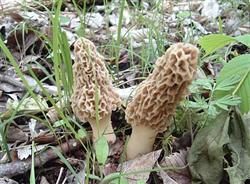
What are the morel cultivation techniques and its effects and functions?
What are the effects of morel? Please give a detailed introduction. Morel is a rare wild mushroom. Because its cap surface is uneven and shaped like a sheep's stomach, it is called morel. Morel is a rare edible and medicinal fungus of the genus Morchella in the family Morchellaceae, and it was already recorded in Li Shizhen's "Compendium of Materia Medica". Morel...
-
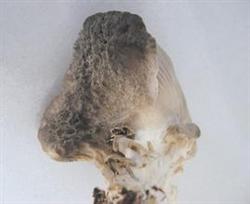
How to effectively prevent deformed mushrooms in winter oyster mushroom cultivation
In winter, temperatures are low and there are few contaminating microorganisms in the air, making it a good season for cultivating oyster mushrooms. However, the following types of deformed mushrooms easily appear during cultivation: thick-stipe mushrooms. After primordium formation, the differentiation and development speed of the cap is abnormal, manifesting as a small cap, a long stipe, and a thick, hard stipe, with relatively low commercial value. The main cause is the use of...
-
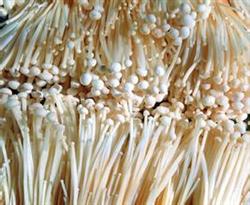
"Five Measures" for Effectively Controlling Black Head Disease in Enoki Mushrooms
Black head disease, also known as bacterial brown blotch disease, is caused by a Pseudomonas bacterium belonging to the phylum Schizomycophyta and the class Schizomycetes. The pathogen is rod-shaped, forms white colonies, and shows a negative reaction to Gram staining. 1. Conditions for occurrence: The internal cause of this disease is the variety's lack of disease resistance, while the external causes are high temperature, high humidity, or spraying unclean...
-
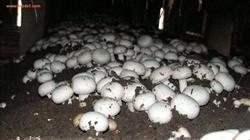
How to Control the Size of White Button Mushrooms? Detailed Explanation of Effective Measures
In recent years, the market's requirements for the quality of white button mushrooms have been continuously rising. Large mushrooms are no longer popular, and some mushroom growers, unable to keep up with market demand for commercial mushrooms of a certain specification, end up with increased production but no increased income. The following measures can be adopted to control their specifications. Replacing the strain The currently widely used strain "2796" is a large-particle type...
-
Secondary bagging of edible fungi can effectively prevent infection
In the production of shiitake mushrooms (Lentinula edodes), lion's mane mushrooms (Hericium erinaceus), wood ear mushrooms (Auricularia heimuer) and others, the secondary bagging technique is applied (that is, when the mushroom logs come out of the sterilization chamber, an extra layer of thin film bag is put on, so that the mushroom logs inside the bag do not come into direct contact with the ambient air), which effectively solves the problem of cross-infection during the log production process and keeps the strain survival rate above 97%. The technique is described below: 1. Preparation of the outer bag The outer bag should preferably be a low-density polyethylene film bag with a circumference 2 cm larger than the inner bag, a length 5 cm longer than the inner bag, and a thickness of 0.2 silk, with one end tied and sealed for later use.
-
How to treat mushroom flies? These effective control tips really work
Black fungus gnats, eye fungus gnats and other Diptera insects are collectively called "mushroom flies". The damage caused by mushroom flies can reduce shiitake mushroom yields by about 30%. Therefore, effective control of "mushroom flies" can increase shiitake cultivation yields by about 30%. 1. Living habits and outbreak patterns of mushroom flies. Mushroom flies like to reproduce in damp, dirty environments, and fungal mycelium is one of the best food sources for these insects. Their main mode of damage is biting and eating the mycelium, disrupting normal mycelium growth, causing the mycelium to weaken or die, while also creating conditions for contamination by foreign microorganisms, allowing some competitive foreign microorganisms to grow on the mushroom fly
-
How to prevent and control contaminants in oyster mushroom cultivation? Covering with burnt mud ash is effective
Bed-style cultivation of oyster mushrooms: When bed-style cultivating oyster mushrooms, if contaminants appear sporadically on the surface of the substrate, they can be eliminated by smearing or covering the affected spots with thick quicklime slurry; if contaminants appear in large amounts on the substrate surface, cover the contaminated part with 2-3 cm thick burnt mud ash, making the covered area larger than the contaminated area, and pat it slightly firm to eliminate the contaminants; if contaminant contamination on the substrate surface is severe, cover the entire substrate surface with burnt mud ash and pat it firm, and after a few days the mycelium will resume normal growth. Bag-cultivated oyster mushrooms: first pick out the bags contaminated by unwanted organisms, then in a place with relatively high
-
What is the effect of adding plant ash to oyster mushroom substrate
When cultivating oyster mushrooms on raw substrate, adding an appropriate amount of plant ash to the substrate has certain benefits for the growth of oyster mushrooms. Because plant ash is alkaline, it has a disinfecting and sterilizing function and can inhibit the growth of various contaminating microorganisms. At the same time, plant ash contains various trace elements such as calcium, magnesium, iron and phosphorus, which can increase the nutrient content of the substrate. In addition, plant ash has the effect of absorbing heat and raising temperature, which can create a good growing environment for mycelial growth. The method of adding plant ash to the substrate is simple: just add 3%-4% after the substrate has fully absorbed water.
条件筛选