-
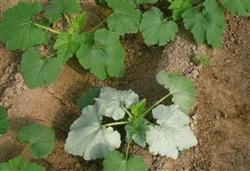
What are the control methods for silverleaf disease in zucchini?
How do you control silverleaf disease in zucchini? What does silverleaf disease look like? Affected zucchini plants show weak growth, a shorter plant type, drooping leaves, wrinkled leaves at the growing point, and a semi-dormant state, with shortened internodes on the upper stem; the stems, young leaves, and petioles of functional leaves become chlorotic, leaf chlorophyll content decreases, and leaves initially appe...
-
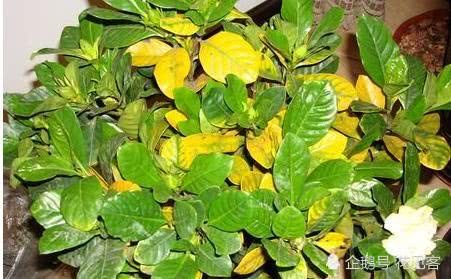
3 diseases that Gardenia jasminoides frequently suffers from - one slip and only the pot is left, prevent and treat them in advance
Gardenia jasminoides is a flower loved by many gardening enthusiasts, evergreen all year round; when it blooms, the flowers are pure white, fragrant and elegantly plain, forming an alternation of green and white with the green leaves, exceptionally clear and lovely. Although Gardenia jasminoides is beautiful, it also often falls ill, especially these 3 diseases that occur frequently...
-
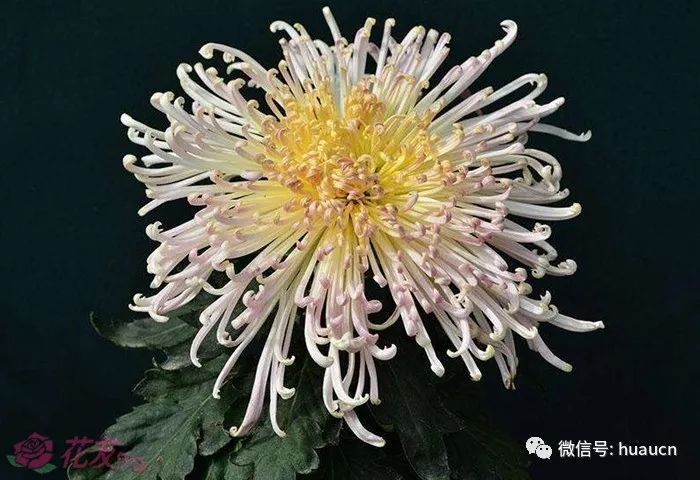
Chrysanthemums, jasmine, and Chinese roses easily attract three kinds of pests: flower pest and disease prevention and control methods
Many people like to grow some flowers and plants indoors, which both greets the environment and cultivates their interests. But flowers and plants are not only somewhat delicate to grow, they are also very easily "favored" by small insects, which is annoying and also quite frustrating. Let me introduce to flower lovers several kinds of flower...
-
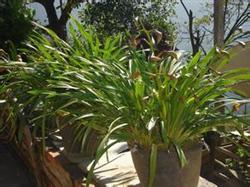
How to care for orchids in summer? Please save this care guide
Summer is the high-temperature season of the year, often bringing muggy weather around 35°C. The climate is unpredictable. The high-temperature season is a troublesome time for potted orchids, and the slightest negligence in daily management can cause unexpected harm, so orchid growers must respond with caution. First, strengthen ventilation to prevent heatstroke and cool down, high temperature...
-
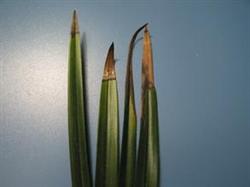
Simple and Effective Home Remedies for Eco-Friendly Control of Orchid Pests and Diseases
In orchid cultivation, some physiological diseases often occur, and timely prevention and control should be noted. 1. Sunscald: also known as sunburn, mainly caused by scorching from intense direct sunlight in midsummer. It can be prevented by using a shade net to ensure no direct sunlight enters. 2. Weak plants: caused by insufficient light, affected orchid plants grow leggy stems and leaves...
-
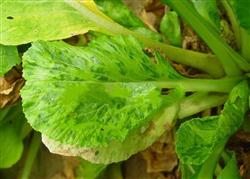
What are the control methods for rapeseed viral disease?
How to control rapeseed viral disease? Please advise. Rapeseed viral disease symptoms occur in all rapeseed production areas nationwide, with especially severe incidence in the winter rapeseed areas of North China, Southwest China, and Central China. The symptoms of this disease vary slightly depending on the type of rapeseed. Brassica rapa and Brassica juncea mainly develop chlorosis along both sides of the leaf veins, with leaves showing a yellow-green mosaic pattern, and the veins appearing translucent; in severe cases, the leaves shrink, curl, or become deformed, and diseased plants are markedly stunted, mostly dying before or at the bolting stage. Plants with mild infection and late onset may still bolt, but the flowering stems are curved or stunted, flowers and pods are densely packed, pods are shrunken and thin, and maturity is advanced. Brassica napus, by contrast, develops systemic necrotic spots, with symptoms appearing early and conspicuously on old leaves, then spreading to newly emerged leaves. At the initial stage of infection, needle-tip-sized transparent spots appear, which later expand into nearly round 2-4 mm yellow spots with dark brown necrotic centers, and the necrotic spots are surrounded by an oil-soaked appearance. On the stems and bolts, purplish-black spindle-shaped to elongated lesions appear, spreading from the middle-lower part toward the branches and fruit stalks; in the later stage, the stem lesions mostly split longitudinally or transversely, and the flowers and pods tend to wilt or die. The pods develop black necrotic spots and are mostly deformed.
-
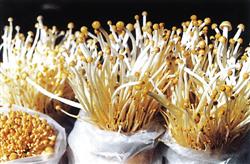
What chemicals should be used to control leaf spot disease in enoki mushrooms (Flammulina filiformis)?
The disease is caused by Pseudomonas bacteria, mainly infecting the caps of enoki mushrooms. It starts as pinhead-sized spots, then expands to the size of sesame seeds. Although the edges are irregular, the lesions can merge with each other to form irregular large rust-colored spots. Control methods: To prevent the occurrence of rust spot disease, do not spray water directly onto the fruiting bodies when watering the mushroom house. After watering...
-
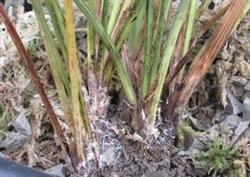
How to prevent and control orchid sclerotium disease (southern blight)
[Symptoms] The disease starts near the soil line of the orchid plant, initially appearing as water-soaked wet rot, then turning brown to dark brown rot, spreading to the middle and upper parts of the leaves, which also turn brown or grayish-brown and necrotic; in severe cases, the entire plant's leaves wither and die. Once one orchid clump is infected, all the tiller plants in the same pot are affected. When examining the necrotic surface of diseased plants and the soil surface, white...
-
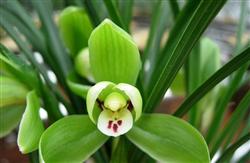
A Detailed Guide to the Prevention and Treatment of Common Orchid Diseases
1. Phytophthora disease Symptoms: It occurs all year round, but is most severe during the plum rain season, when watering is too wet or ventilation is poor, and seedlings that have just come out of the flask are especially vulnerable. Brown spots form at the infected site, and under high temperature and high humidity they rapidly expand, eventually becoming dark brown patches, with leaves dropping and stems rotting until the plant dies. Prevention and treatment methods: ...
-
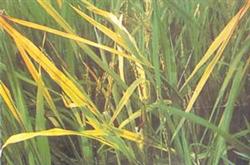
Detailed Guide to Identifying Rice Yellow Leaf Disease Symptoms
How do you identify rice yellow leaf disease? Please note that rice yellow leaf disease can be identified by the following methods: 1 Bacterial leaf blight yellowing. It spreads from bottom to top, and diseased leaves turn yellow to blighted white. After infection, dark green spots first appear at the leaf tip or leaf margin, then become yellow elongated lesions. The boundary between diseased and healthy tissue is distinct, like a wave pattern...
条件筛选