How to prevent and control orchid sclerotium disease (southern blight)
[Symptoms] The disease starts near the soil line of the orchid plant, initially appearing as water-soaked wet rot, then turning brown to dark brown rot, spreading to the middle and upper parts of the leaves, which also turn brown or grayish-brown and necrotic; in severe cases, the entire plant's leaves wither and die. Once one orchid clump is infected, all the tiller plants in the same pot are affected. When examining the necrotic surface of diseased plants and the soil surface, white...
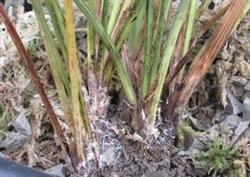
[Symptoms] The disease starts near the soil line of the orchid plant, initially appearing as water-soaked wet rot, then turning brown to dark brown rot, spreading to the middle and upper parts of the leaves, which also turn brown or grayish-brown and necrotic; in severe cases, the entire plant's leaves wither and die. Once one orchid clump is infected, all the tiller plants in the same pot are affected. When examining the necrotic surface of diseased plants and the soil surface, white silky thread-like structures (mycelium) or sclerotia may sometimes be seen.
[Pathogen and disease characteristics] The pathogen is the southern blight fungus of the genus Sclerotium in the Deuteromycotina [Sclerotium rolfsii Sace.], whose sexual stage belongs to the genus Athelia in the Basidiomycotina [Athelia rolfsii = Corticium rolfsii = Pellicularia rolfsii]. The pathogen overwinters in the soil or compost as sclerotia; the following year, mycelium germinates and spreads through the soil, invading and damaging the base of orchid leaves. The sclerotia have strong resistance to adverse environments and can survive in the soil for several years, spreading via running water, irrigation water, rain splash, and fertilizer application. Ecological conditions of acidic soil, high temperature, and high humidity favor disease development.
[Control methods] 1. Replace the potting soil. For precious varieties, pots can be disinfected in a pressure cooker for more than 2 hours, or try mixing 82 Trichoderma biological preparation into the soil (15-20 grams per pot), or try drenching the potting soil with a 1000-fold dilution of 30% hymexazol aqueous solution before planting. 2. For initially diseased plants, try spraying or drenching with a 200-fold dilution of jinggangmycin, or a 300-fold dilution of Tian'an aqueous solution, or a 400-fold dilution of Duojing suspension concentrate.