Simple and Effective Home Remedies for Eco-Friendly Control of Orchid Pests and Diseases
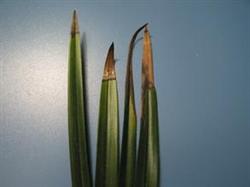
In orchid cultivation, some physiological diseases often occur, and timely prevention and control should be noted. 1. Sunscald: also known as sunburn, mainly caused by scorching from intense direct sunlight in midsummer. It can be prevented by using a shade net to ensure no direct sunlight enters. 2. Weak plants: caused by insufficient light, affected orchid plants grow leggy stems and leaves...
 For orchid pests and diseases, modern times mostly use chemical pesticides for control. Excessive use of pesticides makes orchids prone to pesticide damage. Long-term single use of chemical pesticides or frequent application will cause pests and pathogens to develop resistance and fail to achieve control effects. Spraying pesticides also pollutes the environment, and in severe cases can cause poisoning in humans and livestock. Eco-friendly control of orchid pests and diseases has existed since ancient times and is also commonly seen in modern times. Eco-friendly control of orchid pests and diseases has many advantages: it is effective, low-cost, easy to source materials for, simple to apply, non-polluting, and free of side effects, and is worth promoting. Below are some folk remedies passed down for eco-friendly control of orchid pests and diseases. "Small" remedies can often perhaps solve "big" problems, so orchid enthusiasts may as well give them a try.
I. Tea seed cake
Tea seed cake, also called tea bran or tea seed meal, is the residue left after oil is pressed from tea seeds, often used by farmers for washing clothes. Tea seed cake contains saponin and glycosides, and its water extract is alkaline, with good stomach-poison and contact-killing effects on pests. Control methods: 1. Soak crushed powdered tea seed cake and boiling water at a 1:5 ratio for a day and night, use it to drench orchid pots, and also drench the area where orchid pots are placed and other orchid pots; it has a good control effect on snails. 2. Spray tea seed cake water on orchid plants; it has a very good control effect on aphids and red spider mites, reaching over 90%. 3. Tea seed cake water can also kill earthworms. Drench the pot soil thoroughly with tea seed cake water, and after a short while, earthworms will emerge from the soil surface; pick them out and remove them. Opinions differ in orchid circles on whether earthworms are beneficial or harmful to orchids. One view holds that earthworms in the pot damage some orchid mycelium and injure the root tips of orchid roots during their activity, and are pests that must be removed. Another view holds that earthworms in orchid pots can eat many decaying substances and rotten orchid roots, that their activity helps loosen the soil, and that their droppings can serve as fertilizer for orchids, so their benefits outweigh the harm and they need not be killed. Which is right and which is wrong remains for orchid enthusiasts to weigh the pros and cons and judge based on their own practical observations.
II. Strong-smelling vegetables (scallions, garlic, chives, ginger, onions, etc.)
Strong-smelling vegetables each have their own distinctive odor, and their smell can play a role in killing insects and sterilizing. Control methods: 1. Take 25 grams of garlic, crush it and squeeze out the juice, dilute it in 10 liters of water, and immediately spray orchid plants; it can treat aphids, red spider mites, scale insects, and gray mold. Press peeled garlic into small pieces, place them at equal distances on the surface soil of orchid pots, and after a few days earthworms and ants will disappear. 2. Soak chopped scallions and water at a 1:30 ratio for a day and night, then filter, use it to spray orchid plants, spraying several times a day for several consecutive days; it has good effects on controlling aphids, soft-bodied pests, and powdery mildew. 3. Use 1 jin of ginger, add half a jin of water, mash and extract the juice, add 6 jin of water per jin of juice, and spray orchid plants; it can control aphids. 4. Mix chive juice and clean water at a 1:60 ratio, use it to spray orchid plants, spray twice daily, repeating for several days; it can cure black spot disease. 5. Take 15 grams of chopped onion bulbs, place them in 2 jin of water, seal and soak for 7 hours, then filter, and spray the filtrate on orchid plants; it can treat red spider mites and aphids.
III. Cigarette butts
Tobacco leaves contain about 3% nicotine. Nicotine has a strong contact-killing and stomach-poison effect on pests. Take about 20 smoked cigarette butts and one portion of quicklime, add water, stir, soak, and filter, then add 30 portions of water, and use it to spray orchid plants, pot soil, and the bottom of pots; it can eliminate ants and other pests without a waxy coating on their bodies.
IV. Laundry detergent
Laundry detergent can dissolve the waxy coating of scale insects and at the same time form a layer of foam wrapping around the insect body, suffocating the scale insects to death. Laundry detergent solution can control some pests and diseases. Control methods: 1. Dissolve laundry detergent in a small amount of warm water, then dilute with water to a 1000-fold solution, and spray orchid plants; it can kill aphids, whiteflies, and red spider mites. Dilute to a 600-fold solution, spray once every three days, continuing for three sprays, and all scale insects will die. 2. Mix pig bile and clean water at a 1:100 ratio, add a small amount of laundry detergent, and use it to spray orchid plants; it can control anthracnose and soft rot. After spraying orchid plants with laundry detergent solution, once the pests are dead, the leaves must be rinsed several times with clean water so that the orchid plants can grow normally.
V. Baijiu (white liquor)
Mix baijiu and water at a 1:2 ratio, spray orchid plants once a week, continuing for three sprays; it can kill scale insects.
VI. Orange peel
Placing orange peel at the bottom of the pot can prevent ants and other pests from entering the pot soil to harm orchids. Orange peel can also be cut into small pieces and scattered on the surface of the pot soil, without watering for a few days; it can treat aphids, scale insects, and so on.
VII. Brown sugar
Mix powdered brown sugar and boiling water at a 1:100 ratio, and after it cools, use the brown sugar liquid to spray orchid plants once every 3 days, continuing for three times; it has a good effect on controlling downy mildew, powdery mildew, black spot disease, and leaf blight.
VIII. Diesel
Prepare diesel and water at a 1:60 ratio into an emulsion, then dilute it with 100 times water and spray orchid plants; it can treat scale insects and so on.
IX. Plant ash
Soak plant ash and water at a 1:50 ratio for two days and nights, then filter, and use the filtrate to spray orchid plants; it can both treat aphids and increase potassium fertilizer.
X. Vinegar
Mix vinegar and clean water at a 1:8 ratio, and use it to evenly spray the front and back of orchid leaves; it can treat scale insects. If the scale insects have already become adults, the acidity of the mixed liquid can be slightly increased, spraying once every three days, continuing for three times, and it will kill the adult scale insects. Spraying vinegar liquid on leaves can also eliminate black spot disease, powdery mildew, leaf spot disease, yellowing disease, and so on. Industrial acid vinegar must not be used.