-
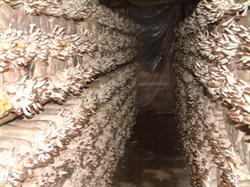
Fertilizer and Water Management Methods During the Fruiting Period of Enoki Mushroom Cultivation
How should fertilizer and water be managed during the fruiting period of enoki mushrooms? Please advise. Because during the fruiting period of enoki mushrooms it is not advisable to spray water directly onto the fruiting bodies and into the substrate, generally after harvesting 2 flushes of mushrooms the substrate becomes severely short of water, making it very difficult to fruit again. By changing the conventional management methods and timely strengthening fertilizer and water management during the fruiting period of enoki mushrooms, 3 to 5 flushes of mushrooms can be produced...
-
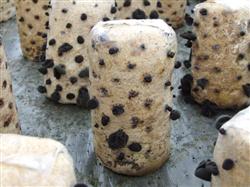
What are the key management points during the fruiting body stage of wood ear mushroom (Auricularia polytricha)?
What should be paid attention to during the fruiting body stage of wood ear mushroom (Auricularia polytricha)? Please give guidance. The fruiting body stage of wood ear mushroom occurs from May to October each year. To produce high-quality, high-yield wood ear mushroom, scientific management methods are very important. The key techniques for managing the fruiting body stage of wood ear mushroom are introduced below: 1. Temperature control. The temperature range for ear growth is...
-
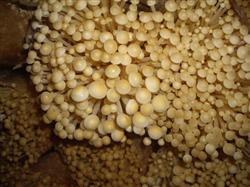
Five methods of water management during the fruiting period of enoki mushroom
Enoki mushroom (Flammulina velutipes) is both a delicious food and a fairly good health food, and its domestic and international markets are increasingly broad. However, enoki mushroom cultivation and management have relatively high requirements, especially the water requirements for fruiting body development. China Agricultural Technology Network now introduces water management methods for reference. Moisture retention to promote pinning. When the mycelium reaches the bottom of the bag...
-
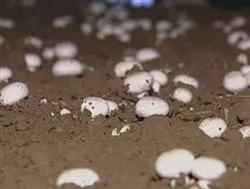
What are the key technical points for managing Agaricus bisporus during the fruiting period?
I. Watering to press down the mycelium should be done at the right time. When mycelium emerges on the bed surface, it indicates that the mycelium has grown to the bottom of the compost and has fully developed within the casing layer, and has already gained the ability to form mushrooms. At this point, water should be sprayed at the right time to press down the mycelium. Method: increase ventilation so that strong wind blows into the mushroom shed and causes the mycelium on the soil surface to lie flat; determine the amount of water sprayed according to the mycelial growth in the casing layer, generally every...
-
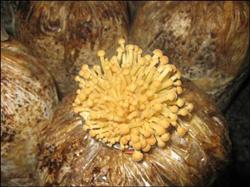
The five-character formula for water management during the fruiting period of bag-cultivated enoki mushrooms (Flammulina filiformis)
Enoki mushroom cultivation and management have high requirements, especially since fruiting body development is very sensitive to water requirements; water management during this period is the key to achieving high yield and quality. The "five-character" formula water management method is introduced here for reference. First, maintain. After the mycelium reaches the bottom of the bag, immediately open the bag and scratch the mycelium, rake away the old mycelial skin, and cover with wet newspaper or plastic film to maintain moisture and promote pinning. For those covered with newspaper, spray water in small amounts and frequently (3-4 times per day) to keep the newspaper moist; for those covered with plastic film, spray water onto the floor and into the air to maintain air humidity at around 90%. During this period, open windows for ventilation once a day, keep the room temperature at 10-14°C, and after 5-7 days mushroom pins will emerge in large numbers.
-
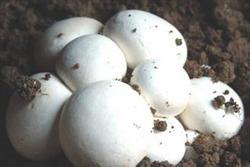
How to prevent and control physiological diseases of button mushrooms during the fruiting period
In button mushroom production, from casing soil onward until fruiting, in addition to routine management, correctly mastering and applying the following four key points on watering plays an important role in ensuring the amount and vitality of mycelium, ensuring the number and uniformity of pinheads, and ensuring the healthy growth of fruiting bodies and their commercial quality. 1. The "mycelium-pressing water" should be...
-

Key points to note during the fruiting period of shiitake mushrooms: regulation of temperature and humidity differences
Increase the day-night temperature difference. In late autumn and early winter, daytime temperatures are high and nighttime temperatures are low. Cover with a layer of film during the day so that the temperature inside the mushroom bed is 2°C-3°C higher than outside the film, then open the film after 10 p.m. so the temperature drops rapidly. After several consecutive days, a large number of primordia will emerge on the surface of the mushroom logs and develop into mushroom buds. Control the humidity of the mushroom yard. After color change, initially maintain the relative humidity of the mushroom bed at about 85%. As large numbers of mushroom buds differentiate into caps and stipes, lower the air humidity to about 80%. Create a suitable dry-wet difference. In the early stage of autumn mushrooms, the internal water content of the mushroom logs is relatively sufficient and can safely
-
Management Methods and Technical Key Points for Shiitake Mushrooms During the Fruiting Period
After the shiitake mushroom logs change color, the mycelium is fully mature and has accumulated rich nutrients. Under the stimulation of certain conditions, it rapidly transitions from vegetative growth to reproductive growth, initiating the differentiation and development of fruiting body primordia, which marks the beginning of the fruiting period. I. Promoting bud formation: Shiitake mushrooms are a type of fungus that fruits under variable temperatures. A certain temperature difference, scattered light, and fresh air are beneficial to the differentiation of fruiting body primordia. During this period, the covering film on the beds is generally removed, and the temperature in the fruiting greenhouse should preferably be controlled at 10-22°C, with a day-night temperature difference of 5-10°C.
-
Fertilization Methods and Cultivation Techniques for Edible Fungi During the Fruiting Period
Fertilization Methods for Edible Fungi During Fruiting
-
How to apply fertilizer during the fruiting period of edible fungi? These techniques should be mastered
Fertilizing techniques for edible fungi during fruiting
条件筛选