-
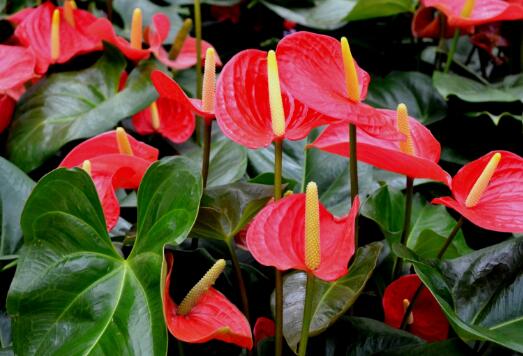
Anthurium growing methods and precautions: Is it toxic? Causes of yellowing leaves with scorched edges and drying
Anthurium, also known as flamingo flower and painter's palette, is deeply loved by everyone because of its broad green leaves, spadix shaped like a Buddhist flame, and petals red as fire, full of auspicious and festive meaning. So how do you grow anthurium? Now let's introduce the growing methods and precautions for anthurium: Anthurium is a perennial evergreen herbaceous plant of the Araceae family
-
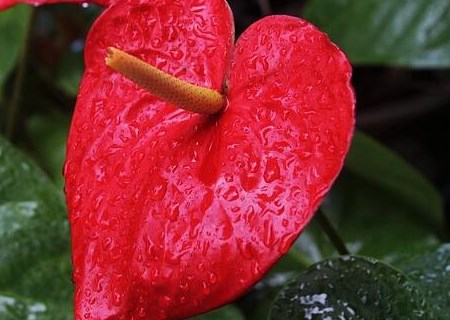
Anthurium seed planting and watering methods, causes of yellowing and drying leaves, and prices
Anthurium, also known as flamingo lily, is a perennial evergreen herbaceous plant of the Araceae family. It prefers warm, humid, semi-shaded environments and dislikes direct sunlight. Anthurium has unique and beautiful flowers with a long blooming period, making it suitable for pot cultivation. So do you know what the seed planting methods for anthurium are? How to water it? What to do when leaves turn yellow and dry up? How much does a pot cost?
-

Reasons for Yellowing and Drying Orchid Leaves and How to Fix Them
What to Do When Orchid Leaves Turn Yellow and What Causes the Leaves to Dry Up
-

Reasons for Camellia Leaves Turning Yellow, Withering and Drying Up, and How to Fix Them
There are many reasons for camellia leaves turning yellow, including care and management factors as well as physiological factors. In summer, yellowing or whitening of the leaves occurs because the soil is lacking phosphorus, iron, sulfur or other nutrient elements; the potting soil can be replaced and the plant grown in mountain soil rich in humus. From April to September
-
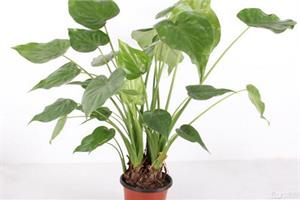
Why are the leaves of the elephant's ear (Alocasia macrorrhizos) drying up? Scientific cultivation can prevent withering
Reasons for the drying of elephant's ear leaves: only scientific cultivation keeps the leaves from withering
-
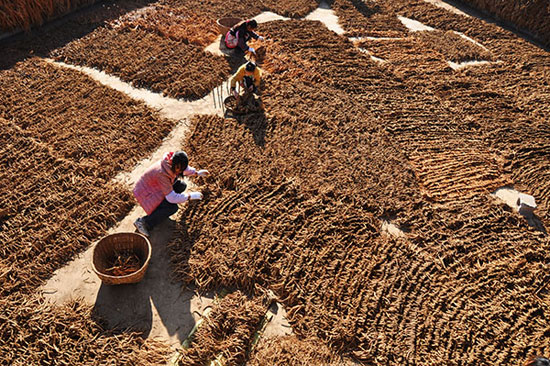
Busy drying Codonopsis pilosula in Weining, Guizhou: a bumper harvest of medicinal herbs helps farmers increase income
Drying Codonopsis pilosula in Weining, Guizhou: a bumper harvest of medicinal herbs brings wealth
-
Corn Drying on Roads: The Root Cause Is the Lack of Public Drying Grounds
Corn "Seizing" the Road Stems from the Lack of Public Drying Grounds
-
Detailed Explanation of Carambola Drying Processing Methods and Production Flow
The raw material for processing dried carambola is sour carambola, which is processed as a semi-finished product because it remains very sour after drying and needs further processing into other foods. The processing techniques are as follows: 1. Raw material preparation: Peel off the angular edges of fresh carambola, cut lengthwise into two halves, or cut crosswise into five-pointed star slices. 2. Pretreatment: Because the peel portion of the fruit is rich in tannins, during the drying process the tannin substances will oxidize and discolor, causing the product to turn brown or even black. In order to achieve good color, the raw material needs sulfur treatment, and there are two methods
-
A Detailed Guide to Drying Oyster Mushrooms: Learn to Dry Oyster Mushrooms with Ease
Drying oyster mushrooms generally includes shade drying, sun drying, oven drying, and other methods. Among the methods for drying oyster mushrooms, sun drying is an economical method that requires no equipment. Shade drying also requires no equipment: the oyster mushrooms are placed in a ventilated spot and dried by natural air, but this method is limited by weather conditions. When drying oyster mushrooms on a large scale, oven drying is commonly used in production. First, a drying room must be built, and the heat source can be charcoal fire or coal. The drying room must have exhaust equipment to prevent smoke from remaining in the room. At the beginning, the temperature in the drying room can be controlled at around 35°C, and after 10 hours
-
Drying ponds in winter has many benefits, and farmers should pay attention to this management practice
During a recent visit to rural areas of Xingyang in our province, the author found that many fishermen friends rush to disinfect and remove debris from their fish ponds right after selling their marketable fish, and then stock fingerlings in matching proportions. They believe this allows the fingerlings to adapt to the pond environment sooner, so they can start feeding and growing earlier in spring. Actually, this is not the case. It would be better to use the winter to expose and dry the fish pond, especially aged ponds, through alternate freezing and sun-drying. In aged fish ponds, fertilizer and feed residues, fish feces, sediment and impurities accumulate over time, and various pathogenic microorganisms multiply in large numbers, causing the ponds to age further and directly affecting
条件筛选