-
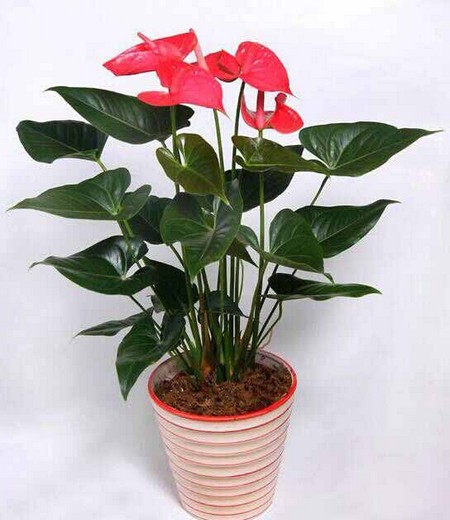
What causes yellowing, scorched edges and drying of anthurium leaves
Anthurium, also known as flamingo flower, anthurium and tailflower, is a perennial evergreen herb native to the tropical rainforest regions of South America. Friends who like growing anthuriums for cut flowers will more or less run into all kinds of situations such as yellowing leaves, scorched edges, drying and rotting leaves, and this really does add a bit of worry for flower lovers. How can such problems be solved?
-
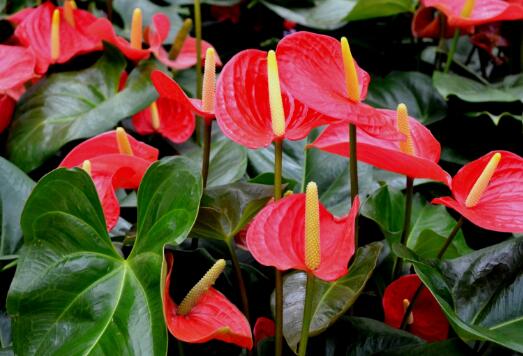
Anthurium growing methods and precautions: Is it toxic? Causes of yellowing leaves with scorched edges and drying
Anthurium, also known as flamingo flower and painter's palette, is deeply loved by everyone because of its broad green leaves, spadix shaped like a Buddhist flame, and petals red as fire, full of auspicious and festive meaning. So how do you grow anthurium? Now let's introduce the growing methods and precautions for anthurium: Anthurium is a perennial evergreen herbaceous plant of the Araceae family
-
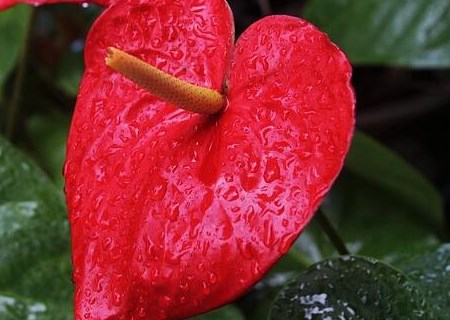
Anthurium seed planting and watering methods, causes of yellowing and drying leaves, and prices
Anthurium, also known as flamingo lily, is a perennial evergreen herbaceous plant of the Araceae family. It prefers warm, humid, semi-shaded environments and dislikes direct sunlight. Anthurium has unique and beautiful flowers with a long blooming period, making it suitable for pot cultivation. So do you know what the seed planting methods for anthurium are? How to water it? What to do when leaves turn yellow and dry up? How much does a pot cost?
-

Reasons for Camellia Leaves Turning Yellow, Withering and Drying Up, and How to Fix Them
There are many reasons for camellia leaves turning yellow, including care and management factors as well as physiological factors. In summer, yellowing or whitening of the leaves occurs because the soil is lacking phosphorus, iron, sulfur or other nutrient elements; the potting soil can be replaced and the plant grown in mountain soil rich in humus. From April to September
-
Loose leaf tea can be dried by sun-drying or oven-drying.
The use of tea began with chewing the fresh leaves of the tea plant, and later developed into boiling the fresh leaves into a soup-like drink; in both cases the fresh leaves of the tea plant were used directly. Before the Tang Dynasty, tea processing was relatively simple: the freshly picked leaves were sun-dried or oven-dried and then stored away. This was the budding stage of the sun-dried green tea process.
-
A Detailed Explanation of the Origin and Development History of Black Tea ⟧2⟧Black tea originated in the Ming Dynasty in the 16th century. During the tea manufacturing process, it was discovered that sun-drying could replace the fixing (kill-green) step
Black tea originated in the Ming Dynasty in the 16th century. During tea manufacturing, it was discovered that sun-drying could replace fixation (kill-green), and after rolling the leaves turned red, thus producing black tea. The earliest black tea production began with Souchong black tea in Chong'an, Fujian. In the Qing Dynasty, Liu Jing's "Pian Ke Yu Xian Ji" records: "At the ninth bend of the mountain there is Xingcun town, where tea experts gather. Tea produced elsewhere in the province such as Shaowu and Jiangxi Guangxin, with black leaves and red soup, locally called Jiangxi Wu, is all privately sold to the various firms of Xingcun." After the appearance of Xingcun Souchong black tea, Congou black tea gradually evolved. In the 1920s, India crushed tea leaves during processing to make broken black tea, and in the 1950s our country also began trial production of broken black tea.
-
Introduction to the Performance Characteristics of the Long-Board Type Flat Tea Frying-Drying Machine
The long-board type flat tea frying-drying machine first appeared in the Xinchang tea area in 2000, and its manufacturers are mainly distributed in Xinchang and Pan'an counties. At present, this tea machine has been widely used in some main Longjing tea producing areas of this province. The commonly used models of the long-board type flat tea frying-drying machine are mainly composed of a long semicircular tea frying pan, a long tea-leaf stirring board, a transmission mechanism, a heat source device, a temperature control instrument and a frame, etc. When this machine is used for Longjing tea frying, like manual frying, it is also divided into two main processes: the green-frying pan and the final-firing pan. For frying the green-frying pan, when the pan temperature reaches
-
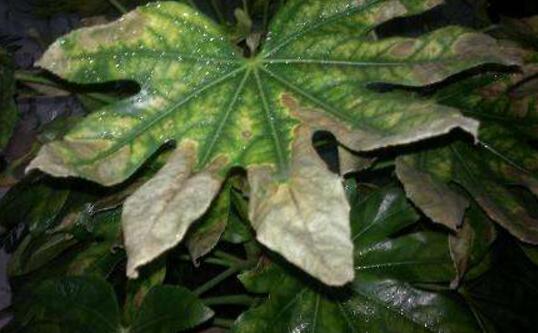
Why Are the Leaves of the Japanese Aralia (Fatsia japonica) Drying Up? Four Main Causes and How to Deal With Them
Under normal conditions, the leaves of the Japanese aralia are bright green on the upper surface, light green on the lower surface, and sometimes have golden-yellow edges, but some plant lovers may run into this situation, namely leaves drying up or even dropping off
-
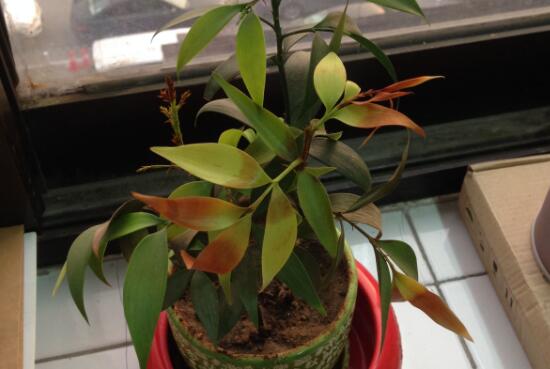
Why Are the Leaves of the Buddhist Pine Drying Up? 3 Fixes That Can Save It
Keeping a pot of Buddhist pine (Podocarpus macrophyllus) indoors is the choice of many plant lovers, because it is not only good-looking and able to purify the air, but also helps resist pollution, repel mosquitoes and insects, and has medicinal and healing uses. But during cultivation, the leaves of many people's Buddhist pines dry up. So why do the leaves of the Buddhist pine dry up? Can a dried-up Buddhist pine still be saved?
-
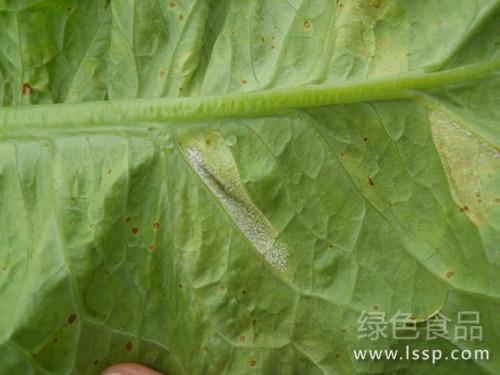
Lettuce downy mildew causes white mold on the undersides of leaves, yellowing and drying up. How should it be prevented and controlled?
Prevention and control methods for lettuce downy mildew with white mold on leaf undersides, yellowing and drying up
条件筛选