Why Are the Leaves of the Japanese Aralia (Fatsia japonica) Drying Up? Four Main Causes and How to Deal With Them
Under normal conditions, the leaves of the Japanese aralia are bright green on the upper surface, light green on the lower surface, and sometimes have golden-yellow edges, but some plant lovers may run into this situation, namely leaves drying up or even dropping off. Why do Japanese aralia leaves dry up? And what are the solutions? Let's find the answers together.
Why Do Japanese Aralia Leaves Dry Up?
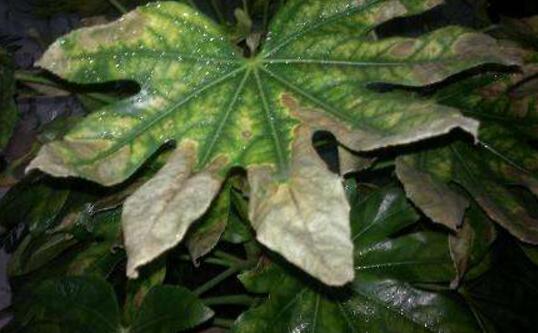
Even though the Japanese aralia has tremendous benefits and uses, if it is not planted correctly, it will not only fail to do its job but will also bring us trouble, and dried-up leaves are one such example. Why do Japanese aralia leaves dry up? Botanists believe there are four causes.
1. Too Little Watering
The Japanese aralia likes a moist environment and is not tolerant of drought. When it is watered too little, two problems arise: first, the plant has no water to absorb; second, the humidity of the surrounding air is too low.
Solution: During the vigorous growth period from April to September, water about once every 3 days, and each time you water, water thoroughly to ensure the soil is moist, with excess water able to drain from the bottom; in summer, you should also frequently spray water around the plant and on the leaves.
2. Temperature Too Low
In winter the temperature is relatively low, and this is also the season when Japanese aralia leaves drying up occurs most often. The reason is that the suitable temperature for the Japanese aralia is 10-25°C, and if it drops below 10°C and you do not keep it warm, the leaves may be frostbitten and dry up.
Solution: In winter you should keep the Japanese aralia warm. There are generally two methods: one is to move the Japanese aralia indoors where the temperature is higher; the other is to take insulation measures outdoors, such as wrapping a plastic bag around the outside of the plant.
3. Too Little Fertilizer
Except in winter, the Japanese aralia generally needs to be fertilized once every 15-20 days. If you do not fertilize it for a long time, it will suffer from a lack of nutrients, and then dried-up leaves are unavoidable.
Solution: Cut off the dried-up leaves, then fertilize at the right time according to the Japanese aralia's care method. Do not go more than 20 days between fertilizing, and do not apply too little fertilizer each time.
4. Pests and Diseases
Pests and diseases are the greatest natural enemies of plants. If pests or diseases appear on the Japanese aralia, dried-up leaves are actually a relatively mild symptom; more serious cases may hinder the plant's growth and eventually kill it, so this situation must be prevented.
Solution: Pests and diseases are mainly about prevention, and the way to prevent them is to ensure the environment is well ventilated and clean, and that watering and fertilizing are done properly. If pests or diseases unfortunately occur on the Japanese aralia, medication should be used for treatment.
Note: When solving the problem of dried-up leaves, it is not necessarily caused by just one reason. For example, it may be caused by too little watering or fertilizing together, so when solving the problem, you should consider the actual situation.
Why Do Japanese Aralia Leaves Turn Yellow?
Improper care of the Japanese aralia causes the leaves to turn yellow
Light Too Weak
The intensity of light is one of the reasons affecting the leaf color of the Japanese aralia. The Japanese aralia itself has strong adaptability to light and can adapt to a semi-shaded environment or grow in full sun. However, note that when the light is strong, the Japanese aralia's leaves will be relatively lighter in color, fading from green to yellow, while in a semi-shaded environment, the Japanese aralia's leaves will be a deeper green.
So to avoid the Japanese aralia's leaves turning yellow, the light should be kept at a suitable intensity, with semi-shade being best. Except in winter, when the Japanese aralia needs full sun, the rest of the time it is best kept in semi-shade. If it is a variegated variety, the light is best kept bright.
Intense Sun Exposure
Strong sun exposure is a cause of the Japanese aralia's leaves turning yellow, because too intense light will damage the Japanese aralia's leaves, making them scorched and yellow, and in serious cases they will drop off.
You can cut off the yellowed leaves of the Japanese aralia, then place it in a semi-shaded spot for care.
Why Does the Japanese Aralia Have Yellow Spots on Its Leaves?
Besides the leaves turning yellow, sometimes the Japanese aralia also develops yellow spots on its leaves. The leaves, including the petioles and the plant's stems, have yellow or yellow-brown spots. This is mostly because the Japanese aralia has contracted a disease such as anthracnose. As a result, yellow spots appear on the leaves, continuously expand, and may even cause the leaves to become distorted.
If the Japanese aralia develops yellow spots because of pests or diseases, you need to analyze the specific condition and carry out prevention and treatment accordingly.
What to Do When Japanese Aralia Leaves Droop: Master Four Techniques to Make the Leaves Stand Upright and Tall
The leaves of the Japanese aralia are normally glossy, green, and upright and tall, but if the care method or environment has problems, you may run into drooping leaves. What should you do if the Japanese aralia's leaves droop? Let me tell you the causes and the answers.
What to Do When Japanese Aralia Leaves Droop
Research shows that the main reasons causing the Japanese aralia's leaves to droop mainly include four aspects, namely dry and compacted soil, water accumulated in the pot, too much fertilizer, and sun exposure, so to solve the drooping problem, you need to start from these four causes.
1. Dry and Compacted Soil
The Japanese aralia's drought tolerance is relatively poor. If the soil becomes dry and compacted, it will be hard for the roots to absorb the necessary water, and the result will be drooping leaves, with the whole plant looking listless and lifeless. The solutions are as follows.
① Water reasonably: When watering, you should keep the soil slightly moist, and avoid not watering for a long time, which causes the soil to dry out and compact.
② Loosen the soil often: Dry and compacted soil is often caused by not loosening the soil regularly. Loosening the soil can not only increase air permeability but also improve drainage, but do not damage the roots when loosening the soil.
③ Use sandy soil: For example, use a mix of leaf mold, garden soil, and so on as potting soil for cultivation, which can effectively avoid the problem of Japanese aralia leaves drooping.
2. Water Accumulated in the Pot
The Japanese aralia's tolerance of waterlogging is also relatively poor. If water accumulates in the pot for a long time, root rot may occur, which indirectly causes the leaves to droop.
Solution: Water accumulation is often caused by too much watering and poor soil drainage, so you should not water excessively, and in addition the soil's drainage should be good.
3. Sun Exposure
If a person is exposed to the sun for too long, not only will they become listless, but they may also suffer symptoms such as heatstroke. In fact, if the Japanese aralia is exposed to the sun for a long time, it will also develop drooping, listless leaves.
Solution: Avoid direct sunlight on the Japanese aralia, move it to a shady spot for care, and in normal times just place it in a bright spot for growing.
4. Too Much Fertilizer
Some plant lovers think that giving plants more fertilizer can promote their growth, but botanists have found through research that too much fertilizer often causes root burn, and the result is drooping leaves. The Japanese aralia is no exception.
Solution: Be sure not to apply too much fertilizer. Fertilizing once about every 20 days is enough, and pay attention to balanced nutrition: do not apply only nitrogen fertilizer, and do not apply only phosphorus and potassium fertilizer. This can prevent the Japanese aralia's leaves from drooping.