Why Are the Leaves of the Buddhist Pine Drying Up? 3 Fixes That Can Save It
Keeping a pot of Buddhist pine (Podocarpus macrophyllus) indoors is the choice of many plant lovers, because it is not only good-looking and able to purify the air, but also helps resist pollution, repel mosquitoes and insects, and has medicinal and healing uses. But during cultivation, the leaves of many people's Buddhist pines dry up. So why do the leaves of the Buddhist pine dry up? Can a dried-up Buddhist pine still be saved? Today the editor will solve this problem for everyone.
I. Why Do the Leaves of the Buddhist Pine Dry Up?
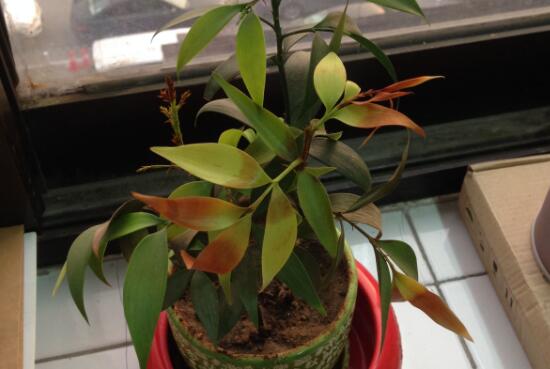
When it comes to the leaves of the Buddhist pine drying up, it can be analyzed in three points: 1. The Buddhist pine likes partial shade and fears strong light; once it is exposed to overly strong light, the leaves will be scorched dry; 2. In a poor environment and with improper care, the Buddhist pine is prone to tip blight, which shows up as dry leaves; 3. If the Buddhist pine is grown in water, dry leaves are very likely to appear.
II. Causes of Dry Leaves on the Buddhist Pine and How to Save It
1. Too much light
The Buddhist pine likes a partially shaded environment and grows faster in diffused light than in a spot with good light. So when growing it indoors, you should put it in a place with good shading and let it receive diffused light only. Otherwise, once the light is too strong, its leaves will be scorched dry.
How to save it: Move the Buddhist pine to a cool place promptly, increase ventilation, and afterward give it 2 hours of light a day and that will be enough.
2. Suffering from tip blight
When it comes to the causes of dry leaves on the Buddhist pine, you should also consider whether it has caught tip blight. Symptoms of the disease: the leaves of the Buddhist pine first turn yellow, then slowly turn black, then gradually develop black spots, and finally progress to drying up.
How to save it: Tip blight is mainly caused by rainy weather, so after the weather clears you should let the Buddhist pine get some sun, of course weak light; if it does not recover, then consider buying medicine to spray for prevention and control.
3. Dry leaves on a water-grown Buddhist pine
When it comes to dry leaves on the Buddhist pine, they generally appear on water-grown plants. It is understood that in water culture, roots not being handled properly, a high frequency of changing the water, too much fertilizer, or being too close to an air conditioner can all cause the leaves of the Buddhist pine to dry up. Specific causes have specific rescue methods; as long as you manage it according to science, the Buddhist pine naturally will not dry up.
① The roots were not handled properly
When doing water culture of the Buddhist pine, the leaves are usually inserted into water, and after careful care, roots generally appear in about 15 days. Moreover, as the growing time increases, the roots of the Buddhist pine will grow more and more, and if they are not pruned in time, the leaves of the Buddhist pine may dry up.
How to save it: When the Buddhist pine has too many roots, you should prune them in time, because these roots have little effect on the growth of the Buddhist pine; only by cutting off the old roots can you avoid the appearance of drying up.
② High frequency of changing the water
During water culture and care, many plant lovers like to change the water for the Buddhist pine, because clean water better sets off the beauty of the Buddhist pine. But once the Buddhist pine has rooted, it is not suitable to change the water, and if the water is changed too often, it can also cause the leaves of the Buddhist pine to turn yellow.
How to save it: Control the frequency of changing the water. Before the Buddhist pine has rooted, change the clean water once every 3 days to 4 days; after the Buddhist pine has rooted, change the water once every 10 days in the early stage to rinse off the dirt on the root crown; once rooting is stable, as long as the water quality does not change, do not change the water.
③ Too much fertilizer
When the Buddhist pine is in water culture, after it has rooted we should apply a small amount of compound fertilizer in moderation, which can keep the plant's leaves green. But if too much fertilizer is applied, it will have the opposite effect, easily burning the roots and thereby causing the leaves to dry up.
How to save it: When too much fertilizer has been applied, change the water in time, then about every 3 weeks inject a few drops of brandy into the bottle and add a small amount of nutrient solution; this can both keep the leaves green and avoid the effects of too much fertilizer.
④ Too close to an air conditioner
Besides the above points, if a water-grown Buddhist pine is placed very close to an air conditioner or an electric fan and is blown by the wind for a long time, symptoms of dry leaf tips and leaf edges easily appear.
How to save it: After discovering dead branches, cut them off immediately and change the water in time to avoid other bamboo branches becoming infected; afterward place the Buddhist pine in an indoor spot with ventilation and light, and after a period of time the plant will recover its health.
What to Do When the Leaves of the Buddhist Pine Dry Up
Too much sunlight
The placement should be decided according to its preferences; it is not that it can survive well wherever it is put. For example, if it clearly likes a cool environment and you insist on putting it in a spot with strong sun exposure, of course problems will arise. So exposure to the sun is one factor that causes the leaves of the Buddhist pine to dry out, and the solution is naturally to change its position quickly, increase ventilation, and a daily light period of about three hours is generally enough.
Pathogen infestation
Besides going against its growth habits, another possibility for the leaves of the Buddhist pine drying out is that it has been infected by some harmful pathogens. The symptoms of this condition, called tip blight, do the most damage to the middle and lower parts of the Buddhist pine plant, and when observing you can check whether this is the case. At first the color turns yellow, then gets blacker and blacker, later black spots gradually appear, and finally it develops to drying up. This condition is caused by rainy weather; afterward receiving a bit more light will help, and if that does not work, spraying with medicine is recommended.
Improper management
If a Buddhist pine grown in water also shows dry leaves, then it may be that the roots were not handled properly during cultivation, or that the water was changed too infrequently, and it may also be caused by too much fertilizer or being too close to an air conditioner vent. Specific causes have specific solutions; as long as you manage it according to science, the Buddhist pine naturally will not dry up.
Causes of Dry Leaves on the Buddhist Pine and How to Handle Them
Too much sunlight
The placement should be decided according to its preferences; it is not that it can survive well wherever it is put. For example, if it clearly likes a cool environment and you insist on putting it in a spot with strong sun exposure, of course problems will arise. So exposure to the sun is one factor that causes the leaves of the Buddhist pine to dry out, and the solution is naturally to change its position quickly, increase ventilation, and a daily light period of about three hours is generally enough.
Pathogen infestation
Besides going against its growth habits, another possibility for the leaves of the Buddhist pine drying out is that it has been infected by some harmful pathogens. The symptoms of this condition, called tip blight, do the most damage to the middle and lower parts of the Buddhist pine plant, and when observing you can check whether this is the case. At first the color turns yellow, then gets blacker and blacker, later black spots gradually appear, and finally it develops to drying up. This condition is caused by rainy weather; afterward receiving a bit more light will help, and if that does not work, spraying with medicine is recommended.
Improper care methods
If a Buddhist pine grown in water also shows dry leaves, then it may be that the roots were not handled properly during cultivation, or that the water was changed too infrequently, and it may also be caused by too much fertilizer or being too close to an air conditioner vent. Specific causes have specific solutions; as long as you manage it according to science, the Buddhist pine naturally will not dry up.
For more content related to the Buddhist pine, please follow the Four Seasons Plant Network!