-
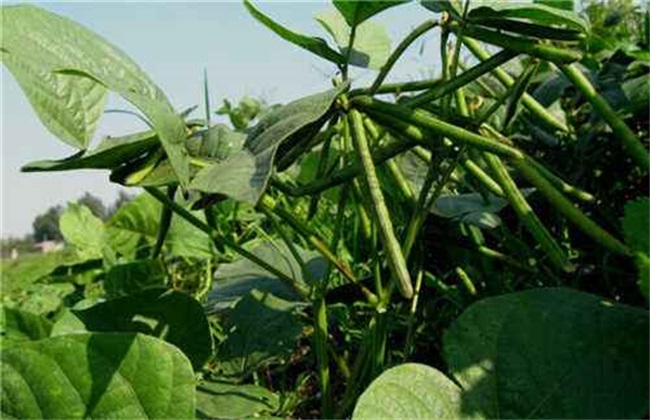
Key Technical Points for Direct-Seeding Mung Bean Cultivation in Summer
Summer Direct-Seeding Techniques for Mung Bean
-

Daily Grain and Oil: Don't believe that liquor is the essence of grain; your alcohol tolerance directly reveals your IQ
Around three thousand years ago, during the Shang and Zhou dynasties, the Chinese uniquely invented the multiple fermentation method using jiuqu (wine starter), and began large-scale brewing of huangjiu (yellow rice wine). Around one thousand years ago, during the Song dynasty, the Chinese invented...
-

How to grow direct-seeded rice? Experience shared by Jingtoushan Farm
Our farm has nearly 700 hectares of paddy fields. We began direct seeding of rice in 1987 and fully promoted it starting in 1999, with a 100% success rate. The key points of this direct seeding technique are mastering the following three critical stages. 1. Land preparation stage. Plow the paddy field, break up the soil, and irrigate; either machine leveling or oxen leveling will do. Then use a leveling bar to smooth the field flat. Use a homemade ditching board to open the furrows. The ditching board is 2 m long, 45 cm wide, and 3 cm thick. On the wooden board, nail 2 handles on each side, each 30 cm long, with a width of 1.6 m between the handles, for attaching ox harness ropes
-
Rice direct seeding machine successfully developed, efficient and versatile, boosting rice sowing
Recently, a "Multifunctional Soil-Covering Direct Seeding Machine Rice Mechanical Direct Seeding Field Demonstration" organized by the China National Rice Research Institute was held in Buqiao Village, Fuyang City, Zhejiang Province, with more than 40 experts from home and abroad attending the field observation event. In recent years, China's rice mechanical transplanting technology has developed rapidly, and a number of different types of transplanters suited to China's rice production have been developed and produced. However, the development and research of rice direct seeding machines and mechanical direct seeding technology have lagged relatively behind, and no mainstream rice mechanical direct seeding technology has yet taken shape. To overcome the problems of poor seedling establishment, easy lodging, premature aging, and difficult and costly weed control
-
High-yield cultivation techniques for no-till direct seeding in rapeseed-rice double cropping
Zhejiang Province is relatively economically developed, with high labor costs. At the same time, as diesel prices rise, the cost of mechanical plowing of farmland increases, and the production cost of grain and oil crops increases year by year. For this reason, Zhejiang Province carried out trials, demonstrations and extension of high-yield cultivation techniques for no-till direct seeding in rapeseed-rice double cropping, which reduced the production cost of grain and oil crops and improved planting efficiency. According to surveys, each mu of no-till direct-seeded rapeseed saves 62.5 yuan in costs and increases efficiency compared with transplanted rapeseed, and each mu of no-till direct-seeded late rice saves 70.24 yuan in costs and increases efficiency compared with plowed and transplanted late rice. The annual cumulative cost saving and efficiency increase of no-till direct seeding cultivation in rapeseed-rice double cropping is 132.74 yuan.
-
Water-seeded direct-seeded rice has many advantages; what exactly are they?
Depending on the soil moisture conditions at the time of land preparation and the method of land preparation and sowing, direct-seeded rice can be divided into dry direct seeding and water direct seeding. Dry direct seeding can further be divided into methods such as sowing on stubble first followed by shallow rotary tillage, and rotary tillage first followed by sowing. The land preparation and sowing procedure for water direct seeding is roughly as follows: after applying base fertilizer, add water and rotary tillage, open furrows, level the field with water, then sow and press the seeds into the soil. Compared with dry direct-seeded rice, water direct seeding has the following advantages. First, more seedlings emerge and emergence is uniform, which is conducive to cultivating strong seedlings. In water direct-seeded fields, the bed surface is level, and there is mud slurry on top; after pressing the seeds into the soil, no seeds are left exposed, emergence is fast and
-
Why can't fresh wheat chaff be fed directly to livestock?
After the wheat is harvested in wheat-producing areas, large livestock have fresh wheat chaff to eat. Many farmers are accustomed to feeding fresh wheat chaff directly to livestock, but this feeding method is not good. Because when livestock eat untreated fresh wheat chaff, the oral mucosa is often punctured by wheat awns, causing stomatitis. After livestock develop stomatitis, they want to eat but refuse food; they take feed into their mouths but dare not chew, or after chewing a few times they spit the feed back out; white turbid mucus continuously flows from the mouth; in the oral cavity, wheat awns can be seen stuck all over the tooth roots and the base of the tongue. To prevent oral
-
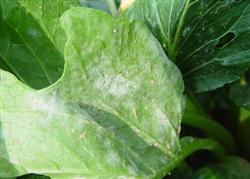
Detailed explanation of the double-low rapeseed minimal and no-tillage relay direct seeding cultivation technique
Controlling rapeseed powdery mildew well is a prerequisite for obtaining high yield and high quality in rapeseed, while autumn-sown rapeseed at the final flowering stage and the middle-to-late pod stage is precisely in the March-April period of high temperatures and shading between plants, when powdery mildew occurs rather commonly, greatly reducing the 1000-grain weight of rapeseed and thereby affecting yield; therefore, the control of rapeseed powdery mildew is very important. 1. Harm...
-
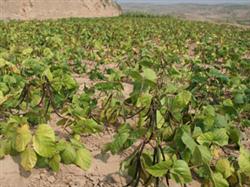
Key Technical Points for Direct Seeding Cultivation of Mung Bean in Summer
When mung bean seedlings reach the 2-leaf 1-heart stage, remove the clustered seedlings. Thin to final stand at the 4-leaf stage, with a plant spacing of 13 to 16 cm and a row spacing of about 40 cm, leaving 10,000 to 15,000 plants per mu; for late-sown fields, up to 20,000 plants per mu may be retained. From emergence to flowering and canopy closure, mung bean must be kept free of weeds through frequent cultivation and hoeing, generally no fewer than 4 times, with the depth of cultivation going from shallow...
-
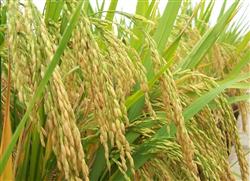
High-Yield Cultivation Techniques for Single-Season Direct-Seeded Rice
Single-season late rice under direct seeding has the advantages of easing seasonal conflicts, reducing labor intensity, and saving labor, cost, seed, and seedling beds, with yields generally above 500 kg, and is deeply welcomed by farmers. Based on several years of planting experience, the techniques are summarized as follows: 1. Select and breed excellent varieties, prepare the field leveling well, improve sowing quality, and strive...
条件筛选