-

Analysis of the Current Status of the Boer Goat Farming Industry and Forecast of Its Development Trends
The analysis of the current status of the Boer goat farming industry and the forecast of its development trends are matters of great concern to the many Boer goat farmers. After interviewing Director Gao of the Shandong Fenghua Livestock Bo...
-
Ecological farming model helps fine-tune the development of animal husbandry
In China, besides large-scale farming, the ecological farming model that combines planting and breeding has also become mainstream in pig production. After fermentation treatment, the pig manure and urine from pig farms become...
-

Integrated development of ecological farming and tourism to create a beautiful ecological environment
1 Project Introduction 22 Project Overview 23 Source of Project Inspiration 34 Product Introduction 55 Market Analysis 76 Breeding Site Construction 77 Sales Direction and Methods 88 Development Prospects...
-
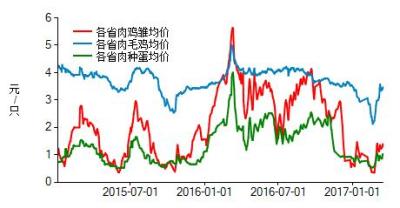
2018 Meat Donkey Farming Prospect Analysis and Development Trends
As 2017 draws to a close and 2018 is about to begin, what is a good prospect to farm? As the weather gets colder and colder, the meat donkey sales market has reached an unprecedented peak season and is growing larger and larger...
-

Analysis of the problems existing in the development of the eel industry and the countermeasures and suggestions
I. Seedlings and fingerlings The main species farmed for eel in China are the Japanese eel (Anguilla japonica) and the European eel (Anguilla anguilla). The resources of both the European eel... have already approached exhaustion, with annual production falling from 3,000 tons 30 years ago to 100-200 tons. From June 3 to 15, 2007, at the Conference of the Parties to the "Washington Convention" (CITES) held in the Netherlands, the European eel was listed in Appendix II of the Convention on Endangered Species of Wild Fauna and Flora, and this will be formally implemented starting in January 2009: China imports about 60 tons, or about 150 million individuals, of European eel seedlings and fingerlings annually, and farmed European eel accounts for more than 1/3 of eel production, while European eel accounts for about 40% of exported roasted eel. Japanese eel resources have also severely declined. In recent years, the seedling and fingerling resources of Japanese eel in Asia have remained at about 100 tons, and the annual catch in recent years has remained at 80-100 tons. In 2008, the output of European eel seedlings and fingerlings was about 90 tons, half of a normal year. The output of Japanese eel seedlings and fingerlings was about 35 tons, one third of a normal year. The severe shortage of seedling and fingerling resources has led to soaring prices. Moreover, artificial breeding of eel seedlings and fingerlings will not be able to form production capacity in the near future.
-
The development prospects for Butterfly Bush are extremely broad
Butterfly Bush is the most popular landscaping tree species in Europe and America, and is highly suitable for promotion in North China, Central China, East China, and parts of Northeast and Northwest China. In terms of landscaping effects, this tree species has many advantages. It is a perennial, fast-growing, semi-evergreen shrub with grayish-green leaves that are large and opposite, about 25 cm long. From summer to late autumn, it continuously blooms with lush panicles, the inflorescences about 40 cm long, in diverse colors including purple, blue, pink, white, and yellow. The flowering period lasts up to 6 months, which can compensate for the scarcity of blooming plants in summer. The flowers have a strong fragrance, attracting many
-
Analysis of the Current State of Snakehead Farming and Interpretation of Its Future Development Prospects
People customarily refer to fish of the family Channidae collectively as snakehead, blackfish, caiyu, shengyu, and so on. The snakehead (Channa argus) is the most widely distributed and highest-yielding species among the Channidae. As market demand grows, the snakehead may become one of the most promising aquaculture species in China in the early 21st century. China has a total of 7 species of Channidae, namely the snakehead (Channa argus), the spotted snakehead (Channa maculata), the dwarf snakehead (Channa asiatica), the broad-headed snakehead (Channa gachua), the striated snakehead (Channa striata), the slender snakehead (Channa limbata) and the elongated snakehead (Channa elongata). Among them, only the snakehead is a widespread species, distributed across all the major river systems of the country and also the highest in yield, while the spotted snakehead, the dwarf snakehead and the broad-headed snakehead are distributed only in South
-
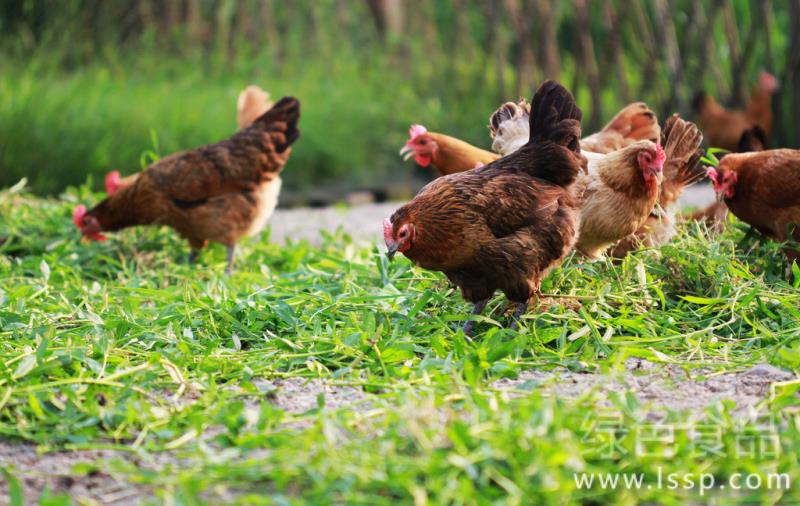
Feeding green fodder to chickens can promote growth and development, but what precautions should be taken?
Green fodder promotes chicken growth and development; precautions for feeding green fodder to chickens
-
Current Status, Existing Problems and Future Development Directions of Sericulture in Guizhou
1 Current Status of Development As a traditional export industry of China, the cocoon and silk industry, since entering the "10th Five-Year Plan" period, has adhered to a market-oriented approach, taken development as its theme, and relied on reform, opening up and scientific and technological progress as its driving forces. By comprehensively applying the state's reform and development policies, strengthening macro-control, and intensifying structural adjustment, it has effectively overcome the phenomenon of "drastic fluctuations," enabling the entire industry to emerge from the trough and basically maintain sustained and steady development. The quality of economic operation has improved markedly, with production capacity, efficiency and export earnings surpassing the best historical years. "Chinese silk
-
Key Technical Points and Management Methods for Uniform Silkworm Larva Development
Uniform silkworm larva development is the primary guarantee for implementing automated mounting of silkworms (spinning on frames), and an important prerequisite for ensuring high-quality and high-yield silkworm cocoons. To achieve uniform silkworm larva development, the following aspects of work must be done well: 1. Properly protect the silkworm eggs after receiving them to promote uniform hatching. Immediately after receiving the silkworm eggs, pour them out and spread them evenly in a foil-lined tray with white paper, and keep them in an environment with a temperature of 26°C, a wet-dry difference of 1.5-2°C, and darkness (covered with black cloth) for protection. On the morning of the hatching day at 4-5 o'clock, uncover the covering, turn on
条件筛选