-

Taitung County Government Leads the Development of the Red Quinoa Specialty Industry
Taitung red quinoa has become a hit, and Taitung's specialty sightseeing tourism has become a hit along with it! Led by the Taitung County Government, 20 local hotel and accommodation operators, together with the Taitung Branch of the Soil and Water Conservation Bureau of the Council of Agriculture, Executive Yuan, the Taitung County Farmers' Association, and the Taimali Township Farmers' Association...
-

What conditions are needed for the growth and development of straw mushrooms?
1. Nutrition Straw mushroom is a saprophytic fungus that does not contain chlorophyll and cannot carry out photosynthesis to synthesize the nutrients it needs, so these must be supplied from outside. The nutrients required by straw mushroom are mainly carbohydrates and nitrogen-containing compounds. Carbohydrates mainly include sugars such as glucose, sucrose, maltose, starch, hemicellulose and cellulose. Organic nitrogen compounds mainly include peptone, amino acids and urea; inorganic nitrogen compounds include ammonium sulfate and ammonium nitrate. It is generally considered that the carbon-to-nitrogen ratio during the vegetative growth stage
-
What are the responses of soybean growth and development to light?
Soybean is a short-day crop, with a daylength range of 9-18 hours. The shorter the light, the more it promotes flower bud differentiation and advances flowering and maturity. When soybean grows its first compound leaf, it begins to respond to light. Generally, seedlings can complete the light stage after 5-12 days of short-day conditions. The appearance of flower calyx primordia on the plant marks the completion of the light stage. Due to long-term adaptation to light conditions in different regions, the short-day response of soybean varies considerably. Southern soybean varieties have a stronger short-day response, while northern soybean varieties are insensitive to daylength, so special attention should be paid when introducing varieties.
-
What are the characteristics of each developmental stage of soybean?
(1) Germination stage: refers to the period from seed germination to seedling emergence, which takes 10-15 days for spring soybeans and 4-6 days for summer soybeans. The germination stage of soybean mainly requires appropriate temperature and suitable soil moisture. It is required to carry out seed treatment before sowing, improve the quality of land preparation, sow at the right time, ensure that the field soil is loose, and prevent excessive soil moisture and poor permeability, which can delay seedling emergence or even cause seed rot. (2) Seedling stage: refers to the stage from seedling emergence to flower bud differentiation. It requires an average daily temperature above 20°C and 19%-20% soil
-
Analysis of the Introduction Performance and Development Strategies of Southern Pears in Hezhou
According to the deciduous fruit development concept of "southern pears and northern peaches" proposed by the Ministry of Agriculture in 1996, Hezhou City, Guangxi, began introducing southern pears from Zhejiang University, Guilin, Guangxi, and other places in 2000. A total of 11 southern pear varieties were introduced, and the current cultivation area is 1066.67 hm2. It is expected that the pear output in 2006 will reach 25,000 t. Based on current introduction observations, the soil, climate, and other natural conditions in Hezhou City are very suitable for the growth of southern pears. Many varieties show advantages such as high and stable yield, good taste, rich flavor, and strong resistance. The products are widely welcomed by consumers in the market.
-
Current Status, Existing Problems and Future Development Directions of Sericulture in Guizhou
1 Current Status of Development As a traditional export industry of China, the cocoon and silk industry, since entering the "10th Five-Year Plan" period, has adhered to a market-oriented approach, taken development as its theme, and relied on reform, opening up and scientific and technological progress as its driving forces. By comprehensively applying the state's reform and development policies, strengthening macro-control, and intensifying structural adjustment, it has effectively overcome the phenomenon of "drastic fluctuations," enabling the entire industry to emerge from the trough and basically maintain sustained and steady development. The quality of economic operation has improved markedly, with production capacity, efficiency and export earnings surpassing the best historical years. "Chinese silk
-
New upland rice variety developed in Shandong, agronomist Xu Defang successfully breeds it
In the golden autumn season, a new upland rice variety carefully cultivated over 3 years by Xu Defang, an agronomist at the Dongying Branch of the Shandong Academy of Agricultural Sciences, has achieved a bumper harvest. According to calculations, it yields more than double that of the current upland rice variety 297, with a yield of 600-650 kg per mu, marking a breakthrough in China's upland rice breeding. Xu Defang used more than 30 ancestral lines provided by Professor Li Zichao of China Agricultural University, discovered a dwarf-stalk mutant line from the tall-stalk line 33-1, and from it selected a group of 9 lines, namely early-maturing, glutinous, early
-
New cotton variety Suza 3 successfully developed in Jiangsu
The new cotton variety "Suza 3", jointly bred by the Institute of Industrial Crops of the Jiangsu Academy of Agricultural Sciences and other institutions, has been successfully developed and recently passed national new variety approval in Jiangsu Province. It is reported that this is Jiangsu Province's first two-gene transgenic insect-resistant hybrid cotton. Tests show that it has strong resistance to common pests such as the cotton bollworm and the pink bollworm. According to experts, at present the insect-resistant cotton in the cotton region of China's Yangtze River basin generally has only a single insect-resistant gene - the "BT insect-resistant gene", while Suza 3, in addition to containing the above gene, also has the "C
-
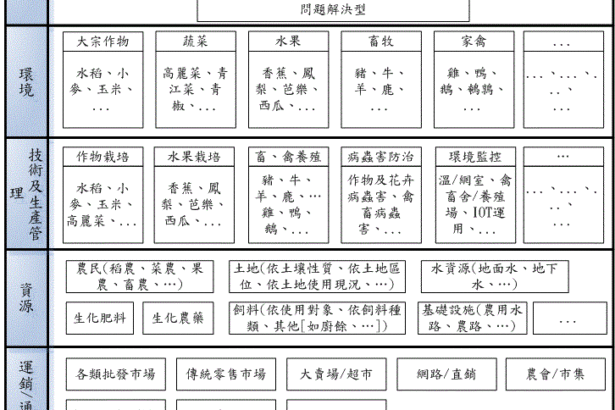
How to establish a goal-oriented systematic review framework for agricultural development and transformation
Establishing a goal-oriented systematic review framework for agricultural development and transformation
-
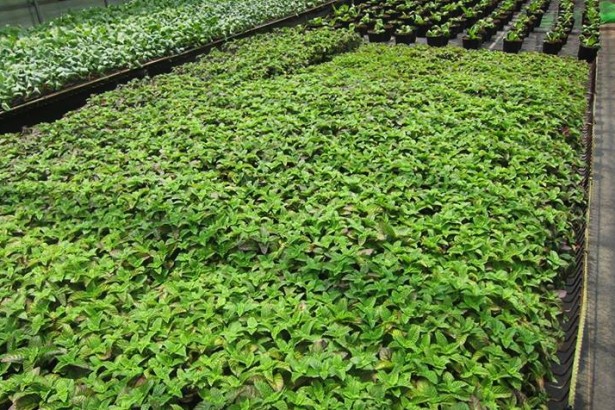
Taoyuan's Mesona chinensis industry production and seedling cultivation are on track, but branding and distribution channels remain to be developed
Taoyuan's Mesona chinensis industry: production and seedling cultivation on track, branding and distribution channels await development
条件筛选