-

Is a deep pot or a shallow pot more suitable for a banyan bonsai?
Tree bonsai often have peculiar and elegant shapes, with powerful and vigorous branches, and generally remain evergreen throughout the four seasons, so they have extremely high ornamental value, and banyan bonsai is one of the quite representative tree species among them. As everyone knows, in addition to foliage viewing, banyan bonsai is also very suitable for root viewing.
-
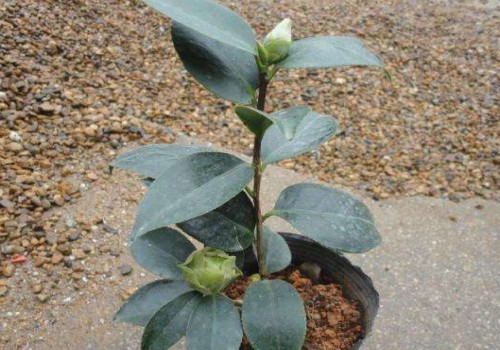
Should camellias be planted in deep pots or shallow pots, and is deep planting or shallow planting better?
Many gardening friends enjoy growing camellias in pots, but for many beginners, the issue of pot choice is a headache. The main confusion is whether camellias are better suited to deep pots or shallow pots, and whether deep planting or shallow planting is better. In fact, whether to use deep pots with deep planting or shallow pots with shallow planting
-
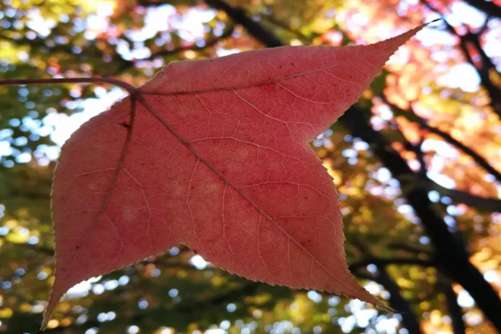
Sweetgum tree cultivation methods shared, leaf colors layered in deep red mixed with light yellow
Speaking of the sweetgum tree, it should be one of the plants loved by many plant enthusiasts. You can see it on street corners and alleys, or in autumn when large swaths of sweetgum trees have their leaves turning from green to yellow to red, dyeing the whole forest in layers - it is a very beautiful sight.
-
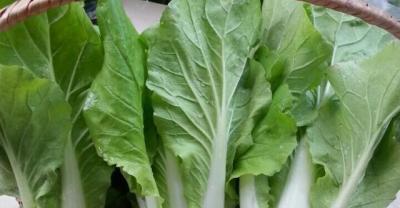
The love bean is planted deep in my heart, carrying profound longing
Some memories cannot be erased, and there is a kind of love deeply rooted in the depths of our hearts... I remember that after the Spring Festival three years ago, the children who worked and studied away from home...
-
Key Cultivation Techniques for Soybean Deep Loosening, Narrow-Row, Flat Sowing and High-Density Planting
Soybean deep loosening, narrow-row, flat sowing and high-density planting is another "new high-yield cultivation model" following "ridge three" and "large ridge density." It integrates advanced techniques such as deep loosening and rotary tillage for seedbed preparation, uses fertilizer to support density and density to increase yield, increases the canopy leaf area index, and improves light interception rate, achieving cost savings and efficiency gains in soybean production. Over two years, Luobei County promoted and planted 16000 mu in Tuanjie, Fengxiang, Zhaoxing and Taipinggou, with an average yield of 206 kg per mu, a 43% increase over the control.
-
How are light pruning and deep pruning carried out on mature tea plants?
Light pruning (1) Light pruning: The purpose of light pruning is to promote the sprouting and growth of tea buds, increase the production density, and strengthen the vigor of the tea plant. It is an indispensable technical measure for creating and maintaining a good plucking surface. The degree of light pruning is measured by cutting off 3-5 cm of branches and leaves from the top of the canopy, or alternatively by cutting off the previous year's autumn shoots while leaving the summer shoots. For tea plants of the small and medium-leaf varieties, the light pruning form is best done by cutting the canopy surface into an arc shape, as this can increase the width of the plucking span and is beneficial for raising the per-unit yield. For tea plants in the young and mature stages, light pruning can be carried out once a year or every other year.
-
Analysis of Key Technologies and Economic Benefits of Deep-Buried Drip Irrigation for Cotton
Cotton "deep-buried" drip irrigation technology is another new high-efficiency water-use technology that has emerged following cotton subsurface hose micro-porous irrigation technology. This technology can utilize fertilizer and water with high efficiency, and its yield-increasing effect is obvious. I. Key Technologies 1. Irrigation The start of irrigation is at the cotton squaring stage. In the cotton region of northern Xinjiang, this is generally June 7-10, with irrigation carried out on a 3-day rotation cycle. If autumn is rainy, irrigation can be carried out on a 5-day cycle. Irrigation amount: at the squaring stage, each irrigation is 8 cubic meters per 667 sq m; at full flowering, 10 cubic
-

How do you grow Venus flytraps with big traps? The pot needs to be deep, the light needs to be ample, and water and nutrients must not be lacking.
Every summer, to avoid the annoyance of flies and mosquitoes, people choose to keep a Venus flytrap at home, because it is a mosquito-repelling plant. It is said that the Venus flytrap's traps can catch small insects such as flies and mosquitoes. The bigger its traps, the better it catches insects. So how do you grow Venus flytraps with big traps? On this point,
-

How to train climbing roses to climb? A deep analysis from two aspects
Climbing roses are highly ornamental flowering plants, and many people across every region of our country grow them. However, as more and more people grow climbing roses, questions about how to train them to climb have also become a concern. So how do you train climbing roses to climb? Let's take a look below.
-
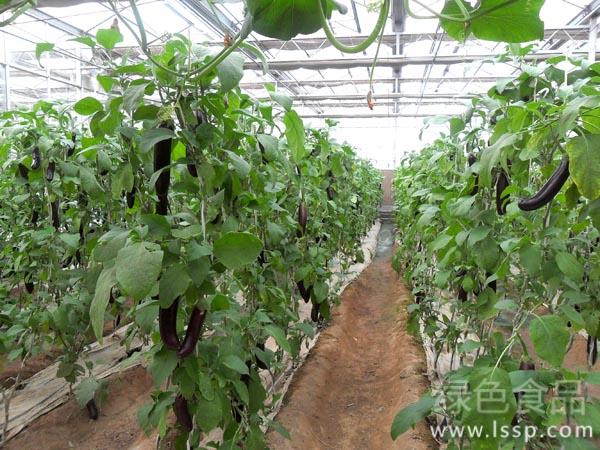
Eight safeguard measures to note for greenhouse vegetable production in deep winter
Note these eight measures to safeguard greenhouse vegetable production in deep winter
条件筛选