Eight safeguard measures to note for greenhouse vegetable production in deep winter
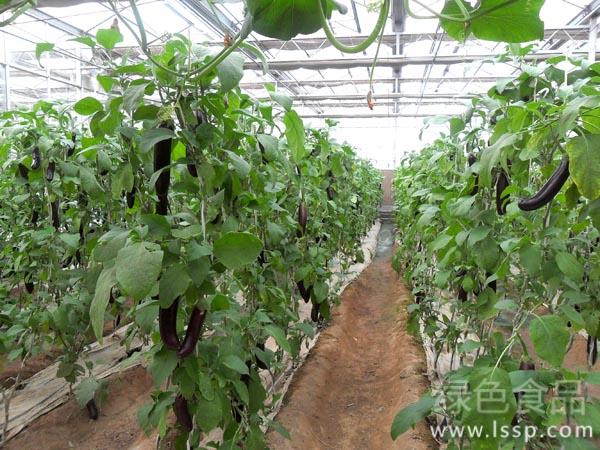
Greenhouse vegetables
December each year and January of the following year are periods when temperatures are relatively low and foggy, overcast days are more frequent. Poor management can cause severe yield reduction or even total crop failure in greenhouse vegetables, affecting production economic benefits. As severe weather approaches, the following eight management measures are specifically proposed:
1. Strengthen the management of uncovering and covering straw mats. When temperature permits, uncover early and cover late as much as possible. The time to uncover straw mats should be when the temperature inside the greenhouse does not drop after uncovering; the time to cover straw mats should be determined by the indoor temperature, generally when the temperature in the solar greenhouse drops to 15°C-17°C, cover the straw mats; solar greenhouses with poor insulation should cover straw mats earlier. On sunny days, uncover straw mats early and cover them late, extending the time vegetables receive light as much as possible; on cloudy and snowy days, depending on outside temperature conditions, uncover straw mats briefly at noon so vegetables receive scattered light. After continuous cloudy and snowy weather suddenly turns sunny, adopt interval and alternating mat uncovering to prevent high-temperature seedling damage.
2. Scientifically manage fertilizer and water. Use drip irrigation under film or small water amounts under film to avoid lowering soil temperature. Watering time is generally from 9 a.m. to 11 a.m. In deep winter, both soil and air temperatures in solar greenhouses are relatively low, vegetable root absorption capacity is weak and growth and development are slow, so fertilize with small amounts and frequent applications, preventing heavy water and heavy fertilizer. Foliar topdressing can be applied appropriately to alleviate poor vegetable growth and development caused by low temperature and low light.
3. Strengthen humidity control and disease prevention. In deep winter or during continuous low-temperature rain and snow weather, air humidity in the greenhouse is high, easily inducing diseases, so ventilate briefly at noon to remove moisture and control disease occurrence; after disease onset, smoke agents or dust agents can be chosen for control, which helps apply pesticide evenly and avoid excessively high air humidity in the greenhouse.
4. Reasonable flower dipping. Choose sunny days for flower dipping; when temperature is low, the concentration of the flower dipping agent should be appropriately reduced, and high concentrations must be avoided to prevent deformed fruit.
5. Hang reflective film. In winter, hang aluminized mirror reflective film about 1.0 m wide on the back wall of the solar greenhouse, which can increase light intensity by 9%-40% and increase air temperature by 1°C-3°C, effectively improving the light and temperature conditions of cultivated crops and helping resist low-temperature and low-light disasters.
6. Appropriately control fruiting. During continuous low-temperature rain and snow weather, plant growth and development are weak, so harvest fruit early and appropriately thin flowers and fruit to avoid increasing the plant burden, making plant growth even weaker and reducing stress resistance. After the weather turns sunny, gradually return to normal management.
7. Pay attention to defending against strong winds, heavy snow, temperature drops and secondary disasters. Strengthen wind protection; when installing film, use special film-pressing lines to fasten and press the greenhouse film firmly, preventing straw mats (together with the outer covering film) from being blown up by strong winds at night; on windy days, seal ventilation openings and doorways tightly to avoid strong winds blowing into the greenhouse, tearing the greenhouse film and lowering the temperature. Strengthen heavy snow protection; prepare backup support posts in advance, and if heavy snow occurs, add support posts promptly to prevent the greenhouse from being crushed and collapsing; for moderate and light snow, clear accumulated snow after the snowfall, but for heavy snow, clear accumulated snow as it falls to prevent excessive snow accumulation from crushing and collapsing the greenhouse; promptly clear accumulated snow around the greenhouse and clear ditches for drainage to prevent snowmelt damage. When producing warm-loving fruit vegetables in winter, when the minimum temperature in the greenhouse is below 8°C, according to crop height, add small tunnels or second-layer curtains for multi-layer covering and insulation; when the minimum temperature in the greenhouse is below 6°C, temporary heating measures are needed to prevent chilling injury or freezing injury.
8. Strengthen insulation measures. For greenhouses with poor heat storage capacity, add heating equipment for use when the temperature drops.