The love bean is planted deep in my heart, carrying profound longing
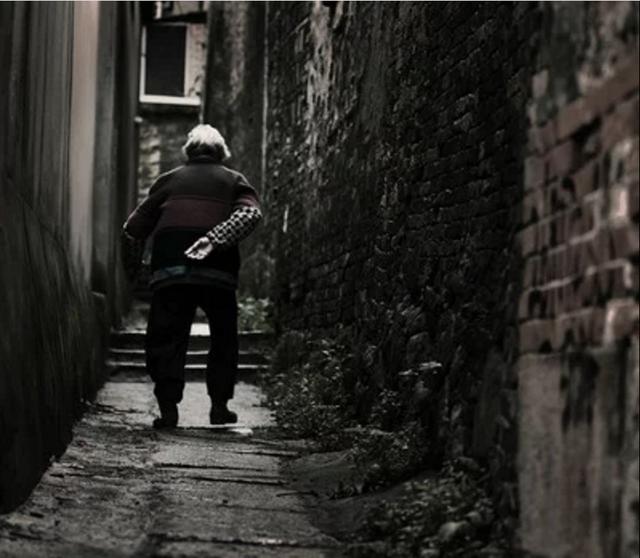
Some memories cannot be erased, and there is a kind of love deeply rooted in the depths of our hearts...
I remember that after the Spring Festival three years ago, the children who worked and studied away from home set off one after another, and Mother's eyes were full of infinite reluctance and the sorrow of parting. She could not bear to let the children leave; she feared that this departure might become a final farewell.
Just before the New Year, as soon as the twelfth lunar month began, Mother would get up every morning, wash up, habitually open the calendar, and count the days on her fingers, waiting for her grandchildren to return.
Watching Mother's increasingly aged body and slow movements, I said with a heavy heart, half reproachfully: "Mom, looking forward to them coming is a burden on you. Every meal means you have to go into the kitchen. What is there to look forward to?" Mother's face immediately darkened. With those slightly puffy and somewhat cloudy eyes, she glared at me fiercely: "Think about it, at my age, what else can I look forward to?" I had no reply. Yes, Mother, who had toiled her whole life, from black hair to white, had lived for nothing but hoping. Now, with her bloated body and her bent legs, she still had to busy herself cooking and doing housework every day. Even when she felt unwell or fell ill, as long as she could endure it, she never said a word. She was always afraid of delaying her children's work and affecting the lives of her children and grandchildren.
Mother lacked parental love from childhood. At that time, driven by hardship, she was sent at the age of 8 to a relatively well-off relative's home to make a living. She experienced the coldness of the world, tasted all the sweetness, bitterness, sourness and spice of life, and endured enough of the indescribable humiliation and pain of living under someone else's roof. Leftovers, beatings, scoldings and humiliation accompanied her into adulthood. It was New China and the new society that gave her the chance to walk out of a feudal-controlled family. A chance encounter led her to meet my father, and only then did her life's fate change.
At that time, whenever Mother mentioned those distant old matters, tears of sorrow and grief would well up in those once clear and bright eyes. When she spoke of those who had helped her in difficult times, she was always filled with gratitude, talking endlessly and recounting them one by one as if counting treasures, repeatedly urging us: in this life, one must hold goodwill in one's heart, remember kindness and repay it, and treat others well. She lived her whole life with backbone. In her vocabulary there was never "afraid," "tired," or "no money"; even sighs were rarely heard. Although the family's conditions in every respect were hard at that time, Mother always found every possible way to let us eat our fill and dress warmly, pouring every bit of warmth into her children. Even in the most difficult moments, the confidence, resolve, endurance and perseverance revealed in her eyes remained in my heart and in my world for all my life.
Mother had been married into the family for more than fifty years, yet she still kept her dialect, the Liangzhou speech. That dialect was mixed with Minle local speech, and it sounded quaint, humorous, plain and warm, such as "men are rakes, women are boxes," "a steady stream runs far, and with that food and clothing are no worry," "even the poor have overnight rice, and no married couple has an overnight grudge," "when exposing someone, do not expose their shortcomings; when hitting someone, do not strike their face," "poor planning makes a lifetime of poverty," and so on. Some of these sayings, when pondered, are simply classics. No matter what matter was brought up or what kind of person was being discussed, Mother always had a humorous and witty saying on her lips, making everyone present clap and praise her. At such times, Mother's face was like a blooming flower, and her eyes overflowed with happiness and sweetness.
Later, although Mother lived in the city, her heart belonged to the countryside. She loved crops, loved the land, and liked talking with rural people. When the old men and women in the residential compound gathered to play cards or mahjong, Mother would sit to one side staring blankly ahead, uninterested in the noisy scene. But as soon as someone talked about the countryside, fields, or topics related to crops, a light would immediately flash in her eyes, and she would become talkative, speaking eloquently about her own experience of planting fields and harvesting crops, and describing the hardships of rural people in spring sowing, autumn harvesting and winter threshing.
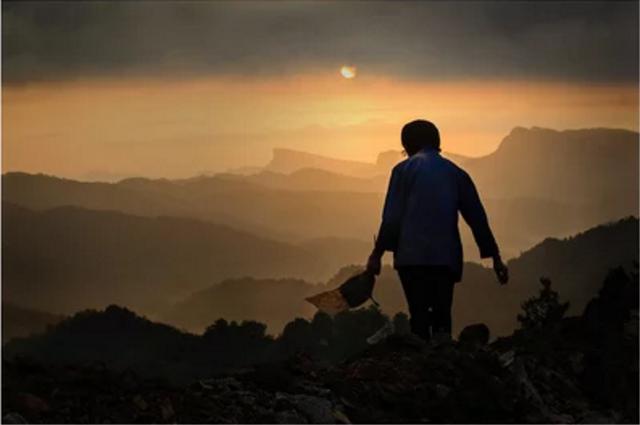
One spring there was little rain or snow, and she kept saying from time to time, "The soil in the fields is all dry. If the seeds are planted, they will not sprout. If things go badly, insects will eat them, and then the farmers will have nothing to hope for." We all laughed at her: "What era is this? Who are you worrying about?" She would always refuse to accept it and rebut with facts: "No matter what era it is, people still have to eat. If the crops have no harvest, then no matter how much money you have, without grain, there is nothing you can do." She would wipe her lips with her fingers, then turn the calendar page by page and mutter to herself: "If rain falls on the eighth day of the fourth lunar month, even pigs and dogs will not eat wheat bran." She seemed immersed in deep recollection...
In Mother's gentle eyes, what was held was not only affection. I remember when we were in our old rural home, Mother's eyes could not only see through the good and evil in people's hearts, but could also measure the amount of land and the amount of seed to be sown.
In the late 1960s, my father was a "capitalist-roader" locked in a cowshed, and our family could hardly protect itself, yet Mother was not afraid of the coercion of being dragged out to be struggled against alongside him, and she insisted on sympathizing with those "landlords, rich peasants, counter-revolutionaries, bad elements and rightists" who were struggled against by the "poor and lower-middle peasants." She always found excuses to bring a bottle of water or hand a piece of steamed bun to the old people wearing "tall hats" and standing at the edge of the fields. Privately, she comforted those who were being persecuted: "The sky will clear up someday. Grit your teeth and endure it, and it will pass. No matter how hard it is, we must live for our children."
At that time our family had no strong laborer. Even though Mother worked herself to death for a whole year, she still could not earn enough work points for the whole family's grain rations. I remember once I followed Mother happily to the threshing ground to divide the grain. The wheat kernels in the threshing ground were piled up like a small mountain. Almost every household turned out in full force, some pulling handcarts and some leading donkeys. The adults tucked woolen sacks under their arms, and each household had one person lining up in order of arrival. The team leader supervised, the storekeeper weighed, and the accountant called out the household heads' names according to the roster, one hand moving the abacus while loudly announcing the grain each was due. A great pile of wheat was shoveled into hemp sacks one scoop at a time, and after being weighed it was either loaded onto donkeys' backs or put into handcarts and pulled away. When my mother's name was finally called, I heard murmuring from the crowd behind: "Family in arrears..."
The accountant quickly calculated that our family should receive 176 jin of wheat, and he glanced at the team leader beside him. That team leader, whose face was covered with stubble, stood with both hands behind his back, staring gloomily at the scale: "Has the overpayment been paid?" Mother answered timidly, "Please give us a few more days." She reached out the sack in her hand, ready to collect the grain. "No! Whenever the payment is made, that is when the grain is divided." In front of everyone, Mother's already thin face immediately turned pale. She lowered her head and withdrew from the line for dividing grain.
Later, no matter how tight the family's finances were, Mother always calculated that she must save money and pay the overpayment first.
In those years, the family relied on Father's meager salary, which could only maintain daily expenses for oil, salt, soy sauce and vinegar and our school fees. Every year Mother raised a pig. Regardless of day or night, she rose early and worked late, cutting grass and collecting manure, adding feed and food for the pig. Mother hoped the pig she raised would be fat and strong, sell for more money, pay off the grain payment, and no longer suffer people's scornful looks. Later, our whole family left that hometown that made us reluctant to part with it and also broke our hearts, and followed Father into the county town. When villagers came to the county town on business, they often stopped by our home to rest. Mother never found it annoying; she served tea, poured water, offered cigarettes, and cooked meals.
One day, that team leader who had once made things difficult for us countless times stood at our door. From the bottom of our hearts we disliked him, and we all wore gloomy faces. But Mother warmly invited him into the house, offered him a seat, handed him a cigarette, and asked about the health of the older generation in the village and how the crops were growing. Later, we heard him stammer out that he had come to borrow my younger brother's college entrance exam books.
My younger brother had already been admitted to university, and those stacks upon stacks of exam books had long been idle, but we would give them to anyone rather than to him. Mother went into the bedroom to get the books, and I pressed them down firmly and would not let her. I struggled back and forth with Mother: "I just will not give them, not even if we burn them!" Mother forcibly snatched the books from my hands: "People you do not need may be needed three times; roads you do not take may still have to be walked three times. A living person cannot be so short-sighted!"
Mother was just like that, never calculating personal honor or disgrace, always thinking of others in everything. No matter where she was, she would hold up a patch of blue sky for her children and open up a broad stretch of land for her family.
Mother, who had waited through stars and moon for her children to grow up, after we all had our own families and our own lives, was instead firmly trapped in a reinforced concrete building, guarding loneliness and cold quiet alone, until she suddenly fell ill and hurriedly left us.
Now, my longing for Mother is like a love bean planted in the depths of my heart, with roots so deep, leaves so green, and flowers blooming so luxuriantly...