-
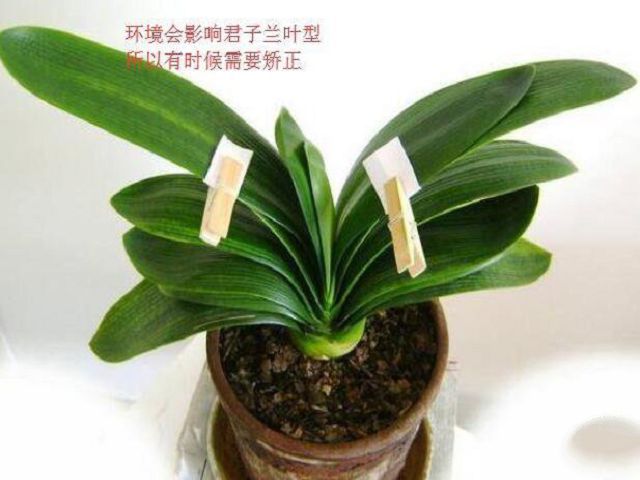
What fertilizer makes Clivia leaves hard and thick with deep veins?
What fertilizer should be used for Clivia to make the leaves hard and thick with deep veins
-

How to choose a special flower pot for clivia? A deep pot is the most suitable
Special flower pots for clivia: a deep pot is simply the most suitable for clivia
-
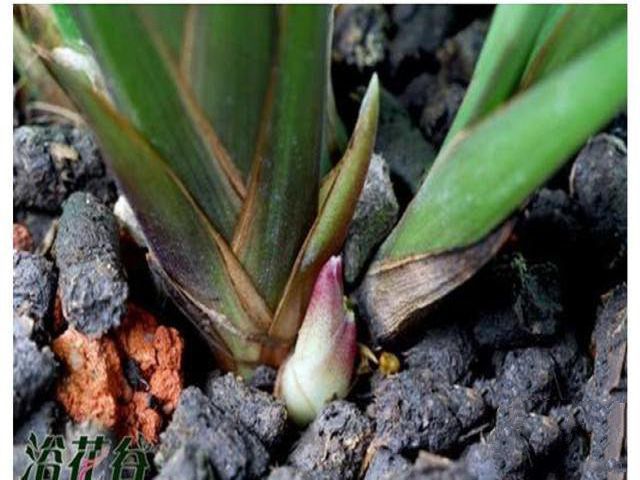
Is it okay to expose the pseudobulbs after the orchid has sprouted when it was planted too deep?
Is it okay to expose the pseudobulbs after the orchid has sprouted when it was planted too deep?
-
How should a tempered glass screen protector be applied in a deep V-shaped area?
Three-lobed, short-foot, round-head, tightly edged; green-shell type plum petal; thick petals; divided-socket silkworm-moth dear-heart; large ruyi tongue; one-character shoulder. It has been listed as one of the New Eight Varieties of Cymbidium faberi. The flower scape is slender and round, a light green "lamp-rush stalk," rising above the leaves. The outer three lobes are short-footed and round-headed, tightly edged, with thick petal flesh; the two lateral sepals are in an arching embrace, and the tongue surface has brilliant red spots.
-
Is deep planting or shallow planting more beneficial for the growth of Cymbidium faberi?
Exploring deep planting versus shallow planting of Cymbidium faberi
-
What effect does deep versus shallow planting of orchids have on strong shoots?
The relationship between deep and shallow planting of orchids and strong shoots
-
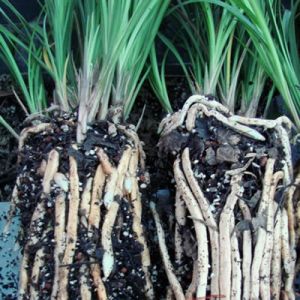
Is it better to plant orchids deep or shallow? A detailed explanation of planting methods
For planting Cymbidium lianpan in Yunnan, leaf mold (chestnut tree) is often used. Leaf mold for growing orchids has moderate fertility and acidity, retains water while draining well, and contains rich natural elements and beneficial microbial communities. It does not need to be sterilized, because after high temperatures the leaf mold's nutrients and beneficial microbial communities are damaged to some extent, fertility is released quickly, and the acidity...
-
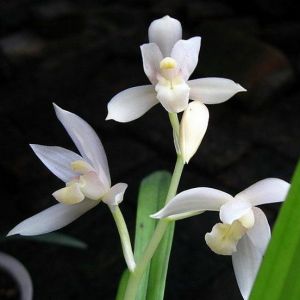
What are the Suxin varieties of Jianlan (Cymbidium ensifolium)? A deep dive into Suxin Jianlan
The Rongxian Snow-white variety with a touch of pale red on the peach cheeks is even more charming. This variety generally does not exceed 30 cm under natural cultivation; the ones I grow are basically around 25 cm, with leaf width just under about 1.3 cm, the leaves tending yellow-green, the flowers easily rising above the foliage, and the flowers large, fully 4 cm - a typical small-plant-big-flower type, with very broad petals; even weak seedlings when they bloom...
-
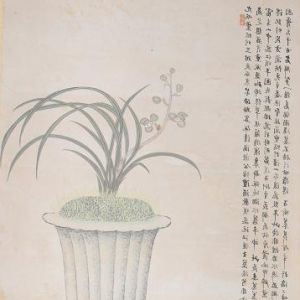
What are the reasons the Four Seasons Orchid (Cymbidium ensifolium) is so deeply loved
This variety has been lost. Chihui, produced in the mountains of Fuyang. The red pistil tip is flat and round like a longan, and the arranged pistil heads look like lotus seeds growing upside down. The petals are as thick as coins, and like coins, they shatter upon hitting the ground. The leaves are broad and short, and it flourishes when given fertilizer. In Jiajun, Fang Lanhai entrusted the old orchid grower Zhang Shenglin to purchase it from a mountain household, and it flowered again for several years. This variety is neither plum nor narcissus; all five petals and the lip are round, truly a wonder of a thousand years...
-
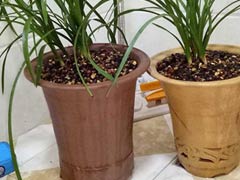
Why do orchids need deep pots? Actually, shallow pots work too
Whenever I see photos of fellow growers' orchids, I notice that most of them are in deep pots. Some growers wonder why orchids need deep pots. In fact, the main advantage of deep pots is that they look attractive, showing off the orchid's graceful leaf posture, complementing the elegance and grandeur of the flowers, and they don't constrict the orchid roots....
条件筛选