How do you grow Venus flytraps with big traps? The pot needs to be deep, the light needs to be ample, and water and nutrients must not be lacking.
Every summer, to avoid the annoyance of flies and mosquitoes, people choose to keep a Venus flytrap at home, because it is a mosquito-repelling plant. It is said that the Venus flytrap's traps can catch small insects such as flies and mosquitoes. The bigger its traps, the better it catches insects. So how do you grow Venus flytraps with big traps? On this point, the editor will tell you a few useful methods. Come in and take a look!
1. Which Venus flytrap variety has big traps: the Giant Traps Venus flytrap
As a plant that can catch mosquitoes and flies, the Venus flytrap has been cultivated for many years and now has many varieties. As for which Venus flytrap variety has big traps, there are actually many, such as the Giant Traps Venus flytrap, the Dwarf Giant Venus flytrap, the CUP Venus flytrap, and the Extra Large Venus flytrap. Their traps are all quite big, but among these, the editor recommends that beginners choose the Giant Traps Venus flytrap.
2. How do you grow Venus flytraps with big traps: light must be ample
In the hot summer, many people excitedly keep a Venus flytrap, because it can catch flies and mosquitoes and looks very interesting. However, many people run into a problem during cultivation: the Venus flytrap grows well and produces many traps, but they just will not grow big. So how do you grow Venus flytraps with big traps? This requires skill. On this point, the editor has summarized the following 8 points for everyone:
1. The pot must be deep
When growing Venus flytraps indoors, many flower enthusiasts care about the soil but neglect the pot, and this is one of the reasons the Venus flytrap's traps do not grow big. When cultivating Venus flytraps, the pot is very important. Everyone should try to choose a deeper pot, because only then can it better provide the nutrients the Venus flytrap needs for growth and let its root system grow comfortably. After doing this, the Venus flytrap's traps will more easily grow to a large size.
2. Light must be ample
Because the Venus flytrap is a swamp plant, where there are no tall plants to provide shade, it has developed the trait of liking light and not fearing harsh sun. Moreover, the more ample the light, the better the Venus flytrap's traps grow. So for how to grow Venus flytraps with big traps, the light must be ample, but in the summer in the south, it is best to provide 50% shade, otherwise it is easily sunburned.
3. The soil must be loose
How do you grow Venus flytraps with big traps? The choice of soil is also very important. Loose soil is more conducive to the growth of the Venus flytrap and to ventilation around the roots. With air circulation, it grows better, and the traps naturally grow bigger.
4. Moss
Besides light and potting soil, moss is also very helpful to the Venus flytrap, though it will cost you quite a bit of money. Laying moss in the pot can help the Venus flytrap retain and release moisture, which is more conducive to its growth and easily lets the Venus flytrap's traps grow big.
5. Water and nutrients
If you want the Venus flytrap's traps to grow big, watering and fertilizing are indispensable. When watering the Venus flytrap, you should use soft water, that is, water with low mineral salt content; during the Venus flytrap's growing season, you can fertilize once every 1-2 weeks, which lets the plant grow better and the traps grow bigger.
How do you grow Venus flytraps best? Venus flytrap cultivation methods and precautions
The Venus flytrap is a perennial herbaceous plant native to North America and a very interesting carnivorous plant. Its stem is very short, and at the tip of the leaf grows an insect-catching trap that looks just like a “shell”, and it can secrete nectar. When a small insect intrudes, it can clamp it shut at extremely fast speed and digest and absorb it. Now let us take a look at how to grow Venus flytraps best!
The growth habits of the Venus flytrap
The Venus flytrap likes a cool, moist environment and needs ample light during the growing season. Its suitable growth temperature is 15-20°C, and indoors it should be placed in a bright place. In summer, when the temperature is high, direct sunlight causes poor growth, so shading should be provided. Especially in the tropical and subtropical regions of the south, excessive heat must be prevented so as not to affect growth. In winter in northern regions, it should be brought into a greenhouse or into the home of a household with heating, placed in a spot that sunlight can reach, and kept at a temperature above 10°C, with the lowest not below 7°C, so as to avoid frost damage that causes leaf drop.
Asexual propagation of the Venus flytrap
1. Leaf cutting method: Strip a whole leaf from the mother plant, insert it at an angle or lay it flat on a clean substrate such as sphagnum moss, and maintain high humidity and bright light. In about 2 months, buds can grow.
2. Division method: The Venus flytrap often grows side shoots. When they grow large enough, the divided bulbs will naturally separate from the mother plant. At this time, you can dig them out and cultivate them separately or separate them when repotting.
3. Flower bud method: The flower bud of the Venus flytrap sometimes turns into a plant. It is already known that this phenomenon is caused by temperature differences. If the day-night temperature difference is very large, it will induce the Venus flytrap's flower bud to transform into a new plant. At this time, you can cut off this small plant and plant it in soil, and then it is another new Venus flytrap.
Seed propagation of the Venus flytrap
1. Flower pot: Fill the flower pot with substrate, then place it in a glass tank or water basin containing purified water, so that the substrate absorbs water until the surface is moist, then use a spray bottle to moisten the surface (spray in mist form).
2. Sowing: Carefully open the seed packet and evenly scatter the seeds on the surface of the substrate, then cover with 0.3 cm of culture soil.
3. Spraying water: Use a spray bottle to moisten the surface (spray in mist form), spraying carefully so the seeds are not washed away.
4. Cultivation: Place the flower pot with the seeds sown, together with the glass tank or water basin, on the inner side of a sunny windowsill. If it is a water basin, add a plastic cover with an opening at the top to retain moisture. Pay attention to replenishing water in time. Generally, they germinate in about 10 days (at 20 degrees).
5. Seedlings: When the seedlings grow 2-3 true leaves, they can be transplanted. For transplanting, use sphagnum moss to wrap the base of the plant (not too high; it is suitable to wrap the roots), with a certain firmness (when pinched with a finger, it can sink and then spring back). After transplanting, water thoroughly with clean water to settle the roots.
Cultivation methods for the Venus flytrap
1. Substrate: To grow Venus flytraps, you need a substrate with good water retention that is acidic or even strongly acidic, with a pH between 3 and 5. You can use pure sphagnum moss or a mixed substrate of 2 parts peat plus 1 part perlite or coarse sand. For tray watering cultivation, you can use a mix of 1 part peat and 1 part perlite or coarse sand. When planting, the white bulb part should be buried entirely in the substrate. If the leaves curve downward and make it hard to work, you can wrap the stem in sphagnum moss to make insertion easier, or lift the leaves upward before inserting. The substrate can generally be changed once every one or two years depending on actual use; repotting is best before growth begins in early spring. When repotting, clean away dead leaves thoroughly, and if there are divisions, plant them separately to favor growth. The Venus flytrap's bulb grows prostrate, and after a period of time the plant will shift position in order to obtain more nutrients. When repotting, replant it in the center of the pot or leave more distance in the direction of the growth point.
2. Water: The Venus flytrap is relatively sensitive to salt. If the mineral concentration in the water is too high, the plant will decline and even die, showing as the plant stopping growth or becoming smaller, and unaged traps, leaf edges, and growing points beginning to wither. Therefore, water with low mineral content must be used. The Venus flytrap likes moisture and cannot tolerate dryness. During the growing season, the substrate must maintain relatively high humidity but must not be waterlogged. Besides daily watering, you can also use the low-water-level tray method. The substrate absolutely must not dry out completely; after drying out, the plant shrinks and suffers severe damage or even death. During dormancy, the substrate should remain damp but not wet; if too wet, the plant easily rots.
3. Humidity: The air humidity for the Venus flytrap should remain above 50%. A general growing environment can satisfy this, and no special humidification is needed as long as the potting soil is moist. But newly planted Venus flytraps must maintain high humidity to avoid dehydration and shrinking. After the roots have grown well and the plant begins normal growth, gradually lower the air humidity.
4. Temperature: The suitable growth temperature is 20-30 degrees, and it can survive at -7 to 38 degrees. High summer temperatures (maximum temperature above 35 degrees) easily cause stem rot. Good environmental ventilation, root cooling, good light, and a large day-night temperature difference all help reduce the occurrence of disease. When the winter temperature is below 10 degrees, it will go dormant. During dormancy, most leaves will wither, leaving only the very small dormant leaves in the center. If the temperature drops further to around 0 degrees, the leaves and roots may all wither, leaving only the underground bulb to overwinter. The dormant bulb is relatively frost-resistant and can withstand short periods of low temperature around -7 degrees.
5. Light: The Venus flytrap is a light-loving plant and can receive full sun. Suitable light can make the plant strong, with larger traps and vivid colors. But in summer, to avoid high temperatures, appropriate shading can be used. You can use a shade net with about 50% shading rate or place it in a bright spot that does not get direct sun around midday. Insufficient light makes the plant weak and slow-growing, with dark green, thin, tender leaves and small traps, and traps or petioles that are normally red turn green (in this situation, do not provide strong light immediately, to avoid sunburn from not being adapted to strong light; instead, gradually increase light).
6. Nutrients: During the growing season, you can use a general-purpose compound fertilizer diluted five thousand times and spray it on the leaves, 1-2 times per month. When fertilizing, it is better to use dilute fertilizer frequently; never use too high a concentration, to avoid the serious consequences of fertilizer burn or even fertilizer death. If you have no experience, do not fertilize at will. You can also use the feeding method, feeding insects or fresh lean meat, and the size must be appropriate, preferably 1/3 the size of the trap, so that the trap can completely enclose the food. The number of traps fed must not exceed 1/3 of the total number of traps. But even if you do not fertilize or feed, the Venus flytrap will not “starve to death”; the substrate also contains necessary nutrients. The plant must also obtain growth through photosynthesis, and feeding cannot replace photosynthesis, so good light is still needed.
7. Pests and diseases: Summer is stuffy and humid, making leaf spot disease and stem rot disease likely. You can spray a broad-spectrum fungicide for prevention and control. Good environmental ventilation, root cooling, good light, and a large day-night temperature difference all help reduce the occurrence of disease. If part of the stem is found to have rotted, immediately remove the rotted part completely, then soak it in fungicide for 5 minutes, and plant it in a sterilized, clean substrate.
Venus flytrap Dionaea muscipula Venus flytrap gallery: how to grow Venus flytraps / how to propagate Venus flytraps
Venus flytrap profileVenus flytrap Dionaea muscipula
Venus flytrap cultivation methods and precautions, introduction to the Venus flytrap
The Venus flytrap (Catchfly) belongs to the vascular plants and is a very popular carnivorous plant, possessing complete roots, stems, leaves, flowers, and seeds. Its leaf blades are the most important and obvious part, with the function of catching insects. Its appearance has obvious bristles and red sessile gland areas, looking like a gaping bloody mouth with bared teeth and claws. Potted plants can be used for viewing on sunny windowsills and balconies, and can also be specially grown in planting troughs; the Venus flytrap is praised as the carnivorous plant of the natural world.
The Venus flytrap (scientific name: Dionaea muscipula) belongs to the family Droseraceae and the genus Dionaea. It is an evergreen perennial herbaceous plant. It is native to the southeastern United States and was first discovered in North Carolina, USA. In recent years, it has been introduced and cultivated in our country. It is a rare foliage plant.
It is said that because the leaf edges have regular bristles, it feels like Venus's eyelashes, so the English name is Venus Flytrap, meaning "Venus's fly trap". In Chinese and Japanese, the Venus flytrap also has the alias "hell of flies" (ハエジゴク). Its main feature is that it can very quickly close its leaf blades to prey on insects. This is one of the carnivorous plants like its distant relative the pitcher plant, and it is the only species in the genus Dionaea of the family Droseraceae. The Venus flytrap (Venus flytrap) belongs to the vascular plants and is a very popular carnivorous plant, possessing complete roots, stems, leaves, flowers, and seeds. Its leaf blades are the most important and obvious part, with the function of catching insects. Its appearance has obvious bristles and red sessile gland areas, looking like a gaping bloody mouth with bared teeth and claws. Potted plants can be used for viewing on sunny windowsills and balconies, and can also be specially grown in planting troughs. The Venus flytrap is praised as the carnivorous plant of the natural world.
Morphological characteristics of the Venus flytrap
The Venus flytrap is an evergreen perennial single-stemmed plant. The plant type is short. The petiole is broad and leaf-like. On the petiole grow 2 opposite leaf lobes, in a slightly opened shell shape, with an opening angle generally less than 90°. The leaf vein where the leaf lobes are attached is swollen, and each leaf lobe has 3 sharp bristles arranged in a triangle. The edges of the leaf lobes bear many sharp, stiff spikes. The leaf surface has many slightly purple glands that can secrete digestive fluid. It has an umbel inflorescence, white flowers, a scape 10-40 cm long, 5 petals, 0.12 cm long, with irregular notches at the tip, and a certain ornamental value.
Roots and stems
The roots of the Venus flytrap (also called insect-eating grass, insect-catching grass) are relatively short and not well developed, with the functions only of absorbing water and anchoring. Its stem is also smaller than that of ordinary plants, and the connection to the petiole is not obvious, but during growth it develops an underground bulb, and the bulb is an evolved type of modified stem.
Leaves
The leaves of the Venus flytrap grow out from the center and are whorled leaves, appearing in a rosette-like form and growing in a clustered shape.
The flat or thin linear wing-like part growing from the center is the petiole portion. The petiole of the native species is flat like a leaf blade, and because it instead looks like a leaf, it is also called a false leaf.
At the end of the petiole there is a trap, and this is the part of the leaf that catches insects. The front side is distributed with many sessile glands, generally red or orange. The closer to the leaf green area, the fewer the sessile glands. This part is the site that secretes digestive fluid to break down insects or absorb the nutrients of insects. The leaf green area has tooth-like bristles, and at the base of the bristles there are secretory glands that secrete mucus, whose function is to prevent insects from escaping and to bind the leaf lobes. This kind of leaf has the special function of catching insects and a special appearance, and belongs to the "insect-catching leaf" among modified leaves.
Because new leaves are all produced from the center, the more outer the leaf, the older it is. At the base of the outermost petioles, new side shoots are sometimes also produced. The petiole of the Venus flytrap has two forms. Some Venus flytraps have slender petioles, reaching 7-16 cm long, and extending toward the air; some Venus flytraps grow short, thick petioles and lie flat on the ground. The inner side of the trap usually shows a red color. These colors are mostly pigments of the digestive glands. When the plant can receive sufficient sunlight, it promotes the production of plant pigments. These colors range from orange-red to red-purple, and some cultivated Venus flytraps even produce pigments outside the digestive glands, thereby making the entire plant turn red.
However, some cultivated Venus flytraps do not produce much pigment, so the inner side of the trap appears only green. These phenomena are formed by genetic differences, so in horticulture some cultivated varieties have already been produced because of these differences in appearance. Under good cultivation conditions and with sufficient nutrients, the Venus flytrap will grow larger traps, but it will reach a limit. The Venus flytrap's trap can reach a maximum of about 3 to 5 cm long. The size of the Venus flytrap's trap is the optimal size obtained through long evolution. A trap of this size allows the Venus flytrap to catch most insects. If the Venus flytrap's trap could grow larger, then the Venus flytrap would have many fewer predation opportunities, because larger insects are few in number, while the numerous small insects could escape from a larger trap. Therefore, being able to grow a larger trap is disadvantageous to the Venus flytrap and would be eliminated by the evolutionary process of survival of the fittest.
Flowers
The flowering period of the Venus flytrap is from early summer to midsummer. In the initial stage, it grows a flower scape, and each scape has about five to ten flower buds. It belongs to the standard corymb inflorescence, opening white flowers in sequence each day. In principle, each plant will produce only one flower scape. If the growing environment is suitable and nutrients are sufficient, sometimes two flower scapes will also grow. Under normal conditions, most have five petals and five sepals, and occasionally there are variant plants with six petals. There are about a dozen stamens, and in the center there is one pistil with a forked stigma.
Self-pollination in the Venus flytrap is relatively rare, because when the stamens are about to grow pollen, the style of the pistil is in a closed state. Only when the stamens begin to lean and droop outward does the stigma open and become forked, and only then is it in a state where pollination is possible. This type, in which the stamens mature first and the pistil develops later, is quite common in the plant kingdom, mainly to avoid self-pollination. In professional terminology, this kind of flower is generally called a protandrous flower.
Apart from the flower scape, there is generally no taller part growing upward. The normal stem is short and hard to notice, and the petioles and leaves do not rise above the flower scape. This is a characteristic of carnivorous plants. Because besides preying on insects to absorb their nutrients, for the continuation of the offspring it also needs the help of insects for pollination, which is also a so-called insect-pollinated flower. Therefore, the two parts, nutrient supplementation leaves and flowers, must be distinguished. It can be said that this is the natural wisdom given to them by nature.
Characteristics
The Venus flytrap is a very interesting carnivorous plant. Its stem is very short, and at the tip of the leaf grows an insect-catching trap that looks just like a "shell", and it can secrete nectar. When a small insect intrudes, it can clamp it shut at extremely fast speed and digest and absorb it. The Venus flytrap's unique insect-catching ability and cool appearance have made it the most beloved carnivorous plant in the world.
Ecological habits of the Venus flytrap
The Venus flytrap likes cool, moist environments and ample light. It grows best on moist, fertile substrate mixed with peat and moss. It fears heat and fears harsh sun exposure, and grows poorly when the air is dry.
The Venus flytrap likes a cool, moist environment. During the growing season it needs ample light. Its suitable growth temperature is 15-20°C, and indoors it should be placed in a bright place. In summer, when the temperature is high, direct sunlight causes poor growth, so shading should be provided. Especially in the tropical and subtropical regions of the south, excessive heat must be prevented so as not to affect growth. In winter in northern regions, it should be brought into a greenhouse or into the home of a household with heating, placed in a spot that sunlight can reach, and kept at a temperature above 10°C, with the lowest not below 7°C, so as to avoid frost damage that causes leaf drop.
Growing environment
The native habitat of the Venus flytrap is grassland on wetlands, and the soil in that area is mostly peat and silica sand. Its water source is mostly rainwater. Because rainwater mixes with carbon dioxide in the atmosphere after falling to the ground, it creates an acidic environment, with a pH value of about 5-6. From this it can be known that the Venus flytrap prefers to grow in places with abundant water and an acidic environment as the medium.
The acidic soil plus relatively low temperatures hinder the growth of bacteria that decompose organic matter. With organic matter not being decomposed, the remains of plants such as sphagnum moss cannot fully decompose and rot, and these rotting organic matters become peat, with very few nutrients, almost none. In addition, after being washed by rainwater year after year, trace elements are almost all lost. Therefore, the native habitat of the Venus flytrap is a barren land where, besides being deficient in the essential growth nutrients nitrogen and phosphoric acid, even trace elements are very insufficient.
Distribution area of the Venus flytrap
The Venus flytrap survives only on the coastal plain of southeastern South Carolina and the northeastern corner of North Carolina in the United States. In its place of origin, Carolina, the Venus flytrap grows in moist sandy or peaty wetlands or swamps. These areas usually appear as grassland, with only scattered pine trees distributed, so they are very open and can receive a large amount of sunlight. The climate here is warm and humid. In summer, the days are hot and the nights can remain warm. In winter it is very cold, but not so cold that it snows often. However, in its place of origin, the Venus flytrap is threatened in its survival by human activities. Rapid population growth has deprived the Venus flytrap of living space, and because of human intervention in the occurrence of natural wildfires, these areas have begun to grow some small shrubs, thereby shading the Venus flytrap from sunlight. Therefore, the Venus flytrap has been introduced to other areas for restoration, such as New Jersey and California. However, in Florida it has successfully naturalized and become a very large population.
Place of origin
The Venus flytrap is native to the eastern coast of North America. Its natural place of origin is mainly in North Carolina, South Carolina, Florida, and other places. The characteristics of its growing environment favor moist areas. Many local areas are alluvial landforms, and summers are hot while winters are cold, with large day-night temperature differences, belonging to a typical continental climate. These are all environmental conditions suitable for the growth of the Venus flytrap. The United States has designated its places of origin as protected areas, and even in Appendix II of the Convention on International Trade in Endangered Species of Wild Fauna and Flora, it is explicitly stipulated that the tubers and bulbs of the Venus flytrap are completely prohibited from export and sale. However, because many plants had already flowed out before that, and with active cultivation by growers around the world, even using tissue culture technology for mass production, it is generally already very easy to buy Venus flytraps on the market.
Variety classification of the Venus flytrap: Venus flytrap
The Venus flytrap is the only species of Venus flytrap. Its leaves have two forms. In summer, the lower part of the leaf is slender and extends into the air; in other seasons, the lower part of the leaf is short and broad and lies close to the ground. When light is ample, the inner side of the trap appears pale red. After autumn begins, the trap appears red. During winter dormancy, the large leaves basically wither, leaving only very small traps that do not catch prey.
Larger trap diameter: 3-5 cm
Survival temperature: 0-38°C
Suitable temperature: 20-30°C
Cultivation substrate: peat, sphagnum moss, perlite, sand, etc.
Environmental humidity: >50%
Place of origin: United States
Adult plant size: diameter about 15-20 cm (slight variation).
Cultivation techniques for the Venus flytrap
Plant in spring. Suitable for potted indoor viewing. It grows better in northern regions, but in winter it needs to be brought indoors to overwinter. In the tropical and subtropical regions of the south, because temperatures are high, getting through summer is difficult, so shading and cooling should be provided. For potting, it is best to choose culture soil mixed with peat and moss. Replace the potting soil once every spring.
It likes a cool, moist environment. During the growing season it needs ample light. Its suitable growth temperature is 15-20°C, and indoors it should be placed in a bright place. In summer, when the temperature is high, direct sunlight causes poor growth, so shading should be provided. Especially in the tropical and subtropical regions of the south, excessive heat must be prevented so as not to affect growth. In winter in northern regions, it should be brought into a greenhouse or into the home of a household with heating, placed in a spot that sunlight can reach, and kept at a temperature above 10°C, with the lowest not below 7°C, so as to avoid frost damage that causes leaf drop.
During the growing period, pay attention to watering and often keep the potting soil warm and moist. In the peak growing season, especially in summer, not only water the pot but also, when the air is dry, frequently spray the leaf surface and surrounding ground to increase air humidity. When growing indoors, pay even more attention to preventing dryness. You can place a shallow water tray under the pot and cover it with a glass box on top, which helps maintain relatively high air humidity in the small environment.
Cultivation medium
1. The Venus flytrap prefers a cultivation medium with good water retention that is acidic. You can directly use peat soil or sphagnum moss for cultivation, that is, use only a single medium completely. However, sphagnum moss is more expensive and has a shorter service life, but it is cleaner than other cultivation media, so sphagnum moss is more suitable as a cultivation medium for leaf cuttings or small seedlings. Larger Venus flytraps are more suitable for using lower-cost peat soil. Some peat soil has a finer texture, so using only peat soil may cause poor drainage and easy water accumulation. We can add a small amount of perlite or granular soil to the peat soil, or mix peat soil and sand in a one-to-one ratio. In fact, in its place of origin the Venus flytrap grows on sandy land, so a cultivation medium made by mixing sand and peat soil may be the best choice. Because the Venus flytrap likes a slightly acidic cultivation medium, when choosing sand, mainly use quartz sand, silica sand, or river sand; do not use sand containing calcium, such as coral sand or shell sand.
2. The fresher the seeds, the higher the germination rate. It is best to sow in spring. Place them in a sealed transparent container with sphagnum moss inside, scatter the seeds on the surface of the sphagnum moss (remember not too densely). The humidity standard is that the sphagnum moss does not drip water (meaning the maximum saturation of the sphagnum moss). Cover the top with plastic wrap, poke a few small holes in the plastic wrap with a toothpick, and place it in a place with strong light but no direct sunlight. Good-quality seeds germinate in about a week. When the plant height or diameter is about 2 cm, transplant it into an ordinary flower pot. After transplanting, it still needs acclimatization.
Watering
The Venus flytrap likes a moist environment, so the tray watering method can be used for cultivation, but the soaking depth should be a low water level to avoid excessive moisture. From spring to autumn, the cultivation medium can be kept in a moist state. In winter, the cultivation medium should be relatively dry, but the tray watering method can still be used for cultivation.
Light
The Venus flytrap needs a large amount of light. When cultivating Venus flytraps, place them in the sun as much as possible, or at least in a bright place. If the cultivation location does not have enough light, then the cultivation location must be changed.
We can usually assess whether light is sufficient by the Venus flytrap's traps. Most native species or horticultural varieties of Venus flytraps, under cultivation conditions with ample light, have digestive glands that produce anthocyanins, making the inner side of the trap appear orange-red to purple-red, and some red varieties of Venus flytraps even turn the entire plant purple-red. However, there are also some horticultural varieties of Venus flytraps characterized by being entirely green; even with ample light, the traps cannot turn red, but the entirely green varieties of Venus flytraps under ample sunlight have a plant color leaning toward yellow-green.
In Venus flytraps with insufficient light, besides the parts that should be red not turning red, the plant as a whole becomes greener, because under insufficient light the Venus flytrap must produce more chlorophyll to increase the efficiency of photosynthesis, so the plant becomes greener. A Venus flytrap that looks glossy green is a phenomenon of serious insufficient light. Such a Venus flytrap usually has slower movement ability in its traps, and the plant will become smaller and smaller. At this time, it must be moved to a place with ample light as soon as possible.
In the south, if the light is too strong, it will sunburn the Venus flytrap, and the very hot summer in the south is very unsuitable for the growth of the Venus flytrap, often making the Venus flytrap look withered and yellow. At this time, the sunburned Venus flytrap must be moved to a shaded place as soon as possible.
Humidity
Under general cultivation conditions, the Venus flytrap does not need very moist air humidity. It can grow normally in a place with good ventilation but not strong winds. Because the cultivation medium of the Venus flytrap is already very moist, the humidity provided by water vapor evaporating from the surface of the cultivation medium is already sufficient. Unless you live in a relatively dry area, or keep the Venus flytrap in an air-conditioned room for a long time, is it necessary to increase humidity. At this time, you can place the Venus flytrap in an open aquarium or plastic trough to maintain the air humidity around the Venus flytrap.
Under general cultivation conditions, do not cultivate the Venus flytrap in a sealed space, otherwise the ultra-high air humidity will only bring negative effects, making the Venus flytrap easily attacked by pests and diseases. Absolutely do not place the Venus flytrap in a sealed container and expose it to sunlight, otherwise the sunlight and humidity will bring a serious greenhouse effect and heat the plant to death. In flower markets, people often cover Venus flytraps with plastic cups. The purpose of doing so is usually just to prevent customers from touching them at will; otherwise, in cultivation there is no need to raise air humidity to this degree.
Feeding and fertilizing
When cultivating Venus flytraps outdoors, there is usually no need to worry too much about insufficient food. The Venus flytrap itself can attract some insects. If conditions permit, you can use another container to hold something with a strong fishy smell, such as fish or meat scraps left from the kitchen, and thus attract many flies.
The biggest trouble in feeding Venus flytraps is that you must supply live insects, because the Venus flytrap only treats live insects as food; dead insects are usually not treated as food by the Venus flytrap. Although we can still artificially trigger the trap to clamp an insect, without the insect's struggling, the Venus flytrap will only treat the dead insect as a foreign object and will open the trap after a few hours.
Another point to note when feeding Venus flytraps is that you cannot overfeed. When overfed, the phenomenon of premature trap damage occurs, and at this time the trap begins to blacken from the edges. The appropriate feeding practice is that on the same Venus flytrap only one or two traps can catch insects, and the size of the insect must be small enough that the trap can completely enclose the insect. If the insect is too large so that part of the insect is exposed outside the trap, it will cause damage to the trap.
On the other hand, when cultivating indoors, the leftover insect shells after the Venus flytrap finishes eating are inevitably unsightly and may also cause hygiene problems. There is another point: if the Venus flytrap is not grown well, its traps lose vitality and cannot catch insects. Therefore, it is better to provide nutrients to the Venus flytrap by fertilizing, but long-term fertilization will affect the trapping mechanism (such as: traps becoming slow and insensitive, closing speed extremely slow, etc.).
Because the Venus flytrap mainly absorbs nutrients through its leaves, fertilizer should also be absorbed by the leaves. Fertilizer suitable for leaf absorption is called "top dressing". This type of fertilizer is mostly chemical fertilizer, which must be dissolved in water (must be soft water) and then sprayed onto the plant, and the fertilizer will penetrate into the plant body.
A common top dressing brand in flower markets is "Huabao", among which "Huabao No. 5" is suitable for cultivating carnivorous plants. Dilute Huabao No. 5 to four thousand times or more, with eight thousand times recommended, and spray it as a dilute fertilizer frequently onto the Venus flytrap. The principle of fertilizer application is to wet the entire plant. If a small amount of fertilizer flows into the soil, it is not a big problem.
The timing of fertilization must be during the Venus flytrap's growing season, applied about once every one to two weeks. In winter, the Venus flytrap stops growing, and if fertilization continues it will cause fertilizer burn. In addition, when the Venus flytrap's growth stagnates because of a poor cultivation environment, fertilization also cannot be applied. The cultivation conditions must be improved, and only after the Venus flytrap begins to grow can fertilization be applied.
Dormancy
In winter, if the temperature reaches below 10°C, the Venus flytrap will enter dormancy. However, in tropical and subtropical regions (Taiwan, China), the winter is usually not cold enough or long enough, and the Venus flytrap will not completely go dormant. Some have pointed out [Camilleri T, 1998] that if the Venus flytrap does not go dormant for several years, it may very likely lead to death.
Therefore, we can promote dormancy in the Venus flytrap by artificial means. When entering winter, dig the Venus flytrap out of the cultivation medium, cut off the leaves, leaving only the rhizome, then wrap these rhizomes in moist sphagnum moss and wrap them well in a plastic bag, and they can be placed in the refrigerator for cold storage (4°C). After about three months of cold storage, by which time it is almost spring, the stored rhizomes can be taken out and planted back into the cultivation medium, and after several weeks buds will grow.
However, whether the Venus flytrap must go dormant is still not conclusively determined. In other related materials, there is no strong requirement that the Venus flytrap must go dormant, but after dormancy, growth hormones will accumulate at a higher concentration, so after waking up the growth speed will be very fast, and after sending up flower scapes it can also recover relatively well.
Propagation methods for the Venus flytrap
Division is a commonly used propagation method for the Venus flytrap. In southern regions it is often carried out in winter and autumn; in northern regions it can be done in combination with spring planting and potting. Turn the potted plant out, divide it into several clumps, pot them separately, and after watering place them in a cool place for cultivation. After growth resumes, enter normal management.
Sowing should preferably be done in spring or autumn, mostly using pot sowing. The seedling medium uses culture soil mixed with equal amounts of peat soil and moss. After sowing, maintain moisture and suitable temperature, and they can germinate the following spring.
If propagating in large quantities, tissue-cultured plantlets can be used. Use the cotyledons after seed germination or mature leaves as explants. After routine disinfection, on the medium of MS+6-BA 2.0 mg/L+NAA 0.2 mg/L, induce adventitious buds, subculture and proliferate on the medium of MS+6-BA 1 mg/L, and use the medium of MS+NAA 0.5 mg/L for rooting induction. One Venus flytrap can propagate and produce more than 10,000 test-tube plantlets. When the test-tube plantlets are taken out of the bottles, relatively high humidity must be maintained, and the survival rate can reach above 98%.
Sexual propagation
The Venus flytrap can self-pollinate, but usually artificial pollination must be carried out for it to actually set fruit. However, artificial pollination of the Venus flytrap does not necessarily succeed, because the timing of pollination is wrong.
When the Venus flytrap's flower opens, the stamens and pistil do not mature at the same time. When the flower first opens, its stamens have already matured, but the pistil has not yet matured, and at this time pollinating it is useless. The pistil of the Venus flytrap usually matures one day later than the stamens, so the correct approach is to wait until the second day after the flower opens before carrying out pollination. We can also observe the form of the pistil to judge whether it is mature. The stigma at the end of an immature pistil is round; the stigma at the end of a mature pistil will split open, like cotton fluff; only a mature pistil can successfully pollinate.
If pollination succeeds, the flower will wither within 1-2 days, and the ovary (the base of the pistil) will swell, and after a few more weeks the fruit can mature. The seeds of the Venus flytrap are black and teardrop-shaped; one fruit usually contains a dozen or so seeds. The number of seeds is related to the health and size of the plant itself; robust plants usually can set a few more seeds. Sometimes the pollination method is correct, but the seeds still cannot be set. The biggest problem is that the Venus flytrap is not robust enough, or that sufficient light was not continuously provided during the flowering period. At this time, even if pollination succeeds, it is difficult to set seeds.
The seeds of the Venus flytrap do not keep well, so it is best to sow them as early as possible after harvesting. Sometimes, if you want to carry out cross-pollination between different plants, but the plants to be crossed do not bloom at the same time, you can first collect the pollen and store it in the refrigerator to extend the life of the pollen.
Because flowering is a nutrient-consuming activity for plants, if it is not necessary, do not let the Venus flytrap bloom. Especially when you want to grow a very large Venus flytrap, the flower scapes it sends up should be cut off as early as possible to prevent the Venus flytrap from consuming nutrients on flowering. Because the Venus flytrap will bloom when the season comes, some weakened plants will also barely bloom, but to protect the plant, it is still better to cut off the flower scapes.
Asexual propagation by leaf cuttings
The most common propagation method for the Venus flytrap is leaf cuttings, which means inserting a section of leaf stalk into the soil so that a new plant can grow. From late spring to early summer, during the season when the Venus flytrap grows vigorously, after digging the Venus flytrap out of the soil, we can see its white petal-shaped leaf stalks buried in the soil. Peel off the trap together with the leaf stalk (the part resembling a leaf blade), along with the white base of the leaf stalk, then place these leaf stalks on the growing medium, maintain high humidity and give bright light, and after several weeks new shoots will emerge.
The process of new shoot formation is very slow, so you need to wait patiently. As long as the base of the leaf stalk has not turned black or rotted, you should keep waiting. Because the leaf stalk at this stage no longer has roots, maintaining humidity is very important; the moist growing medium must be able to cling to the leaf stalk to provide water. The light intensity at this time is also very important; bright and sufficient light is needed, but direct sunlight must be avoided, otherwise the leaf stalk will become too hot and dry out. The age of the leaf stalk is also related to the success rate of propagation. Usually, leaf stalks in their prime are thicker and have the greatest chance of producing seedlings; old leaves and young leaves are less likely to produce new shoots. Therefore, when propagating, we can use the ring of leaf stalks on the outer edge of the Venus flytrap, and the remaining center part can still be planted back; if the leaf stalk can retain roots, the chance of success will be even higher.
To reduce damage to the leaf stalks, using a clean growing medium is less likely to cause the leaf stalks to rot, so it is recommended to use sphagnum moss as the growing medium for leaf cuttings, and wait until the young seedlings grow before considering transplanting them elsewhere.
Division
Venus flytraps often produce side shoots. As long as the side shoot grows large enough and has a complete root system, it can be separated from the mother plant and cultivated on its own (but some cultivated varieties rarely produce divisions all year round).
Flower buds
The flower bud of the Venus flytrap sometimes turns into a plant! It is already known that this phenomenon is caused by temperature differences. If the temperature difference between day and night is very large, it will induce the flower bud of the Venus flytrap to transform into a new plant. At this time, you can cut off this small plant and plant it in soil, and it becomes another new Venus flytrap.
Key growing points
Light: A swamp plant, its native environment has no tall plants for shade, and it likes sunlight. When cultivated at home, it can receive full sun in spring, autumn and winter; in southern summers, 50% shade should be added or it can simply be placed on a sunny windowsill indoors. Alternatively, use a 40W tube for artificial light cultivation 30cm above the plant, with a lighting duration of 12 hours/day.
Water: Use soft water such as purified water or rainwater as much as possible. Use the tray method (called the "waist water" method in Hong Kong, China and Taiwan, China) to create a small environment similar to its native habitat. The specific method is: place the Venus flytrap pot in a tray or glass container, add water to a depth of 3cm, and replenish the water regularly.
Humidity: Greater than 50%. The native environment of the Venus flytrap is a swampy grassland, where the humidity is relatively high. If a large water tray is used for the waist water method, the nearby humidity will be a bit higher. You can also add a layer of sphagnum moss on the surface of the pot soil, which also helps maintain air humidity.
Substrate: Peat without added fertilizer, granular material (perlite, gravel, etc.) at 1:1, or pure sphagnum moss. The substrate must be replaced once every spring. Note that the Venus flytrap prefers somewhat acidic soil. When potting, broken tiles should be placed at the bottom of the pot.
Temperature: Growing temperature 15°C-35°C, suitable temperature: 21-35°C. In winter, if you want it to go dormant, it must be kept at around 5°C (0-8°C). However, based on many years of cultivation experience, not going through dormancy does not have an obvious effect on normal growth the following year.
Feeding: Please do not force them to eat too much; they will catch food on their own. At most, you can only feed arthropods (insects, spiders, etc.) on 2 leaves. Their digestive fluid has great difficulty digesting meats that people commonly eat, such as beef and chicken.
Fertilizing: The root system of carnivorous plants is extremely intolerant of salt. Applying fertilizer directly into the substrate will cause the plant to die, so low-concentration liquid fertilizer should be sprayed on the leaves. If using commercially available foliage plant fertilizer, apply it at 1/5 of the recommended concentration, spraying once every 2 weeks during the growing season.
Sowing steps
1. Prepare the sowing pot: Fill the pot with substrate, then place it in a glass container or water basin containing purified water, so that the substrate absorbs water until the surface is moist, then use a spray bottle to moisten the surface (mist spray).
2. Sow: Carefully open the seed packet, evenly scatter the seeds on the surface of the substrate, and cover with 0.3 cm of culture soil.
3. Spray water: Use a spray bottle to moisten the surface (mist spray), spraying carefully so that the seeds are not washed away.
4. Cultivate: Place the pot with the sown seeds together with the glass container or water basin on the inner side of a sunny windowsill. If it is a water basin, add a plastic cover with an opening at the top to retain moisture. Pay attention to replenishing water in time; generally germination occurs in about 10 days (20 degrees).
5. Seedling establishment: When the seedlings grow 2-3 true leaves, they can be transplanted.
Seedling screening management
Substrate preparation: Use clean sphagnum moss as the substrate, and soak it for at least 24 hours before transplanting (preferably with boiling water, to remove pathogens and weed seeds). When transplanting, squeeze the water out of the sphagnum moss (or spin it dry in a spin dryer), and it is ready for planting.
Tissue culture seedling preparation: Use clean water to wash off the culture medium on the tissue culture seedlings (during cleaning and transplanting, pay attention to keeping the plants moist so that the leaves do not wilt). Tissue culture seedlings are not soaked in chemicals.
Transplanting: Wrap the sphagnum moss around the base of the plant (not too high, just enough to wrap the roots), with a certain degree of firmness (when pinched with fingers, it can sink and then spring back). After transplanting, water thoroughly with clean water to settle the roots.
The role and uses of the Venus flytrap
The ornamental value of the Venus flytrap mainly lies in its unique leaves. Not only are the leaves peculiar, they also have the unusual function of catching mosquitoes and flies. Its insect-catching ability is the most eye-catching among the more than 500 species of insect-catching plants existing worldwide. When insects such as mosquitoes and flies touch the bristles on the leaf lobes, the leaf lobes immediately close, and the spines growing along the edges of the leaf lobes interlock like a mousetrap to prevent the captured mosquitoes and flies from escaping. Then the digestive fluid secreted by the glands on the leaf surface digests the mosquitoes and flies into nutrients that the plant absorbs, and after 10-30 days the leaf slowly opens again. If you touch the bristles with your hand and cause the leaf lobes to close, because there is no nutrient food, the leaf lobes will slowly reopen. The Venus flytrap is very small in plant size but full of interest. It can be grown as a small potted plant for indoor viewing; it can not only keep the room free of mosquitoes and flies, but also carry out photosynthesis to produce nutrients for its normal growth.
Landscape use and ornamental value of the Venus flytrap
The leaves have the function of catching insects and belong to the "insect-catching leaves" among modified leaves. The obvious bristles and red sessile gland areas on the appearance make it look like a gaping bloody mouth with bared teeth and claws. It is a very popular carnivorous plant, suitable for viewing on sunny windowsills and balconies, and can also be grown specifically in planting troughs.
The insect-catching mechanism and catching process of the Venus flytrap
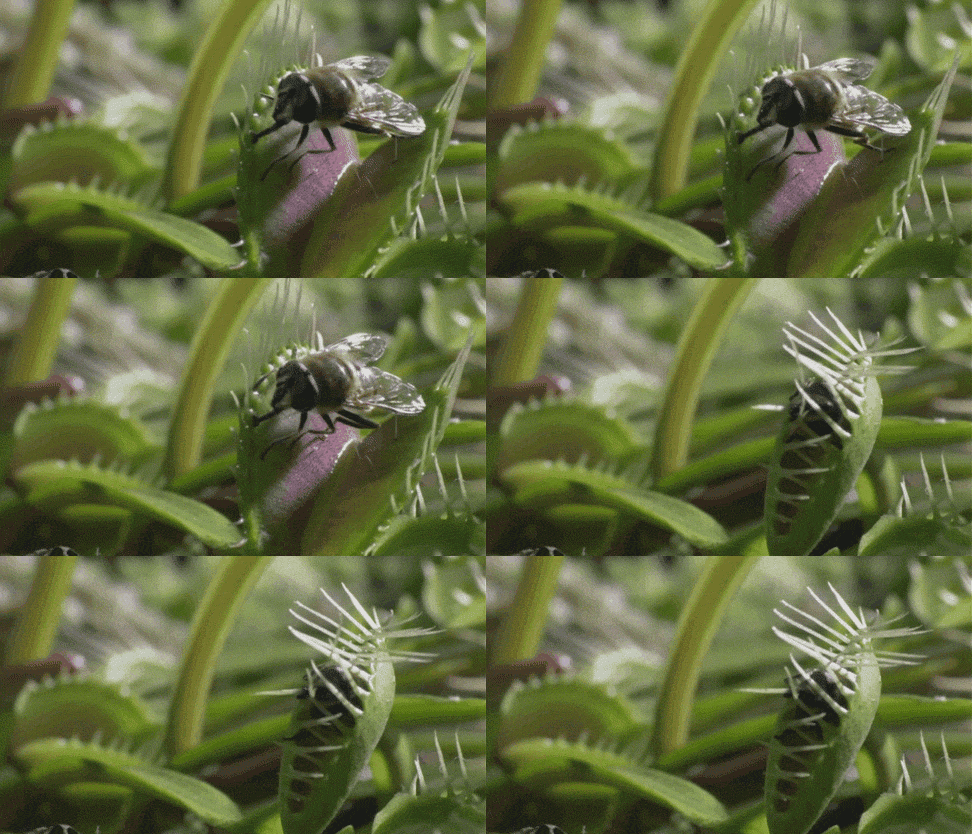
The insect-catching process of the Venus flytrap is probably the most peculiar among all carnivorous plants, and its trapping mechanism is the most complex. The trapping structure of the Venus flytrap is a trap formed by a pair of symmetrical leaves on the left and right. This trap-shaped structure is specialized from leaves, while the leaf-shaped structure connecting the trap is the leaf stalk. Along the outer edge of the trap are arranged spike-like hairs. At first glance they look very sharp and stinging, but in fact these hairs are very soft. The function of these hairs is to prevent captured insects from escaping. When the trap catches an insect, the hairs at both ends of the trap interlock exactly, forming a cage so that the insect cannot escape. The inner side of the trap appears red, and careful observation will reveal that it is covered with many tiny red dots. These red dots are the digestive glands of the Venus flytrap. On the inner side of the trap, three pairs of fine hairs can be seen. These fine hairs are the trigger hairs of the Venus flytrap, used to detect whether an insect has walked to a position suitable for capture. Most traps bear only five pairs of trigger hairs, but traps with one to several extra trigger hairs may also occur.
Catching method
The habits of carnivorous plants can generally be divided into the following four steps: (1) lure insects -> (2) capture insects -> (3) use digestive fluid to decompose and absorb -> (4) use the absorbed nutrients to maintain growth. However, not all carnivorous plants go through such a complete process. For example, some plants of the same type do not secrete digestive fluid, but instead absorb nutrients after decomposition by various microorganisms. In this part, the Venus flytrap belongs to the relatively advanced carnivorous plants with a fairly complete process.
The leaf margin of the Venus flytrap contains nectar glands, which secrete nectar to lure insects closer. When an insect enters the leaf surface area and touches the trigger hairs of the sensory organ twice, the two leaf lobes close very quickly. The spike hairs growing on the leaf margin are multicellular projections and do not have the function of bending. When the leaf closes very quickly and traps the insect, the spike hairs interlock tightly, and their purpose is to prevent the insect from escaping.
Signal transmission
The trapping signal is not provided directly by the trigger hairs. At the base of the trigger hair there is a swollen part containing a group of sensory cells. The trigger hair acts like a lever. When an insect pushes the trigger hair, the trigger hair presses on the sensory cells, and the sensory cells emit a weak electric current to notify all the cells on the trap. Because the current disperses throughout the entire trap, triggering closure does not require touching the same trigger hair; as long as any two trigger hairs in the same trap emit current, the closing movement can be triggered. Of course, the current emitted by the trigger hairs only affects the trap in which they are located and will not interfere with the operation of other traps on the same plant.
Before being stimulated, the trap is open at a 60-degree angle. When stimulated by an insect, the trap closes along its leaf veins as the axis. The closure of the trap is related to the contraction of the cells on the trap. When the cells on the trap receive the current emitted by the sensory cells, the vacuoles of the cells on its inner side rapidly lose water and contract, causing the trap to bend inward and thus close.
Closure of the trap
The closure of the trap is a precise control process. This process initially begins when an insect touches the trigger hairs located on the trap. The condition that triggers closure is that within one trap, any one trigger hair is touched twice, or two trigger hairs are touched separately. The time interval between touches of the trigger hairs has a decisive influence on closure: if the interval between the two touches is within 20-30 seconds, it can close; if this period is exceeded, a third successful stimulation is needed to close. The trap needs two stimulations in order to confirm that the insect has walked to the appropriate position. When the trap receives the first stimulation, the insect has only slightly entered the trap; if the trap closes at that point, it only traps part of the insect, and the insect has a great chance of escaping. When the trap receives the second stimulation, the insect has more or less walked into the inside of the trap, and at this time the closed trap can firmly grasp the insect and shut it inside the trap.
The closing process is divided into two stages. In the first stage, the trap closes quickly in order to catch the insect; at this time the trap only grips the insect. In the second stage, the trap contracts inward so that the inner side of the trap can get as close as possible to the insect; at this time, the trap is completely sealed, leaving no gap. After that, the trap remains closed for several days to more than ten days, during which the insect is digested by the digestive fluid secreted by the glands distributed on the trap. After the insect is fully digested, the trap opens again and waits for the next prey; the remaining insect exoskeleton that cannot be digested is carried away by wind and rain. The second stage requires the insect's struggling to proceed, because only then does it represent that what the trap has caught is indeed an insect, a living prey. The Venus flytrap sometimes mistakenly catches dead branches or fallen leaves. If this confirmation mechanism were lacking, it would inevitably waste nutrients on digesting undigestible debris. If the trap mistakenly catches debris, as long as there is no continued stimulation, it will reopen after several hours and wait for the next prey.
Digestion and absorption
When a captured insect is clamped by the two leaf lobes and cannot break free, during the insect's struggling the leaf lobes clamp tighter and tighter until they are almost completely sealed. At this time, the dense inner glands on the inner side of the two leaf lobes secrete digestive fluid, and the protease contained in this digestive fluid decomposes the insect's proteins into amino acids composed mainly of nitrogen, oxygen, carbon and hydrogen, and possibly also including other elements, and absorbs them. Generally, after about four days, the more easily digestible parts can be decomposed and absorbed, after which it continues to absorb the remaining nitrogen, phosphorus and various other needed trace elements. After all these nutrients are absorbed, the leaf lobes open again. The whole process takes about 5-10 days, and at this time only the empty shell remains of the insect, composed of chitin.
However, the Venus flytrap cannot distinguish the size of what it has captured, and sometimes it may capture prey about the same size as the leaf, such as a small frog or a long-legged wasp. At this time, it often cannot decompose and absorb it in time, and the prey itself rots first, so the leaf withers as if from food poisoning. In addition, each leaf can capture about 12-18 times and digest 3-4 times. Beyond this number, the leaf loses its insect-catching ability, makes its due contribution to the final photosynthesis, and then gradually withers.
The wondrous mystery of nature
When an insect touches the trigger hairs for the first time while collecting nectar, the leaf does not make any movement, but if it is stimulated twice in succession, the leaf will close immediately in an average of about 0.5 seconds (but some artificially bred horticultural varieties cannot reach this speed). If the time of the second touch differs from the time of the first touch by more than about 20 seconds, the leaf will become half-closed or show no reaction. If the third stimulation is given immediately at this time, the leaf will also close quickly.
Through experimental investigation, the trigger hairs of the Venus flytrap are like a sensing device. When stimulated by two consecutive touches, the base of the leaf generates an action potential of about 100 millivolts (mV) to the leaf surface, causing the water on the inner side of the leaf to be rapidly lost, resulting in unequal internal and external pressure, so the leaf closes. Such a trapping mechanism is a quite precisely matched structure, and stimulating the trigger hairs is like setting a timer, waiting for the second confirmation before closing. The main purpose is to improve the accuracy of insect catching; otherwise, raindrops or animals passing by would reduce and affect its insect-catching efficiency.
Plant researchers have confirmed that the Venus flytrap emits action potentials through such a mechanistic device, similar to how animal nerve tissue generates and transmits information. However, because this must be touched twice in succession to occur, that is to say, there should also be a tissue that can remember. So far it is still unclear how such memory operates in the Venus flytrap, and this is an unsolved mystery.
Closing force
Researchers at Oakwood University in the United States used sensitive piezoelectric sensors to measure that at the instant the leaves of the Venus flytrap are triggered to close, the average force is 149mN, and the pressure is about 41kPa. And when a captured insect is struggling to escape, the force generated by the leaves can reach a maximum of 450mN, with pressure reaching 9 kPa. Under such force and pressure, ordinary small insects have very little chance of escaping. However, artificially bred varieties are slightly lower than this value.
The growth process of the Venus flytrap
The Venus flytrap is a perennial herbaceous plant. After germination from seed, it reaches maturity after 4-5 years and can then flower and bear fruit. If given good care, the Venus flytrap can live at least 20-30 years.
The Venus flytrap begins to bloom shortly after growing new leaves in spring. It grows a flower stalk up to 15 to 25 cm tall, with about 10 flower buds at the top. A flower opens every other day, and the flower color is white. A flower can remain open for several days before pollination, but if pollination is successful, the flower withers the next day, after which the ovary gradually swells, and the fruit matures after about several weeks. The mature fruit contains dozens of black, teardrop-shaped seeds.
After flowering is finished, summer also arrives at this time. The Venus flytrap continues to grow more leaves and larger traps. This is the season when the Venus flytrap needs to catch a large amount of prey, in order to store nutrients for flowering the following year. The fruit set at the end of spring matures in mid-summer, and the seeds that burst out germinate after a period of time. The young Venus flytrap first grows false leaves, then grows its first cotyledon with a complete trap, and begins its life of catching insects.
The lifespan of the leaves of the Venus flytrap is about several months in autumn (2-3 months), but only a few weeks in summer. Old leaves gradually turn yellow, lose their insect-catching ability, and finally turn black and die, but new leaves will still continue to grow from the center. Throughout the summer, the Venus flytrap continuously grows new leaves, until autumn, when it grows another kind of slower-growing leaf. At this time, most of the leaves grown in summer have also withered, and the Venus flytrap is ready to overwinter. In winter, some very small traps remain, but they have lost their insect-catching ability and are hardly used; when the climate is too severe, the leaves above ground all wither.
Venus flytrap pictures