-

Can You Make Money Raising Snakes? Snake Farming Technical Guidance and Breeding Stock Introduction Methods
Can you make money raising snakes? Generally, if raised well, it is very profitable. No matter what animal we raise, we need to introduce breeding stock, so how should snakes be introduced? Let's find out together. 1. The best season for introducing breeding stock is spring and autumn. Autumn is a good season for introduction because the autumn
-
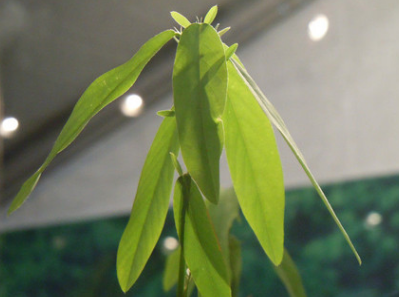
Why the Dancing Grass Dances and How to Care for It as a Bonsai
Dancing grass (Codariocalyx motorius) is an upright small shrub, named dancing grass for its posture that resembles a dancing maiden. It grows and is distributed mostly in China, Bhutan and Sri Lanka. Why does dancing grass dance and how does it dance? On both sides of the dancing grass leaves grow large numbers of linear leaflets, which are extremely sensitive to sound waves.
-

Technical Guidance on Chemical Weed Control in Paddy Fields
Chemical weed control in paddy fields is a key step in achieving high and stable rice yields. There are three main types of weeds in the rice fields of our county: grassy weeds such as barnyardgrass, sprangletop, and crabgrass; broadleaf weeds such as monochoria, pondweed, and Rotala indica; and sedge family weeds. In recent years, because rice planting methods in our county have become diverse, the weed spectrum in paddy fields has undergone considerable change: first, some malignant weeds in paddy fields are on the rise. In addition to barnyardgrass, which remains widespread and abundant, sprangletop and Cyperus serotinus have shown a clear upward trend;
-
How to grow spring-planted soybeans in Northeast China? A detailed explanation of the technical guidance
In the autumn and winter of last year, precipitation in Northeast China was lower than normal, soil moisture was insufficient, and drought was relatively severe. This spring there has been more rain and snow, temperatures began to rise rapidly in early April, and temperature and precipitation are close to normal. The Soybean Expert Steering Group of the Ministry of Agriculture, together with the National Agricultural Technology Extension Service Center, based on full investigation, proposed the following technical guidance for spring soybean planting: 1. Strictly select excellent varieties. Because of the dry climate last autumn, soybeans may not have matured normally physiologically at harvest, and mechanical threshing increased the possibility of damage to the seed embryo
-
Technical Guidance for Rice Management in the Early and Middle Stages of This Year
I. Characteristics of Rice Production This Year 1. Large mechanical transplanting area and high transplanting quality. According to reports from all towns, the city's mechanical transplanting area is 173,500 mu, accounting for 81% of the rice area, with high transplanting density, few missing hills or gaps, and suitable basic seedlings. Seedling condition monitoring data: the city's average number of hills per mu is 17,300, an increase of 1,200 hills or 7.5% over last year's 16,100; the average number of basic seedlings is 70,700, an increase of 19,200 or 33.2% over last year's 57,700. 2. Suitable transplanting period and rapid seedling establishment and growth.
-
Current Technical Guidance on Rice Seedbed Management
Currently, some early-sowing areas are affected by sharp temperature changes caused by cold waves, and rice seedlings have suffered frost damage to varying degrees, which has affected seedbed management and will delay the transplanting process to a certain extent. In order to improve seedbed management and reduce low-temperature damage, the following technical guidance on seedbed management is hereby proposed. 1. Small-tunnel seedling cultivation. According to the weather forecast, add more covering material on the tunnel and keep it sealed for insulation. In case of frost, candles can be lit or smoke can be generated inside the tunnel to raise the temperature and prevent freezing. For medium and large tunnel seedling cultivation, ventilation should be reduced or even stopped. Straw curtains should be placed around the tunnel, plastic film should be laid flat inside the tunnel,
-
How should current rice production be managed? Technical guidance is here
At present, China's early rice production has entered the late growth stage. In southern Guangdong and Guangxi, the vast majority of early rice has entered the grain-filling stage, and a small portion has entered the maturity stage; in central Guangdong and Guangxi, heading has begun; in northern Guangdong and Guangxi, it has entered the initial heading stage to heading stage. Early rice in the middle and lower reaches of the Yangtze River has entered the milk-ripe stage and is expected to begin harvesting around July 10. Single-season rice in Northeast China is in the tillering peak stage, young panicle differentiation stage and booting stage from south to north; mid-season rice in the winter paddy field areas of Southwest China is in the booting stage, the river valley and hilly areas have begun young panicle differentiation, and the Chengdu Plain area is in the field-drying stage at the maximum tiller stage
-
Technical Guidance on Cotton Management During the Flowering and Boll-setting Stage
The flowering and boll-setting stage of cotton is a critical period when vegetative growth and reproductive growth proceed together. During this stage, the plant gradually shifts from being dominated by vegetative growth to being dominated by reproductive growth. The plant grows vigorously with a large daily growth increment. It is the peak period of fertilizer and water demand in the plant's entire life cycle, and also the key period for forming economic yield. Timely and meticulous management is essential, adapted to local conditions and to the condition of the seedlings. Attention must be paid to pest and disease control, chemical regulation, pruning, and intertillage loosening of the soil, while at the same time rationally and scientifically formulating fertilizer and irrigating promptly and in appropriate amounts, so that individual plants grow steadily, the plant architecture and field population structure are reasonable, ventilation and light penetration are good,
-
How to manage cotton during the dog days? Please check this guidance
According to the citywide "715" survey summary, this year our city's cotton growth progress is fast and the cotton is growing well. This is shown by: fast growth progress, uneven growth, and a large area of cotton entering the dog days with bolls. The citywide average cotton plant height is 88.38 cm, an increase of 2.01 cm over last year; the total number of fruiting nodes is 49.80, an increase of 7.77 over last year; the number of abscised squares and bolls is 4.39, a decrease of 0.15 over last year; the abscission rate is 8.8%, a decrease of 1.99 percentage points over last year. The area entering the dog days with bolls accounts for 10 of the cotton field area
-
How to manage cotton in the mid-to-late stage? Hebei strengthens technical guidance
At present, spring-planted cotton in Hebei Province is successively entering the flowering and boll-setting stage from south to north. Due to a good sowing foundation, timely field management, abundant early rainfall, and sufficient sunlight, the cotton in Hebei Province has a neat plant type, steady growth, relatively light pest and disease damage, and field growth is generally better than in previous years. Recently, the provincial cotton expert advisory group conducted a field survey of cotton in 21 counties (cities) across 4 cities: Handan, Xingtai, Hengshui, and Cangzhou. According to the survey, the average plant height is 60-70 cm, the number of main stem leaves is 15-17, and the number of fruiting branches is 8-12. The growth and development process is basically normal, and a foundation for high yield has been established.
条件筛选