Why the Dancing Grass Dances and How to Care for It as a Bonsai
Dancing grass is an upright small shrub, named dancing grass for its posture that resembles a dancing maiden. It grows and is distributed mostly in China, Bhutan and Sri Lanka.
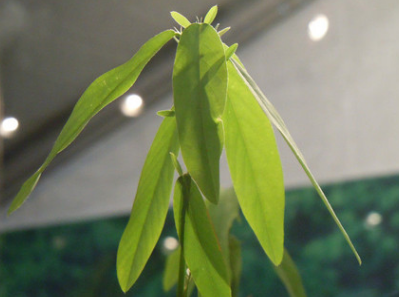
Why dancing grass dances
1. How dancing grass dances
On both sides of the dancing grass leaves grow large numbers of linear leaflets, which are extremely sensitive to sound waves. When the temperature is no lower than 22°C and there is plenty of sunlight, dancing grass stimulated by sound waves will continuously swing up and down, like a butterfly fluttering its wings in the air, dancing gracefully in the sky.
2. The reasons why dancing grass dances
Dancing grass dances in relation to temperature, sunlight and sound waves.
The leaflets on both sides of dancing grass move because the spongy tissue at the base of the leaflet stalks is sensitive to light. Under normal temperature, strong light and no wind or rain, the linear leaflets on both sides of the dancing grass leaves will sway without stopping; each leaflet can complete one elliptical movement within half a minute, and after rotating 180 degrees it returns to its original position and continues to rotate.
When the sun shines, the temperature begins to rise, the water inside the plant evaporates faster, the spongy tissue expands, and the leaflets swing left and right. The stronger the light, the faster the movement, until at night all the leaves droop and close for sleep. When the sun sets and the light dims, the leaves droop, closing tightly against the branches.
When it is vibrated by a song at 35-40 decibels, the spongy tissue also contracts, driving the leaves to swing.
How to grow dancing grass as a bonsai
1. Soil for a dancing grass bonsai
Dancing grass likes loose, fertile, well-drained soil. It can be fertile sandy soil or humus soil, with leaf mold being the best.
2. Light for a dancing grass bonsai
Dancing grass likes light. If it lacks light, the plant tends to grow leggy, becoming thin, spindly and prone to lodging. Be careful to increase the light; if the weather is not very good, you can often turn the pot so that the branches and leaves receive sunlight from every angle, allowing the dancing grass to grow fully.
3. Watering and fertilizing a dancing grass bonsai
During the budding stage of dancing grass, keep the potting soil moist; after budding, the potting soil should be dry on the outside and moist inside, somewhat on the dry side. Watering is generally done in the morning; if tap water is used, it needs to be treated first before watering. When watering, take care to water less at the base of the plant, and it is best not to splash the leaves and stems.
Dancing grass has a low demand for fertilizer, and the number of fertilizing times is small. Generally it needs one fertilizing during the growing period, and during the flowering period, fertilizer also needs to be applied to supplement nutrients.
4. Pest and disease prevention for a dancing grass bonsai
Dancing grass is prone to diseases such as powdery mildew, anthracnose, leaf spot and root rot. When disease occurs, promptly prune the diseased branches and destroy them. In addition, dancing grass is also threatened by pests such as cutworms, mealybugs, thrips and mites, which need to be controlled promptly.
How to grow a dancing grass bonsai
Soil for a dancing grass bonsai
Dancing grass likes loose, fertile, well-drained soil. It can be fertile sandy soil or humus soil, with leaf mold being the best.
Light for a dancing grass bonsai
Dancing grass likes light. If it lacks light, the plant tends to grow leggy, becoming thin, spindly and prone to lodging. Be careful to increase the light; if the weather is not very good, you can often turn the pot so that the branches and leaves receive sunlight from every angle, allowing the dancing grass to grow fully.
Watering and fertilizing a dancing grass bonsai
During the budding stage of dancing grass, keep the potting soil moist; after budding, the potting soil should be dry on the outside and moist inside, somewhat on the dry side. Watering is generally done in the morning; if tap water is used, it needs to be treated first before watering. When watering, take care to water less at the base of the plant, and it is best not to splash the leaves and stems.
Dancing grass has a low demand for fertilizer, and the number of fertilizing times is small. Generally it needs one fertilizing during the growing period, and during the flowering period, fertilizer also needs to be applied to supplement nutrients.
Pest and disease prevention for a dancing grass bonsai
Dancing grass is prone to diseases such as powdery mildew, anthracnose, leaf spot and root rot. When disease occurs, promptly prune the diseased branches and destroy them. In addition, dancing grass is also threatened by pests such as cutworms, mealybugs, thrips and mites, which need to be controlled promptly.
[Dancing Grass Video] Why Dancing Grass Dances
Dancing grass is also known as dance grass, lover grass, passionate grass, romantic grass, courtship grass, grass that moves without wind, and so on; the origins of these names are all alternative names given according to its characteristics. Dancing grass is a perennial woody plant of the genus Codariocalyx in the Fabaceae family, and it dances gracefully when sound reaches 70 decibels. On both sides of the dancing grass leaves there are many linear leaflets, which are extremely sensitive to sound waves; under sunlight with a growing temperature no lower than 22°C, when stimulated by sound waves it will continuously swing up and down, like a butterfly gently fluttering its wings in flight or a maiden on stage gently stretching her jade-like arms, and so people call it dancing grass. Below, the editor gives a detailed answer to the question of why dancing grass dances.
[Introduction to Dancing Grass]
Dancing grass likes to grow in warm conditions and is a small shrub plant. If grown in a pot, its height is 70-100cm; if planted in the ground, its height is 1.5-2m. On the leaf stalks of each branch and leaf there are 3 delicate leaflets, and when the temperature reaches 25°C and the sound is at 70 decibels, the two small leaflets will twine around the large leaf in the middle and dance on their own, giving people a clear and mysterious feeling. Dancing grass generally grows in hilly open fields and shrub thickets, and is a rare plant on the verge of extinction. It likes to grow in an environment with plenty of sunlight and is fairly tolerant of drought and poor soil; it generally grows on hilly slopes and in mountain ravine thickets, growing on slopes at an altitude of 2000m. It is mainly distributed in China, India, Bhutan, Sri Lanka, Nepal and other countries, and is a very unique and magical plant.
[Why Dancing Grass Dances]
Dancing grass is a plant with the natural characteristic of dancing. It is used for ornamental gardening and is also an excellent material for making bonsai, and it has very high ornamental value. Dancing grass is the only plant in nature that can react to sound. According to scientists' research, the reason dancing grass dances naturally is closely related to temperature, sunlight and sound wave sensing under a certain rhythm and intensity. Under normal temperature and strong light, without wind and rain, the 2 lateral leaflets of dancing grass will sway without stopping, and within half a minute each leaflet can complete one elliptical movement; each time the leaf rotates to 180 degrees it springs back to its original position, and occasionally dances again.
Even in its midnight sleep, the leaflets of dancing grass slowly rotate, but at a slower speed than during the day. Each time it is in the sleeping state, the leaf stalk presses upward against the branch, and the leaflets automatically droop, like a folded fan that has been closed. When dawn comes, the angle of the leaf axil increases, and the leaflets are propped open.
Dancing grass dances gracefully along with music, but it is not the whole plant that moves. If the light is strong or the sound wave vibration is relatively large, the dancing grass moves very quickly, and only at night do the leaves droop and close in the sleeping state. The reason the lateral leaflets of dancing grass sway without stopping is that the spongy tissue at the base of the leaflet stalks is extremely sensitive to light, which produces the movement. Whenever it is exposed to the sun, the temperature rises, the water inside the dancing grass evaporates faster, its spongy tissue expands accordingly, and the leaflets of the dancing grass swing left and right. Dancing grass has a sense of sound; when it is vibrated by a song at 35-40 decibels, its spongy tissue also contracts, driving the leaflets to dance together.
According to scientists' research, when dancing grass is exposed to an outside temperature of 20°C, its lateral leaflets rotate. If the temperature rises to 30°C, the rotation becomes more active, and the rotation speed increases accordingly; this movement phenomenon is very rare in the plant kingdom. Therefore, why dancing grass dances is still a mystery, and scientists are carrying out further research and exploration.
More related information: How to grow perfume lily How to cultivate black diamond Daphne odora Desert rose cultivation Passion fruit