Can You Make Money Raising Snakes? Snake Farming Technical Guidance and Breeding Stock Introduction Methods
Can you make money raising snakes? Generally, if raised well, it is very profitable. No matter what animal we raise, we need to introduce breeding stock, so how should snakes be introduced? Let's find out together.
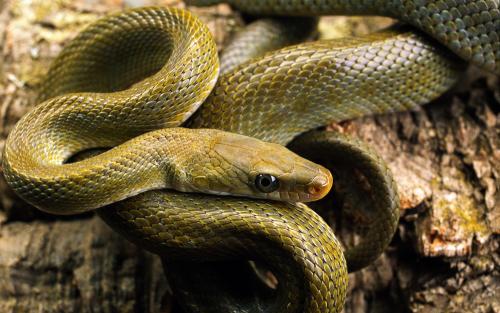
1. The best season for introducing breeding stock is spring and autumn
Autumn is a good season for introducing breeding stock, because the autumn weather is neither too cold nor too hot, and it is the peak season for snakes to hunt, as well as the time when they are at their strongest in the whole year. Spring is the same; the spring weather is suitable, and after introduction, the snakes will soon enter the egg-laying or birthing period, which is especially suitable for beginners.
2. Introducing breeding stock from artificially raised snake farms
Breeding snakes should be introduced from snake farms with a breeding scale, and the snake stock should come from a different location, so as to prevent inbreeding as much as possible. Do not buy snakes sold by snake traders in snake markets or farmers' markets, to avoid buying inferior snakes that have just been force-fed or had sand stuffed into them or water injected, or venomous snakes whose fangs have been pulled out.
3. Catching or buying breeding snakes
When selecting parent stock, they must be long-bodied and robust. Generally, small varieties should be 100-200 g, medium varieties 150-350 g each, and large varieties 250-600 g. The best ones are lively and active, with good stretching elasticity, fierce and spirited, full and cylindrical muscles, oily and shiny body surface, bright and vivid skin markings, and no injuries or diseases.
To check whether a snake has internal injuries, place it on the ground to crawl and observe whether it moves flexibly and naturally; or hold its head and tail with both hands and stretch it straight naturally. If the snake has a strong curling ability, it means there are no internal injuries; otherwise, it cannot be used as a breeding snake. Next, check whether it has a gallbladder. Some snake catchers cut open the gallbladder with a sharp blade, then sew it up with a needle and sell it on the market. This kind of snake without a gallbladder can still survive for some time, but it cannot be kept for breeding. If a snake is found to be dull, unwilling to flick its tongue, thin and weak, with dry and loose scales and a lusterless color, it may have contracted a disease and is also not suitable to be kept for breeding. When introducing young breeding snakes, pay attention to a reasonable male-to-female ratio. Generally, the female-to-male ratio is 5:1.