-
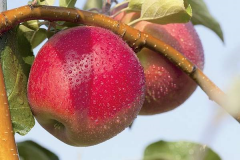
What are the new early-ripening apple variety saplings, and will they be better than the best varieties currently available?
If you love eating apples, do you know which early-ripening apple varieties there are? Have you heard of the newest apple variety, the MN55 apple? The new American apple variety MN55 is a high-quality early-ripening red apple, and it does not yet have a corresponding official commercial name. It ripens in August each
-
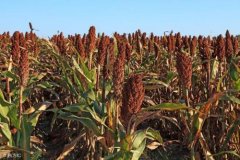
When is sorghum harvested, and what is the current purchase price per jin?
When is sorghum harvested? How is the purchase price? Let's take a look together. Sorghum is ready for harvest 35~40 days after heading, when the stems and leaves turn yellow and the grains are hard and milky white; the heads should be cut and harvested promptly with a sickle. After the sorghum heads are sun-dried, they can be threshed by rolling with a cart wheel
-

Current Status and Progress of Research on Porcine Ophthalmic Diseases
Researchers in veterinary medicine at the University of Florida in the United States used pigs as experimental subjects and specially treated the feed provided so that it created a zinc-deficient condition. As a result, this treatment group may have caused chronic damage to the pigs' retinas, and it may be related. Veterinary ophthalmology experts have completed monitoring changes in blood, skin, body weight and major organs in young piglets and older pigs. The pig eye is very similar in structure to the human eye. This group of researchers has
-
Analysis and Suggestions on the Current Status of Soybean Production in Huludao City
Soybean is one of the main crops in Huludao City and also a traditional crop. Soybean is both a protein crop and an oil crop. In recent years, soybean production has developed slowly, with no major breakthroughs. This article analyzes the current status of soybean production in Huludao City for reference. 1. Current status of soybean production. According to statistical data, from 1996 to 2005, the soybean planting area in Huludao City fluctuated considerably, hovering between 10,000 and 26,000 hectares. Among these, 2000 was the highest at 26,000 hectares, and 2005 was the lowest at 10,000 hectares. There were 5 years each in which the planting area exceeded 20,000 hectares and fell below 20,000 hectares. The soybean planting area accounted for about 11% of the total grain and soybean area. Soybean yield per unit was unstable; the lowest yield per unit was in 1999, only 613.0 kg/hectare; the highest yield per unit was in 2004, 2603.6 kg/hectare. Under normal circumstances, the yield per unit is 1700-2100 kg/hectare, which is at the lower-middle level in Liaoning Province.
-
Garlic current management details reminder: don't overlook these key points
According to relevant information, during this current period the growth of all parts of the garlic plant is at its greatest, so this period is also the critical period for water and fertilizer needs of the garlic plant. This is especially true for nitrogen and potassium fertilizers; at this time, a deficiency of nitrogen or potassium will cause extremely large losses in yield. Another report indicates that the maximum leaf width and pseudostem diameter (leaf sheath) of garlic show a significant positive correlation with the weight of garlic scapes and garlic bulbs. To obtain high yields of garlic bulbs and garlic scapes, plants with thick, sturdy leaf sheaths and wide leaves must be cultivated, so ensuring that the garlic is not harmed by diseases and pests is also a guarantee
-
Key rice diseases to focus on controlling in Guangdong currently
Bacterial leaf streak, rice blast, sheath blight and bacterial leaf blight are the four major diseases in late rice production in Guangdong, mainly damaging the leaves of plants in the early and middle stages of rice growth. The coastal typhoon-prone rice areas of our province are frequent-occurrence areas of bacterial leaf streak, while hilly and mountainous areas are mainly affected by rice blast and bacterial leaf streak. The occurrence periods, characteristics and control methods of bacterial leaf streak, rice blast and sheath blight are briefly described as follows: Bacterial leaf streak. Rice bacterial leaf streak has shown a spreading trend in Guangdong in recent years. The disease starts at the seedling stage and breaks out severely at the young panicle differentiation stage. Ty
-
Current Technical Guidance on Rice Seedbed Management
Currently, some early-sowing areas are affected by sharp temperature changes caused by cold waves, and rice seedlings have suffered frost damage to varying degrees, which has affected seedbed management and will delay the transplanting process to a certain extent. In order to improve seedbed management and reduce low-temperature damage, the following technical guidance on seedbed management is hereby proposed. 1. Small-tunnel seedling cultivation. According to the weather forecast, add more covering material on the tunnel and keep it sealed for insulation. In case of frost, candles can be lit or smoke can be generated inside the tunnel to raise the temperature and prevent freezing. For medium and large tunnel seedling cultivation, ventilation should be reduced or even stopped. Straw curtains should be placed around the tunnel, plastic film should be laid flat inside the tunnel,
-
How should current rice production be managed? Technical guidance is here
At present, China's early rice production has entered the late growth stage. In southern Guangdong and Guangxi, the vast majority of early rice has entered the grain-filling stage, and a small portion has entered the maturity stage; in central Guangdong and Guangxi, heading has begun; in northern Guangdong and Guangxi, it has entered the initial heading stage to heading stage. Early rice in the middle and lower reaches of the Yangtze River has entered the milk-ripe stage and is expected to begin harvesting around July 10. Single-season rice in Northeast China is in the tillering peak stage, young panicle differentiation stage and booting stage from south to north; mid-season rice in the winter paddy field areas of Southwest China is in the booting stage, the river valley and hilly areas have begun young panicle differentiation, and the Chengdu Plain area is in the field-drying stage at the maximum tiller stage
-
Occurrence of Pests and Diseases in Rice Seedbeds and Current Control Methods
During the rice seedbed stage, aphids, thrips, and damping-off disease mainly occur, harming the growth of rice seedlings. Adult and nymph rice thrips often gather at the leaf auricle, ligule, and inside the central leaf to cause damage; the affected parts first show small yellow-white spots, after which mottled white patches appear on the leaf surface. Affected seedlings recover green slowly, become stunted and fail to grow, appearing as if "stuck in the clump." Damping-off disease mostly occurs in wet (semi-dry) seedling nurseries and dry seedling nurseries, causing seedling death. Because temperatures in early to mid-April are unstable, aphids, thrips, and damping-off disease are prone to occur, affecting full, uniform, and strong seedlings. Agricultural technology centers of all townships and subdistrict offices are requested to strengthen water
-
Hubei: Current Cotton Growth Status and Field Management Recommendations
According to the survey results of August 5, most cotton fields in our city have currently entered the flowering and boll-setting stage. The average density of cotton fields in our city is 1266 plants/mu. The average plant height is 90.2 cm, the number of fruit branch layers is 15.8, the number of empty branches is 0.1, the total number of fruit nodes is 51.1, with 5.1 large bolls, 2.3 small bolls, 1.4 flowers, 31.6 buds, and 11 abscised buds and bolls, with a bud and boll abscission rate of 21.6%. In view of the current situation, field management should currently focus on the following points: 1. Focus on per-unit yield, grasp the "two striving" This year's cotton growth is relatively
条件筛选