-
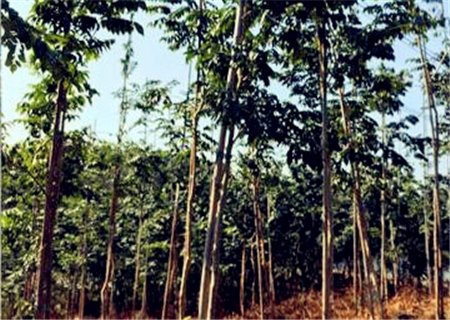
What is the current price per jin of Huanghuali (rosewood) and the price per sapling, and how is it planted?
Huanghuali saplings range in color from orange-yellow to purplish-red, and those with yellowish-brown heartwood are considered the best. The wood is hard in texture and beautiful in grain, and has long been regarded as the finest of woods. Most of what we commonly see are Vietnamese Huanghuali saplings produced in Vietnam. So what is the current market price of Huanghuali per jin?
-
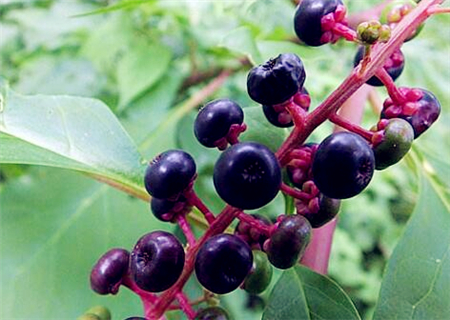
Pokeweed current price per jin, main production areas, best harvesting time, and planting prospects and economics
Pokeweed is a perennial stout herbaceous plant in the Phytolaccaceae family, genus Phytolacca. Among the species currently distributed in China, the main ones are pokeweed (wild radish) and American pokeweed (Phytolacca americana, American pokeweed, ten-stamen pokeweed). So what is the current price of pokeweed per jin? Where are the main production areas? What about its planting prospects and economic benefits?
-
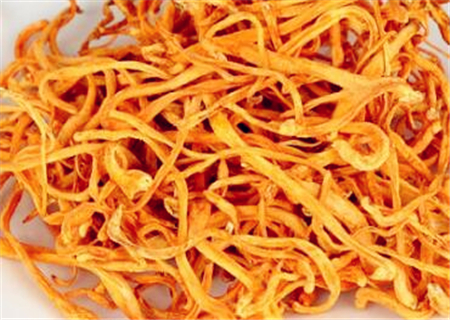
Cordyceps flower current price, correct ways to eat it and taboos, cultivation methods
Cordyceps flower is not a flower; it is essentially the fruiting body of Cordyceps, not the fruiting body of Chinese cordyceps (Ophiocordyceps sinensis). The culture medium mimics the various nutrients contained in natural insects, including grains, beans, eggs and milk, and it belongs to a type of fungus. So what is the current price of Cordyceps flower per jin? How should it be eaten for the best effect? Who should not eat it?
-
PGS May Solve the Challenge of Recurrent Embryo Implantation Failure
Recurrent implantation failure (RIF) refers to patients undergoing IVF treatment who have had multiple consecutive embryo transfers but still cannot achieve pregnancy. The currently accepted standard is...
-

Analysis and Suggestions on the Current Status of Soybean Production in Huludao City
Soybean is one of the main crops in Huludao City and also a traditional crop. Soybean is both a protein crop and an oil crop. In recent years, soybean production has developed slowly, with no major breakthroughs. This article analyzes the current status of soybean production in Huludao City for reference. 1. Current status of soybean production. According to statistical data, from 1996 to 2005, the soybean planting area in Huludao City fluctuated considerably, hovering between 10,000 and 26,000 hectares. Among these, 2000 was the highest at 26,000 hectares, and 2005 was the lowest at 10,000 hectares. There were 5 years each in which the planting area exceeded 20,000 hectares and fell below 20,000 hectares. The soybean planting area accounted for about 11% of the total grain and soybean area. Soybean yield per unit was unstable; the lowest yield per unit was in 1999, only 613.0 kg/hectare; the highest yield per unit was in 2004, 2603.6 kg/hectare. Under normal circumstances, the yield per unit is 1700-2100 kg/hectare, which is at the lower-middle level in Liaoning Province.
-
Hubei: Current Cotton Growth Status and Field Management Recommendations
According to the survey results of August 5, most cotton fields in our city have currently entered the flowering and boll-setting stage. The average density of cotton fields in our city is 1266 plants/mu. The average plant height is 90.2 cm, the number of fruit branch layers is 15.8, the number of empty branches is 0.1, the total number of fruit nodes is 51.1, with 5.1 large bolls, 2.3 small bolls, 1.4 flowers, 31.6 buds, and 11 abscised buds and bolls, with a bud and boll abscission rate of 21.6%. In view of the current situation, field management should currently focus on the following points: 1. Focus on per-unit yield, grasp the "two striving" This year's cotton growth is relatively
-
Detailed Explanation of Current Field Management Measures for Cotton
Recently, our region has experienced consecutive moderate to heavy rain, with local torrential rain, causing waterlogging in some cotton fields. Currently, cotton is about to enter the flowering and boll-setting stage. Because waterlogging accelerates the aging of cotton roots, it will affect normal flowering and boll-setting, resulting in reduced cotton yield and quality. Therefore, the following management measures should be taken to ensure a bumper cotton harvest. 1. Drain water promptly. Use every possible method to drain the waterlogged cotton fields as soon as possible, ensure the cotton fields dry out and are aerated, and strive as much as possible to restore normal root growth and promote flowering and boll-setting. 2. Topdress
-
Key Points of Current Technical Management Measures for Cotton
I. Do a good job in seedbed stage management 1. Ventilate in a timely manner to reduce humidity, thin the seedlings and remove weeds. After the cotyledons of the cotton seedlings flatten and turn green, ventilate slightly in a timely manner for 1-2 days to reduce humidity; take advantage of sunny and warm weather to sun the boards and reduce humidity, thin the seedlings and remove weeds. 2. Do a good job in chemical regulation of cotton seedlings. When the cotton seedlings form a heart and begin to produce true leaves, chemical regulation should be carried out in a timely manner. For each standard seedbed per mu of field, use 1 bag of the seedbed-specific biochemical preparation Cu Zhuang Su, mix with 2 kg of water, and spray evenly to prevent the cotton seedlings from shooting up and forming leggy seedlings. 3. Scientifically regulate temperature. Pay attention to two points in bed temperature regulation: first, persist in
-
Current key technical points for spring tea production management
Early picking and early marketing of spring tea, thereby increasing spring tea yield and output value, is the key to improving tea industry efficiency and increasing tea farmers' income. Combined with the actual tea production situation in Fuyang City, before spring tea picking, the main tasks are tea garden fertilization, tea tree pruning, freeze damage prevention, and tea factory and tea machine maintenance. 1. Shallow tillage and fertilization. Through shallow tillage, the soil can be loosened, the soil temperature raised, and early sprouting of spring tea promoted. Shallow tillage is generally carried out from late February to early March. When shallow tilling, combine with applying spring tea bud-promoting fertilizer. For tea gardens where base fertilizer was not applied in the previous autumn and winter, apply the spring tea bud-promoting fertilizer and base fertilizer at the same time. The amount of fertilizer applied depends on tea yield.
条件筛选