The goose is completely paralyzed with a drooping head and weakness; how to prevent botulism poisoning?
Botulism poisoning in geese is an acute toxic disease caused by eating the exotoxin produced by Clostridium botulinum. Symptoms: generalized paralysis, drooping head, weakness and lack of strength, hence it is called limber neck disease.
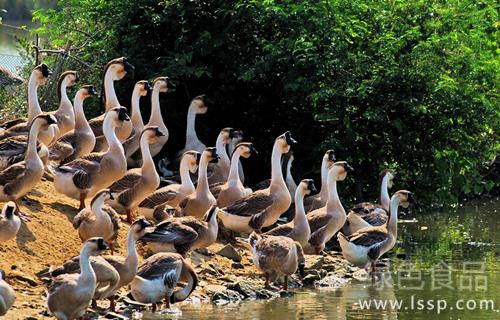
Goose
Epidemiology: Clostridium botulinum is distributed in nature and in the intestines of healthy animals, but it does not cause disease. However, when it parasitizes putrefying animal carcasses, plant products, or fly maggots, under anaerobic conditions it produces a highly toxic exotoxin. Botulism poisoning in geese occurs mostly in warm seasons, because high temperatures cause feed or fish and shrimp to spoil and produce exotoxin. Geese become poisoned after eating these spoiled foods, and can also become poisoned by eating fly maggots contaminated with the toxin.
Symptoms: The incubation period of this disease is 1~2 days. Geese suddenly become ill, and the typical symptoms are limber neck, with the head and neck stretched out and drooping, eyes tightly closed, wings drooping and dragging on the ground, and coma and death. In severely affected geese, the feathers are ruffled and easily fall out.
Prevention and treatment: Do not feed spoiled feed, dead fish or rotten shrimp, fly maggots, etc. There is no specific drug for this disease. 2~3 grams of magnesium sulfate can be administered orally with water to accelerate toxin excretion, and at the same time the sick geese should be given oral antibiotics to inhibit intestinal bacteria from producing more toxin.