-
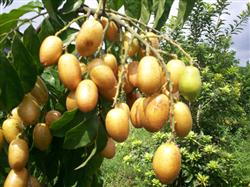
How to Grow Chicken-Heart Wampee? A Complete Guide to Practical Methods
How to grow chicken-heart wampee? For guidance on growing chicken-heart wampee, you can refer to the following methods: 1. Main cultivated varieties. At present, the main cultivated varieties are chicken-heart wampee, selected large chicken-heart wampee, and others. 2. Environmental requirements of wampee. (1) Temperature: Areas with an annual average temperature above 20°C and an average January temperature above 12...
-
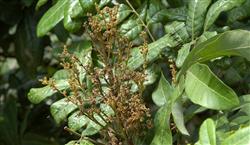
What Is Longan Witches' Broom Disease? A Complete Guide to This Disease
What is longan witches' broom disease? A detailed introduction to longan witches' broom disease: ◎Disease Introduction◎ Also known as witches' broom disease. Also called bald twig disease, broom disease, huya, leprosy disease, tiger ear and mute disease, etc. It is distributed in Fujian, Guangdong, Guangxi, Zhejiang and Taiwan, China and other provinces (autonomous regions). This disease causes serious damage in Fujian. In Guangdong, Guang...
-
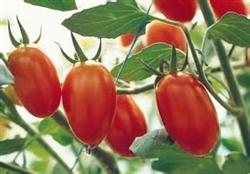
Complete Guide to Pest and Disease Control Measures for Cherry Tomatoes
The cultivation techniques are as follows: 1. Sow at the right time. This variety is suitable for autumn sowing; seedlings can be raised starting in late May to early June, transplanted in July, and harvested starting in September. To prevent the spread of seed-borne viruses, disinfect the seeds before sowing: wrap the seeds in gauze, soak them in a 15% trisodium phosphate aqueous solution for 10 to 20 minutes, then...
-
A Complete Guide to Fertilization Techniques and Key Points for Chestnut Orchards
Chestnut blight, also known as chestnut canker, trunk blight, or chestnut bark disease, is a major disease of chestnut trees. It mainly affects the trunk and main branches, often causing the trunk and main branches to rot until the entire tree dies. The chestnut blight pathogen mainly overwinters in diseased branches as mycelium, pycnidia, and perithecia, while conidia and ascosp...
-
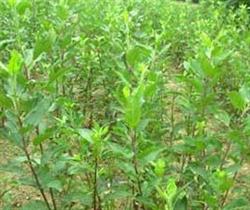
A Complete Guide to Spring Planting Methods for Cherry Trees
Cherry planting is generally done in spring after the soil thaws and before the saplings bud, mostly from mid-to-late March to early-to-mid April, planted close to the time before budding. When planting, pay attention to the following two points: 1. Selection and treatment of saplings. Before planting, select robust saplings with plump buds, well-developed root systems, and no pests or diseases. Then soak the saplings...
-
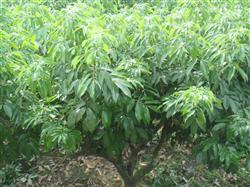
A Complete Guide to Key Lychee Spring Management Techniques
1. Thoroughly clean the orchard. First, cut down overly dense weeds and shrubs around and inside the orchard and clear them outside the orchard; second, thin out overly dense branches and diseased or pest-infested branches inside and outside the tree canopy and clear them outside the orchard; third, spray the whole orchard once with trichlorfon 600x solution + Yunsheng 600x solution to eliminate overwintering insect eggs and pathogens. Orchards with a water source should be irrigated as much as possible...
-
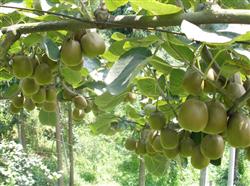
A Complete Guide to High-Yield Kiwifruit Cultivation Techniques
1. Variety selection: choose good varieties with large fruit, good quality, strong disease resistance and good yield, such as Hayward, Allison, Bruno, etc. 2. Site selection and orchard establishment: kiwifruit likes a cool and humid environment, fears drought, waterlogging and wind, and is cold-tolerant but not tolerant of late frost in early spring, so kiwifruit orchards in mountainous areas should be chosen on sheltered...
-
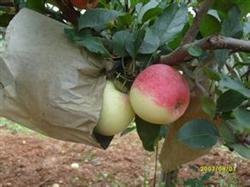
A Complete Guide to Apple Bagging Time and Methods
Bagging Time Apart from apple varieties whose fruit surface is prone to russeting, early-ripening and mid-ripening apple varieties are usually bagged about 30 days after petal fall, while mid-late-ripening and late-ripening apple varieties are bagged 35 to 45 days after petal fall. If bagged too early, the apple surface will be more smooth and glossy at harvest, but because the young fruit's stalk is tender and slender, the fruit may drop with the bag in windy weather...
-

-

A Complete Guide to the Key Technical Points for Establishing an Apricot Orchard for Kernel Production
Apricot trees are fruit trees that love sunlight, tolerate drought, and fear waterlogging and frost, so an orchard should be established on a sunny, high, and dry site; it must not be established on shady slopes, waterlogged lowlands, or valley bottoms where cold air easily settles. Apricot trees are long-lived fruit trees; generally even 100- to 200-year-old trees still bear heavily, so the planned row and plant spacing should be somewhat large. However, to meet the need for early high yields, temporary trees can be set up when the orchard is established, and gradually thinned out or transplanted as the trees age. The row and plant spacing for the permanent rows can be designed at 4 m x 6 m, and for temporarily densified orchards at 2 m x 3 m; by around 10 years of age the temporary trees should be dealt with in time.
条件筛选