A Complete Guide to Apple Bagging Time and Methods
Bagging Time Apart from apple varieties whose fruit surface is prone to russeting, early-ripening and mid-ripening apple varieties are usually bagged about 30 days after petal fall, while mid-late-ripening and late-ripening apple varieties are bagged 35 to 45 days after petal fall. If bagged too early, the apple surface will be more smooth and glossy at harvest, but because the young fruit's stalk is tender and slender, the fruit may drop with the bag in windy weather...
Bagging Time
Apart from apple varieties whose fruit surface is prone to russeting, early-ripening and mid-ripening apple varieties are usually bagged about 30 days after petal fall, while mid-late-ripening and late-ripening apple varieties are bagged 35 to 45 days after petal fall. If bagged too early, the apple surface will be more smooth and glossy at harvest, but because the young fruit's stalk is tender and slender, the fruit may drop with the bag in windy weather; if bagged too late, the apple surface will be rather rough at harvest. As for the paper bags currently produced in our country, since the bag paper has mostly not been treated with chemicals, fruit growers report that rotten fruit or Comstock mealybug often occurs after bagging, so a fungicide and insecticide should be sprayed together 2 days before bagging. The fruit surface of Golden Delicious and Golden Spur apple is prone to russeting, so they should be bagged immediately after fruit thinning, and for bagging one should choose young fruit whose calyx is relatively upright and closed.
Bagging Methods
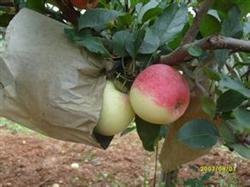
Generally the entire apple orchard should be bagged, so as to make pesticide spraying easier to schedule. For a single apple tree, when bagging, the upper part of the tree should be bagged first, then the lower part. The specific bagging procedure: first put your hand into the bag to make the whole bag puff up, then grasp the fruit stalk with one hand and support the paper bag with the other, put the young fruit into the middle of the bag, then fold the bag opening from both sides toward the fruit stalk at the middle, and after all the bag opening has been folded to the fruit stalk, tear downward along the left edge of the bag opening to the length of the wire clip at the bag opening, and finally turn the wire clip 90°C, bend and twist it tightly around the fruit stalk. Be careful not to tie it onto the fruit cluster branch, and do not tie it too tightly, so as to prevent the clip from injuring the fruit stalk and affecting the growth of the young fruit. After the bag is put on, support the middle of the bag upward with your hand so that the whole bag bulges out and the vent holes at the two bottom corners open up. The young fruit hangs suspended in the bag and does not stick to the bag wall, which can prevent stink bugs from stabbing the fruit and prevent contamination by pesticide solution and fungal and insect secretions that would cause russeting and mold.