-
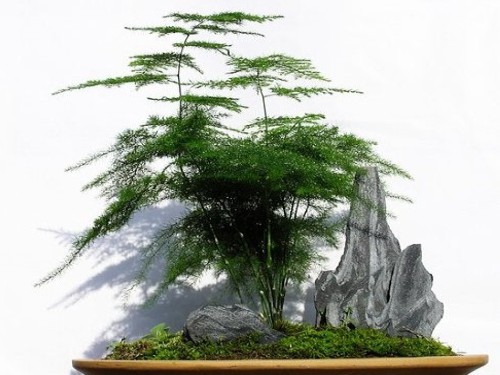
What are the pruning methods for bonsai cloud bamboo (Asparagus fern)?
Asparagus fern (Asparagus setaceus) is a perennial trailing evergreen herbaceous flowering plant; in some places it is called cloud bamboo, Songshan grass, and cloud bamboo mountain grass. Although asparagus fern is evergreen year after year, improper pruning during care can cause yellowing of branches and leaves, affecting its ornamental effect. If asparagus fern is kept for a long time, the plant will grow longer and longer.
-
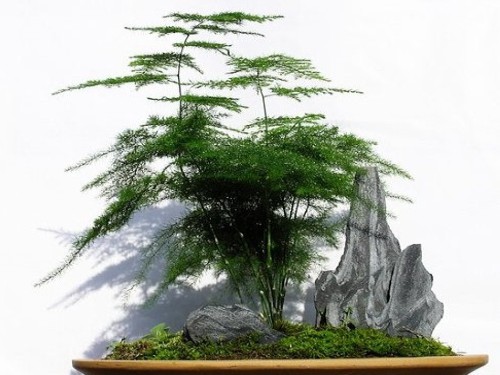
How to grow a cloud bamboo bonsai? Master these care methods
Cloud bamboo is one of the household flowering potted plants that many flower lovers greatly adore, so the cultivation methods for cloud bamboo and the household care and management methods for cloud bamboo are also topics that flower lovers delight in discussing. Below, we will introduce the cultivation methods for cloud bamboo. Since cloud bamboo is so good, how should it be grown to make it add more scenic charm?
-
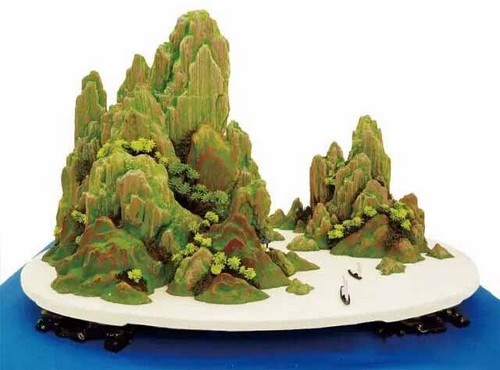
How to Make a Mountain Stone Bonsai: Cloud Peak in the Evening Glow
The creative theme is to express the beauty of mountain peaks at sunset, recreating the beauty of nature's elegant peaks glowing in the light, highlighting the beautiful mountain scenery under the slanting rays of the setting sun, and achieving the artistic effect of layered ridges in verdant green and charming scenery. Choose five-colored axe-cut stone with alternating red and yellow colors as the creative material
-
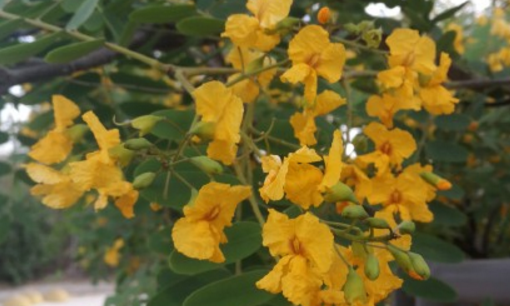
Senna surattensis (cloud-forest senna) seed planting method, benefits and uses, and differences from Senna bicapsularis
Senna surattensis is also known as huanghuai, golden phoenix tree, bean pagoda tree, golden medicine tree, and powdery-leaved senna. So how do you plant Senna surattensis seeds? What benefits and uses does it have? And how does it differ from Senna bicapsularis? According to available information, Senna surattensis is a plant that quite likes light, can tolerate partial shade, and prefers hot and humid climates.
-
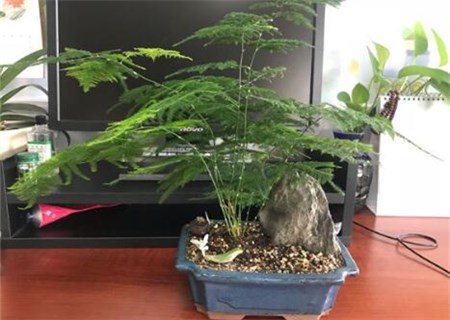
Asparagus fern, also known as cloud bamboo, how do you care for it so it sprouts new shoots and solve excessive growth and yellow leaves in winter?
Asparagus fern is also known as cloud pine, Asparagus acicularis, cloud bamboo, mountain grass, and chicken-feather mushroom. It likes warm, humid, semi-shaded and ventilated environments. In winter it is not tolerant of severe cold, nor of drought, and in summer it should not be exposed to direct sunlight. So do you know how to care for asparagus fern so that it can sprout new shoots? What should you do if it grows excessively? What should you do if the leaves turn yellow in winter?
-

Why is high-mountain cloud-and-mist tea of such good quality?
That high mountains and cloud and mist can produce good tea is something people have come to recognize gradually through long years of production practice. Green tea from cloudy and misty mountains has a high aroma, a rich and full flavor, is fresh and brisk, and is of good quality. The reasons for this are mainly related to the ecological factors of high mountains. First, in tea gardens at a certain altitude, with high mountains and dense forests, abundant rainfall, moist air and plenty of scattered light, a unique set of ecological conditions is formed, resulting in deep and fertile soil, short sunshine hours and high relative humidity there; the tea plants are nourished by mist and dew all year round, which exactly suits their growth characteristics of liking warmth and moisture and tolerating shade.
-
What kind of tea is Longji Cloud Mist Tea? Characteristics and quality introduction
Longji Cloud Mist Tea grows in the Longji Rice Terraces scenic area, known as one of the world's wonders. The tea garden is at an altitude of over 800 m, in a subtropical monsoon zone. Affected by the alternation of cold and warm air, it has four distinct seasons, abundant rainfall, high organic content, short sunshine hours, and high humidity. Streams flow murmuringly all year round, and clouds and mist swirl around. On clear days, tea spreads across the fields morning and evening; on rainy days, clouds fill the mountains. This unique, pollution-free growing environment is an ideal place for forming the high-mountain cloud-mist quality of tea aroma. It has a long history; during the Qianlong period it was once a tribute item, recorded on a stone tablet in Duanzhai, Longji Village, and its quality is excellent.
条件筛选