Senna surattensis (cloud-forest senna) seed planting method, benefits and uses, and differences from Senna bicapsularis
Senna surattensis is also known as huanghuai, golden phoenix tree, bean pagoda tree, golden medicine tree, and powdery-leaved senna. So how do you plant Senna surattensis seeds? What benefits and uses does it have? And how does it differ from Senna bicapsularis? According to available information, Senna surattensis is a plant that quite likes light, can tolerate partial shade, and prefers hot and humid climates, and it grows very quickly. Senna surattensis is relatively intolerant of cold, likes well-drained soil, and also prefers fertile soil.
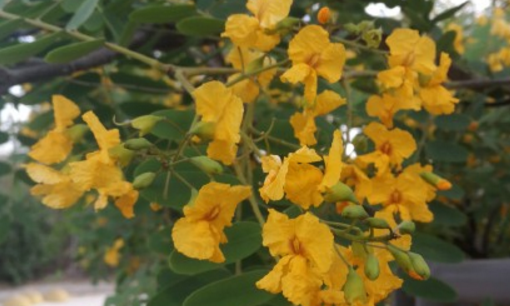
I. How do you plant Senna surattensis seeds?
Sowing time
Senna surattensis fruit ripens in every season. Ripe fruit is grayish-brown and does not fall off on its own; it stays on the tree until you pick it, so you can sow whenever you harvest. However, seeds that ripen in autumn have a greater chance of germinating. If you cannot plant them in time, you can dry them in the shade and then store them.
Sowing method
1. Soak the mature seeds in 45-degree warm water, and after the water cools, soak them for another 12 hours, then remove and set aside.
2. You can use the drill sowing method. Choose soft, nutrient-rich soil and prepare it by clearing away large rocks and debris, dig several drainage ditches, keep the row spacing at about 25 cm, scatter the seeds, and cover with 1 cm of soil. Water until the soil is thoroughly wet.
3. Under normal conditions, sprouting begins ten days after sowing, and by twenty days at the latest all the seeds have finished sprouting.
Later care
1. After the seedlings emerge, when the feathery leaves have not yet fully opened, you can thin and transplant the seedlings, moving the small seedlings carefully so as not to damage the roots.
2. During the six months after the seedlings emerge, apply a thin fertilizer each month, such as urea, once a month; after one year they can be planted in their permanent position.
3. This plant likes hot and humid environments and grows faster with sunlight, but varieties that can block wind and sand are all highly adaptable and not sensitive to sunlight requirements; they can also grow in partial shade, but they cannot withstand wind, so pay attention to wind protection during the seedling stage.
4. It has low requirements for fertility and water. After being planted in its permanent position later, it can survive growing along roadsides with below-average fertility or on poor mountain land. When caring for it, it is better to let it be dry than to let it become waterlogged, because it can adapt to slightly dry ground, but excessive waterlogging will cause it to die. Growing it at home is relatively worry-free.
II. What benefits and uses does it have?
Sophora flowers have good medicinal value. The main medicinal part is its flowers, which have the effect of clearing heat and reducing internal heat, and are a very good choice for moistening the lungs; in addition, they also have a hemostatic effect. Some of the compounds they contain can improve capillary function, and the sophora seeds can also stop bleeding and lower blood pressure.
Landscaping role
As a green plant, Senna surattensis itself has the effect of purifying air and reducing noise. In addition, the sophora flowers are beautiful and can be used to decorate courtyards, making our lives more beautiful.
Ornamental value
The flower shape and color of Senna surattensis are both very beautiful, and as a sightseeing tree species it has high ornamental value.
III. How does it differ from Senna bicapsularis?
Differences in plant form
1. Senna bicapsularis: It is a small tree, and its branching is very luxuriant. It generally begins branching and reproducing very close to the ground, and its branches are very small and grow in a particularly messy way, generally with no main trunk. Its bark is relatively smooth, and there are some fine soft hairs on the branches and leaves.
2. Senna surattensis: It is an upright shrub, generally 5 to 7 m tall. However, its branches are hairless.
Differences in growth habits
1. Senna bicapsularis: It has very strong wind resistance, extremely strong sprouting ability, and a very developed root system. It is suitable for growing in suitably fertile, slightly acidic soil or lateritic soil.
2. Senna surattensis: It is not wind-resistant, and it is not tolerant of waterlogging or low-lying land. It also does not have many soil requirements; generally, low gentle slopes with average fertility and roadsides can accommodate its growth.
Differences in flower form
1. Senna bicapsularis: Its flowers contain ten stamens, of which seven are fertile, and the remaining three are reduced and have no anthers. Among the seven fertile stamens, three are especially large and taller than its petals, while the remaining four are shorter than the petals. Its flowering period is generally from October to November, and its fruiting period is from November to March of the following year.
2. Senna surattensis: Compared with Senna bicapsularis, all ten of its stamens are fertile. In addition, the flowers produced by Senna surattensis are relatively large, and the petals are bright yellow or deep yellow. Its flowering period is longer, and it blooms almost all year round, generally concentrated from March to December.