Asparagus fern, also known as cloud bamboo, how do you care for it so it sprouts new shoots and solve excessive growth and yellow leaves in winter?
Asparagus fern is also known as cloud pine, Asparagus acicularis, cloud bamboo, mountain grass, and chicken-feather mushroom. It likes warm, humid, semi-shaded and ventilated environments. In winter it is not tolerant of severe cold, nor of drought, and in summer it should not be exposed to direct sunlight. So do you know how to care for asparagus fern so that it can sprout new shoots? What should you do if it grows excessively? What should you do if the leaves turn yellow in winter?
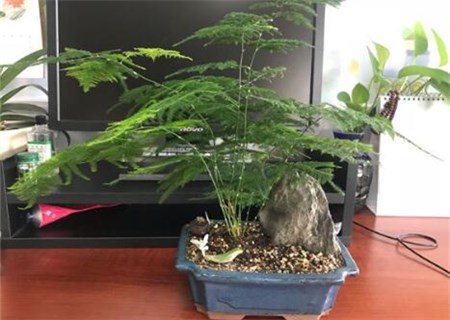
I. How to care for it so it can sprout new shoots
1. Withered and dead
If you accidentally kill it through poor care, that is a painful thing for us too. At this time there is no need to rush to throw it away.
① First, remove all the withered and dead branches completely, because the dead roots will grow again, so at this time they must be pruned away cleanly and not left behind.
② After that, place it in a shaded spot with diffused light to grow. In less than 3 days, it will grow new shoots.
③ And afterward, there is no need to rush with watering. Start by watering a little less, and once it has grown to a certain extent, you can care for it normally.
2. Not withered
If it has not withered and you want it to grow new shoots, you must follow the points below.
① Light
We must give it a certain amount of light every day, but this must be moderate, not too much. Exposure to strong sun will cause its death. So placing it in a cool, windy area is the correct way to make it grow new shoots.
② Smoke and dust
This plant is afraid of smoke and dust. If there is smoke and dust, it will definitely be very difficult for it to grow new shoots. So if we keep it at home, we absolutely must not smoke in the house, and it is best to place it in a relatively ventilated spot.
③ Watering
We cannot water at will; we must wait until it is dry before watering, and once we water, it must be thorough. In the relatively dry spring and summer, we can just spray the leaves with water, which will also make the humidity relatively high, and growing new shoots will then be only natural.
④ Fertilizing
If you want it to grow new shoots, fertilizer is certainly indispensable, but do not use too much. Generally, fertilizer water is enough, and it needs to be diluted. At one time, water a little less, and the frequency of watering can be greater. Once it has grown, this is no longer needed.
II. What to do if asparagus fern grows excessively
1. Reasons for excessive growth of asparagus fern
The “excessive growth” of asparagus fern is a normal phenomenon in its growth, but if asparagus fern grows too fast, it easily becomes messy and disorderly, which is not good for its ornamental value.
2. What to do if asparagus fern grows excessively
The excessive growth of asparagus fern can be suppressed by pruning, but the cut asparagus fern will continue to grow, wasting its nutrients for nothing. The best method is to fix and shape the asparagus fern.
3. How to fix and shape asparagus fern
For asparagus fern that has “grown excessively,” it is best to guide it according to its tendency. Use bamboo strips or wire to make a frame in your favorite shape, such as a sphere, fan, or well shape, fix it on the flower pot, and provide it for the long branches of the asparagus fern to climb on. As the asparagus fern extends, you can guide it according to the situation so that it is evenly distributed on the surface of the frame. Where fixing is needed, you can tie it with fine string.
In this way, the excessive growth of the asparagus fern is suppressed. Not only can you enjoy an asparagus fern with a unique shape, but it also will not waste its nutrients for nothing.
III. What to do if asparagus fern leaves turn yellow in winter
1. Sun exposure
Asparagus fern is a semi-shade plant. Many flower lovers think asparagus fern is not suitable for sun exposure, so they keep it in a backlit place for a long time. This is actually a big mistake!
What asparagus fern fears is strong sunlight. In summer it needs appropriate shading, but in winter the sunlight is naturally not strong. If asparagus fern goes without sunlight for a long time, the plant will become weak and slowly turn yellow.
Therefore, in winter it is best to place asparagus fern on a sunny windowsill and let it bathe in warm sunlight.
2. Spray more water, water less
Asparagus fern likes moisture but fears waterlogging. Before watering, you should first tap the pot of the asparagus fern. If the sound is crisp, and the soil surface in the pot feels dry to the touch, then it needs watering. If the sound is dull and the soil you touch is moist, then do not water the asparagus fern.
If the surrounding air is too dry, the leaf tips of asparagus fern will also dry out and turn yellow, so asparagus fern should be kept away from air conditioners and heaters, and water should be sprayed on the leaves and around it every day to maintain air humidity.
3. Light fertilizer, applied more often
The roots of asparagus fern are fragile. Applying unrotted fertilizer or overly concentrated fertilizer easily causes “root burn,” which leads to dry, yellow leaves and leaf drop.
If no fertilizer is applied for a long time and the soil is poor, the leaves of asparagus fern will also turn yellow. Therefore, asparagus fern should be given light fertilizer more often. Use rotted organic liquid fertilizer diluted at a ratio of 2:1000.
4. Stay away from radiation
Not only do people need to stay away from radiation; the growth of asparagus fern also needs to stay away from radiation. Placing asparagus fern beside a TV or computer will make its leaves and stems dry out and turn yellow. Generally speaking, if asparagus fern is kept more than 5 m away from the radiation source, the impact it receives will be much less.
5. Raise the temperature appropriately
Asparagus fern is suitable for growing at room temperature above 10°C. If the temperature is below 5°C, the leaves will dry out and fall.
Flower lovers can check the temperature at home. If the temperature is below 5°C, promptly cover it with a bag to keep it warm. If the temperature is between 5°C and 10°C, asparagus fern basically stops growing at this time, so reduce watering and do not fertilize, and ensure sufficient sunlight. If the temperature is above 10°C, you can care for it normally.
6. Be alert to pests and diseases
When asparagus fern is infected by pests such as scale insects, its branches and leaves easily wither and turn yellow. Flower lovers should observe whether the asparagus fern at home has pests. If it does, dilute jiebijiezhi at a ratio of 1:2000 and spray it on the branches and leaves of the asparagus fern.
7. Rescue care after yellowing
Generally speaking, after asparagus fern leaves turn yellow, it is very difficult for them to turn green again. The diseased and weak branches and leaves will consume the nutrients of the whole plant. In this situation, you should sacrifice the lesser to save the greater and cut off the yellowed branches and leaves to ensure that the new branches and leaves can grow healthily.