How to grow a cloud bamboo bonsai? Master these care methods
Cloud bamboo is one of the household flowering potted plants that many flower lovers greatly adore, so the cultivation methods for cloud bamboo and the household care and management methods for cloud bamboo are also topics that flower lovers delight in discussing. Below, we will introduce the cultivation methods for cloud bamboo. Since cloud bamboo is so good, how should it be grown to make it add more scenic charm? First, let us understand its habits.
To grow cloud bamboo well, being familiar with its growth habits is also very crucial. Cloud bamboo is native to southern Africa. It likes warm, humid, semi-shaded environments. It is not cold-tolerant and not drought-tolerant. It likes fertile, loose, well-drained sandy loam soil. Cloud bamboo likes shade and is mostly used for indoor desk display. Cloud bamboo likes moisture and fears drought, and avoids excessive moisture and waterlogging. It has relatively strict requirements for soil and moisture, and mastering suitable pot soil moisture is a major key to the daily care of cloud bamboo.
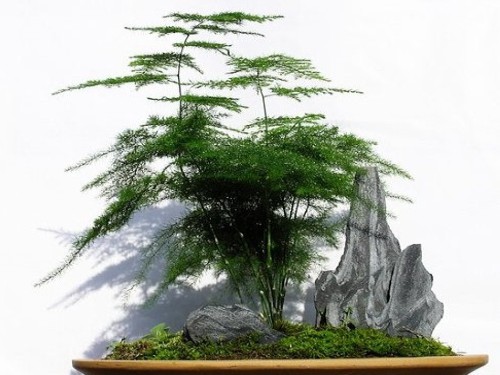
1. Pot soil
Cloud bamboo is suitable for growing in warm, humid soil rich in humus and well-drained. Cloud bamboo fears smoke and dust; if it encounters toxic gases, its branches and leaves easily turn yellow. For this reason, during care, attention should be paid to placing it in a clean environment. Cloud bamboo prefers fertile soil. If the soil is not changed and fertilizer is not added for a long time, nutrients will be in short supply, and the phenomenon of yellowing branches and leaves will appear. At this time, it is necessary to water once a week with decomposed dilute liquid fertilizer or compound chemical fertilizer, and water and loosen the soil in time, so that it can soon turn from yellow to green. If fertilizer is too concentrated or undecomposed fertilizer is applied, it is likely to cause "root burn," leading to dry and falling leaves. At this time, it is necessary to remove the plant from the pot, remove the fertilizer, rinse the soil ball with clean water, and then replace it with new culture soil.
Cloud bamboo is generally suitable for pot cultivation, because pot soil can well ensure good drainage and humus is relatively easy to add. Moreover, the soil must be clean, otherwise it will be harmed. The soil should be moist, and the soil should be loosened in time to ensure air circulation.
2. Light
Cloud bamboo is a semi-shade plant and should not be exposed to sunlight for a long time, especially the summer sun, which needs to be shaded in time. In spring and summer, it can be appropriately exposed to sunlight. When cultivating cloud bamboo, avoid direct exposure to scorching sun. In the hot seasons of summer and autumn, it should be placed in a shaded and ventilated place. During the flowering period, it fears both wind and rain. At this time, attention should be paid to good ventilation, otherwise it will cause flowers to drop and fail to set fruit. When potted, on sunny days it is suitable to place the pot outdoors to receive sunlight, which helps it carry out photosynthesis.
3. Temperature
In winter, potted cloud bamboo should maintain an ambient temperature above 5°C to avoid freezing. In daily life, cloud bamboo only needs the temperature to be above 10°C to grow normally. In summer, place it in a ventilated and cool place, and water appropriately to lower the temperature. In winter, the indoor temperature needs to be maintained above 5°C, otherwise the plant will be frostbitten and die.
4. Watering
Cloud bamboo actually does not have strict water requirements. The general watering standard is to water when the soil is dry, and when watering, it should be watered thoroughly, meaning the leaves should also be watered, but be careful not to cause water accumulation. Generally, the air in spring and autumn is relatively humid, so watering should be done according to the standard. In summer, the soil dries easily, so the leaves can be appropriately moistened.
If potted cloud bamboo is watered too much, the soil is too sticky and heavy, and drainage is poor, the spaces between its leaves will turn scorched yellow and fall off, affecting its growth and lifespan. Generally, it is necessary to wait until the pot soil is dry before watering again. In spring and autumn, watering should be reduced, adhering to not watering until dry. In winter, watering should be controlled. Too much watering and excessively wet pot soil easily cause root rot and yellow, falling leaves. When watering, note that the water temperature should be as close as possible to the surrounding temperature, reducing irritation to the root system from unsuitable water temperature. When the weather is hot and dry, spray the leaf surface with water.
5. Fertilizing
Cloud bamboo actually does not like fertilizer that much. Unlike pothos, snake plant, and others, just like with the money tree, applying light fertilizer is enough. Generally, nitrogen fertilizer is the main type, and it is usually fertilized once a month; otherwise, because the pot soil is relatively little, nutrients cannot be replenished in time and unhealthy conditions will appear.
Although cloud bamboo is not a plant that loves fertilizer, it cannot lack fertilizer either. Potted cloud bamboo is limited by pot soil and must be supplemented with nutrients in time to meet its growth requirements. Cloud bamboo should be fertilized lightly and frequently; never apply concentrated fertilizer, otherwise it easily causes yellowing branches and leaves. In the spring and summer growing seasons, nitrogen fertilizer is the main type. A thin decomposed liquid fertilizer can be applied once a month. After the plant's form is established, fertilization should be appropriately controlled to avoid leggy growth, which affects the beauty of the plant shape.
6. Environment selection
Cloud bamboo is relatively delicate and can be said to love cleanliness, so if it is placed in a place with a lot of smoke smell or smoke and dust, its leaves will turn yellow and dry up.
In addition to the above care methods, we should also pay attention to the following precautions:
1. The soil for cloud bamboo needs to be handled relatively cleanly, and when adding soil during care, do not add dirty things. Regularly changing the soil and adding fertilizer is a very good guarantee for the growth of cloud bamboo.
2. Watering cloud bamboo should adhere to one principle: do not water until dry; water less in spring and autumn, more in summer, and preferably not at all in winter. Cloud bamboo likes slight moisture rather than wetness, and it cannot be watered frequently, but spraying water is different. That is mist-like water and evaporates easily, increasing leaf surface humidity and environmental humidity. In summer, spray once in the morning and evening; in spring and autumn, spray once a day; in winter, spray once every 3~4 days. Except for the plum rain season, in other seasons cloud bamboo should be sprayed frequently to maintain environmental humidity; if it is too dry, the leaves easily turn yellow.
3. When applying fertilizer to cloud bamboo, pay attention to applying thin fertilizer more frequently, with an appropriate amount being best, and nitrogen fertilizer is best. Especially after the plant is established, fertilizer should be appropriately controlled and leggy growth must not be caused.
4. What cloud bamboo likes is scattered light. Sunning it through a window or with something blocking it is best. It can also grow well in a bright indoor location. While providing light, remember that cloud bamboo is semi-shade by nature and is not suitable for long periods of exposure; just do not take it outside in summer.
5. Cloud bamboo will bloom. When it blooms, it is not suitable to be exposed to wind, as this will make the flowering period very short. It is also not suitable to be exposed to rain, as this will also shorten the flowering period, and it will not set fruit. When potted, it should be cared for well during the flowering period.
6. Generally, if cloud bamboo is grown from seeds, the sowing season is around April. It can normally become a mature plant within 3 years, and in the fourth year it can be divided, and generally in the fourth year it can bloom and bear fruit.
7. In winter, the temperature must be above 5°C, otherwise it is easily frostbitten, and the frostbitten parts cannot recover. If there is indeed a period when the temperature is insufficient, then the bagging method can be used. The bag needs to be supported with a frame and should not directly touch the plant. Poke several holes in the bag.