-

What new changes have emerged in China's grain purchase and sales situation?
New changes are taking place in China's grain purchase and sales situation
-
What new changes were there in agricultural subsidy policies in 2016
What changes in agricultural subsidy policies were there in 2016
-
How Fenlong technology changes traditional farming models
Fenlong technology changes traditional farming models
-
The Impact of Population Migration on Changes in Rural Households in China
Changes in Rural Households in China Under the Influence of Population Migration
-
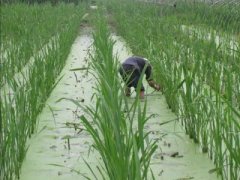
Cultivation Techniques for Water Bamboo: Scientific Fertilization Based on Changes in Growth Characteristics
The growth and development of water bamboo shoots can be divided into four stages according to their characteristic changes. So how do you fertilize water bamboo? 1. Germination stage: When spring temperatures rise, tiller buds and ramet buds begin to sprout, successively forming new shoots. Generally, the upper buds sprout earlier than the lower buds, and their
-
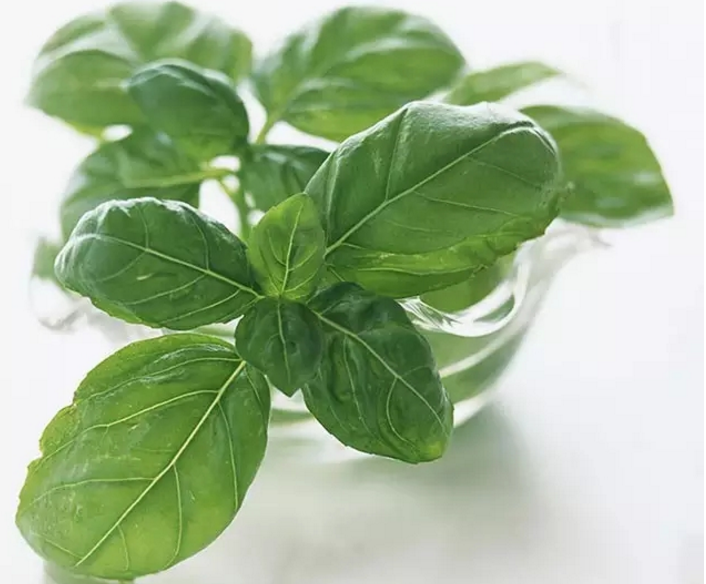
How to hydroponically grow basil? Methods, steps and key points on frequent water changes
Basil is a plant that can be eaten, and its taste is a bit like fennel. Basil can not only be used for eating, but can also be grown hydroponically. Let's see what the steps for hydroponic basil are: Material: a basil branch about 10cm long cut together with its leaves. Container: a transparent glass cup
-
New High-Yield Cultivation Technique for Soybeans: "Four Changes and One Addition"
With the traditional tillage and sowing method for growing soybeans, the rows are narrow and the plants too dense, and combined with various other reasons, yields have long hovered around 100-150 kg. Through years of experimental research, we have worked out a new approach that can increase soybean yields by more than 40%, namely the "Four Changes and One Addition" technique. The usual measures for raising soybean yields, besides selecting new high-quality, high-yield varieties, also include paying attention to crop rotation. According to experiments, after many years of continuous cropping, soybeans show slow growth, short plants, yellowing lower leaves, early leaf drop, and few pods with small seeds. Experiments have also proven that continuous cropping (monocropping) for more than 3 years can reduce yields by 20%-30%, or even more, and 2 years of continuous cropping following a one-year break can reduce yields by more than 30%. Therefore, crop rotation and changing to a different crop are of great significance in soybean production. To achieve high-yield and super-high-yield soybean cultivation, the new "Four Changes and One Addition" cultivation technique should be implemented on this basis. The specific methods of "Four Changes and One Addition" are:
-
Sudden Temperature Changes: Farmers Should Guard Against Swine Influenza
Swine influenza is an acute, highly contagious disease caused by the swine influenza A virus. It is mainly characterized by sudden onset in pigs, rapid spread, high morbidity, low mortality, high fever, and inflammation of the upper respiratory tract. Epidemiological features: 1. It has obvious seasonality, occurring mostly in autumn and winter and in spring when temperatures change abruptly, and pigs are especially prone to the disease when it is damp and rainy. 2. Pigs of all ages, sexes, and breeds can be infected and become ill. 3. It often occurs as an endemic or pandemic. 4. It spreads rapidly, and within 2 to 3 days it
-
What are the signs of aging in dogs? Watch out for these changes
Dogs kept as family pets generally begin to gradually age after they reach 10 years old. The main signs of aging in dogs include: estrus behavior becomes less pronounced, reproductive capacity stops completely, the skin becomes dry and wrinkled, the muscles age, stiffen, and lose elasticity, and the coat loses its luster, begins to thin, and becomes messy. The mouth, ears, skin, and other areas give off an unpleasant odor different from before. If the dog has a darker coat color, white hairs can be seen mixed in. The whiskers around the mouth begin to thin, teeth fall out, chewing becomes difficult when eating, and appetite decreases.
-
How to Grow High-Yield Soybeans? A Detailed Guide to the "Four Changes and One Addition" Cultivation Technique
Traditional drill sowing of soybeans results in narrow rows and overcrowding, and along with various other factors, yields have long hovered around 100-150 kg. Through years of experimental research, we have developed a new approach that can increase soybean yields by more than 40%, namely the "Four Changes and One Addition" technique. The usual measures for increasing soybean yields include, besides selecting new high-quality, high-yield varieties, paying attention to crop rotation. According to experiments, after years of continuous cropping, soybeans show slow growth, short plants, yellowing lower leaves, early leaf drop, and few pods with small seeds. Experiments
条件筛选