-
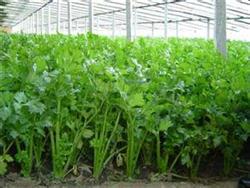
Detailed Explanation of Water and Fertilizer Management Techniques for Greenhouse Celery
I. Seedling Stage: When the sprouts push through the soil, water lightly once, and the seedlings will emerge completely in 1-2 days. After that, keep the soil moist, following the principle of frequent but light watering. When the seedlings are 10 cm tall, apply topdressing with irrigation 1-2 times. II. Transplanting and Seedling Restraint: From transplanting to seedling recovery, water frequently and lightly to keep the soil moist; after seedling recovery, control the water amount and carry out cultivation (to a depth of 1 cun) to restrain the seedlings, so that the roots grow downward and the differentiation of heart leaves accelerates. III. Vegetative Growth Stage: This period is the key stage for yield formation. After the seedling restraint period ends, concentrate fertilizer and water to promote vegetative growth of the plants. Generally, immediately after seedling restraint, apply quick-acting nitrogen fertilizer, then apply topdressing 2-3 times in stages. Pay special attention to applying a certain amount of potassium fertilizer, because celery is a potassium-loving vegetable. Water once every 3-4 days, but with a smaller amount of water, to avoid excessively low soil temperature, which is unfavorable for petiole thickening. About half a month before harvest, spray the whole plant with 30-50 ppm gibberellin 1-2 times for a better yield-increasing effect. Nitrogen deficiency in celery shows as small leaves and easy hollowing and aging of petioles. Phosphorus deficiency in the early stage and potassium deficiency in the later stage both have a relatively large impact on the yield and quality of celery, so phosphorus and potassium liquid fertilizers can be sprayed in the early and late stages respectively. In addition, celery is very sensitive to boron fertilizer. When boron is deficient, stem cracking occurs, and 0.5-0.75 kg of borax per mu can be applied for prevention and control.
-
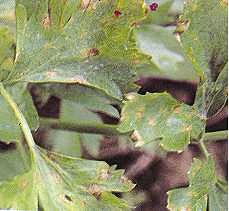
Control Methods for Late Blight in Greenhouse Celery
Celery late blight, also known as leaf spot disease and leaf blight, is a common disease in celery. Late blight in greenhouse-grown celery is more severe than in open-field celery and has a great impact on celery yield and quality. Occurrence characteristics: Celery late blight is a fungal disease, and the pathogen can overwinter on seeds and diseased plant residues. Sowing...
-
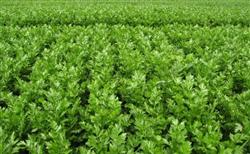
How to sprout celery seeds in hot weather
The suitable temperature for celery seed germination is 15-25°C; above 30°C germination becomes difficult. When sowing celery in hot weather, the following seed treatment methods can be used to promote uniform germination. Variable temperature treatment: after drying the seeds in the sun for 1 day, soak them in clean water for 24 hours, changing the water every 8 hours, then remove them, rinse them clean, wrap them in damp gauze, and place them at 5°C...
-
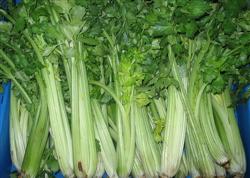
What herbicides are suitable for use during the celery growing period?
Celery grown by conventional methods has a high fiber content, and often because of imprecise management or delayed harvesting, the stalks are rather hard, which affects its commercial value and can even make it unfit to eat. Based on the successful experience of some vegetable growers over many years, adopting a set of celery tenderizing cultivation methods not only reduces the fiber content of the stalks but also improves their eating quality and...
-
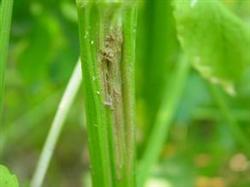
Cause analysis and control methods for celery petiole cracking
Celery petiole cracking mainly shows as the stem base splitting open together with the petiole. The first cause of cracking is boron deficiency; the second is growth being hindered under low temperature and drought conditions. In addition, sudden high temperature and high humidity, with the plant absorbing too much water, cause the tissue to fill with water rapidly, which can also cause cracking. Control methods: first, apply...
-
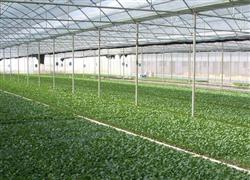
Full analysis of celery seedling-raising techniques: easily grow strong, healthy seedlings
Key points of celery seedling-raising techniques. Celery can be cultivated all year round, and its seedling-raising time and methods vary with the cultivation time and method. 1. Seedling raising for spring cultivation (1) Seed treatment. 5 to 6 days before sowing, sun the seeds for 1 to 2 days. When sunning the seeds, do not spread them directly on a concrete surface. Soak the seeds for 24 hours, and change the water 1 to 2 times during soaking...
-
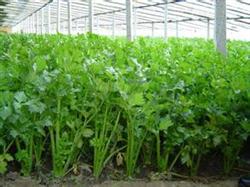
How to increase celery yield? A practical little trick
According to trials, the optimal concentration of gibberellin for promoting celery growth is 40 x 10 to the negative 6th power to 90 x 10 to the negative 6th power. Spray on the leaves 2 to 3 times during normal growth, with an interval of 2 weeks. After celery is sprayed with gibberellin solution, it promotes cell division and cell expansion. 8 hours after use, the nutrient absorption and conversion rate reaches...
-
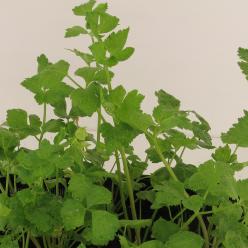
How to sow and raise seedlings for autumn delayed cultivation of celery?
(1) Seed treatment: The suitable seedling age for transplanting celery is 5 or 6 true leaves, the seedling raising period is 50-60d, and the sowing period is from June to August. At this time, the high temperature is not conducive to emergence, so low-temperature seed soaking and germination should be carried out before sowing. The method is: 6-7d before sowing, soak the seeds in cold water for 24h, rub and wash them several times and change the water during this period, and after taking them out, wrap them well in gauze or a gunny bag...
-
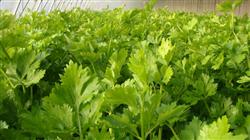
Detailed Explanation of Key Techniques for Blanching Cultivation of Celery
Overwintering celery is mainly grown in a single-slope solar greenhouse with covering conditions, with the supply period from New Year to the Spring Festival. Because of its good quality, it is well received by the market and has relatively high output value. Its cultivation techniques are introduced as follows: 1. Select good varieties. For solar greenhouse celery cultivation, choose varieties that do not tiller, grow fast, are high-yielding, ...
-
Detailed Explanation of Common Celery Seed-Saving Methods and Technical Points
In recent years, many regions have cultivated some high-quality common celery varieties, and they also account for a relatively large proportion in sowing. Because celery is a cross-pollinated crop, for common varieties it is especially important to do a good job in seed saving and preventing degeneration, to truly establish a good seed-saving field or seed-production site, and to select and retain good seed plants. Strictly isolate in the seed-saving...
条件筛选