-
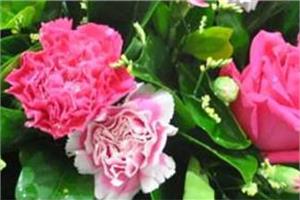
What Do Different Numbers of Carnations Represent? A Detailed Explanation of Their Floral Meanings
What Different Numbers of Carnations Represent: The Floral Meanings of Carnations
-

What are the cultivation methods and precautions for carnations?
Speaking of carnations, everyone must know something about them. So, do you know how to grow carnations? Next, the editor will introduce carnations'...
-

-

-

As Teachers' Day approaches, flowers are selling well, and carnations are still the most sought-after
As Teachers' Day approaches, flowers are selling well, and carnations are still the most sought-after
-

Roses Command a Premium After Snow: How Much Is a Single Rose at the Flower Shop? Which Is More Expensive, Carnations or Roses?
Everyone surely knows roses. During this year's Valentine's Day, do you know how much roses cost? Reports say roses command a premium after snow; the market price used to be 2 to 3 yuan per stem, but now each stem costs between 8 and 10 yuan. And
-
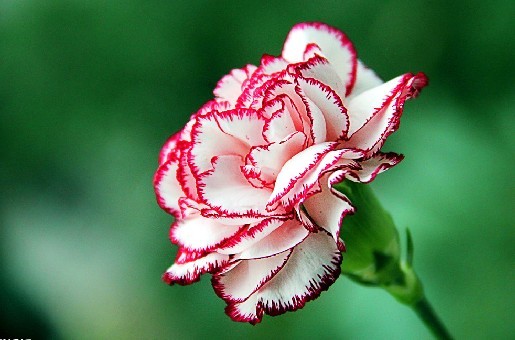
How to grow potted carnations? These little cultivation tips you need to master
The elegant carnation always reminds people of maternal love. Giving a bouquet of carnations you grew yourself to your mom - just think, what a heartwarming thing that would be! Are carnations easy to grow? Friends who have never grown carnations all share this worry
-
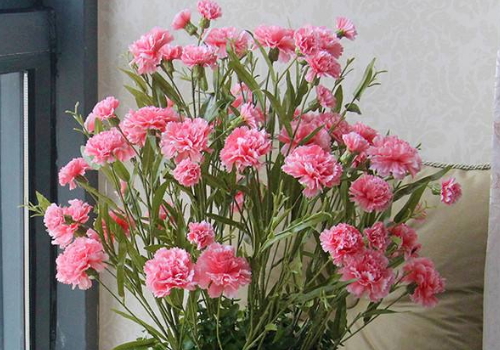
When should carnations be sown, and how should they be handled after the flowers fade?
Carnations are grown by many people in daily life and are very beautiful. When should carnations be sown? How should they be handled after the flowers fade? When to sow carnations: note that carnations are not heat-tolerant and prefer a cool environment; they grow poorly at a temperature of 30°C, and the best germination temperature is around 20°C
-
Key Techniques for Winter-Spring Cutting Propagation of Carnations
Carnation is an annual or perennial clump-forming herbaceous flower of the genus Dianthus in the family Caryophyllaceae. Its propagation can be carried out by sowing, cuttings, layering, tissue culture and other methods, but cutting propagation is generally the most commonly used, carried out in winter and spring. Generally speaking, carnation cuttings can be taken from December to April of the following year, with January to February being the most suitable; at this time the lateral buds used as cuttings grow vigorously and are of the best quality. At the same time, cuttings taken during this period can control the plants to bloom at New Year's Day and Spring Festival of the following year. The survival rate of cuttings taken in March is also
-
What are the methods for controlling Phytophthora disease in carnations?
Symptoms The stems and roots are affected. When infected at the seedling stage, it causes root rot and the plants die. After planting out, the main stem and branches become infected; the affected areas appear water-soaked and turn grayish-white when dry, and the stems and leaves above the affected area wither. The pathogen Phytophthora nicotianae Breda is called tobacco Phytophthora and belongs to the fungal subdivision Mastigomycotina. The sporangiophores emerge from the stomata and measure 10-744 microns long; the sporangia are borne singly, long elliptical or oval, measuring 28.8-67.5 x 12.5-30 mic
条件筛选