How to grow potted carnations? These little cultivation tips you need to master
The elegant carnation always reminds people of maternal love. Giving a bouquet of carnations you grew yourself to your mom - just think, what a heartwarming thing that would be! Are carnations easy to grow? Friends who have never grown carnations all share this worry, so let's get straight to the point and share a few little tips from the carnation cultivation methods: 1. Pot selection tips: choose a tall pot with a large inner diameter. 2. Watering principle: water thoroughly when you water, and don't water if the pot surface is not dry. 3. Pay attention to light, and avoid drought and waterlogging. 4. In midsummer carnations enter a semi-dormant state, so avoid harsh sun exposure... Next, let's learn about the points to note when growing carnations.
Little tips for growing potted carnations
1. To prevent carnation leaves from withering, control light and temperature well
Some flower growers report that during the growing process, phenomena such as leaf withering appear. This problem is mainly caused by temperature and light conditions not being controlled well. When the temperature is above 30 degrees, wilting symptoms are easily caused. The most suitable environmental temperature for carnation growth is 13-25 degrees, and light conditions should be controlled at 6-8 hours per day. This can ensure normal growth of potted carnations. Liking strong light is an important characteristic of carnations. Whether it is indoor overwintering, potted summering, or greenhouse forcing cultivation, sufficient light is needed, and they should all be placed in a sunny position exposed to direct light.
2. To avoid root rot in carnations, master the watering principle well
Why do some potted carnations develop root rot? Potted plants share a common trait: they like an environment with good ventilation, breathability, and drainage. Excessive watering easily causes root rot, so the number of waterings must be controlled well. Avoid water accumulation. During the rainy season, pay attention to loosening the soil and draining water. Apart from timely watering during the peak growing and flowering season, water less at ordinary times, just enough to keep the soil moist. If conditions permit, the air humidity can be kept at around 75%. (Friends who have an air humidifier at home should find this not hard to control) Once again, a reminder of the carnation watering principle: don't water if the pot surface is not dry, water thoroughly when you water, and avoid waterlogging.
3. If you want carnations to grow healthily, pay attention to fertilizing
If you are a friend who chooses to grow carnation plants. Pay attention to choosing a clayey soil that drains well, is rich in humus, has good fertilizer retention, and is slightly alkaline. Before planting, first apply enough base fertilizer containing potassium, calcium, nitrogen, and phosphorus at the bottom of the pot (or apply sufficient baked fertilizer and bone meal). During the growing period, liquid fertilizer must also be applied continuously; generally, apply a thin, well-rotted fertilizer solution once every 10 days or so, and apply one topdressing after harvesting flowers. Do not fertilize during the high-temperature period in summer, otherwise the plants are prone to withering and dying.
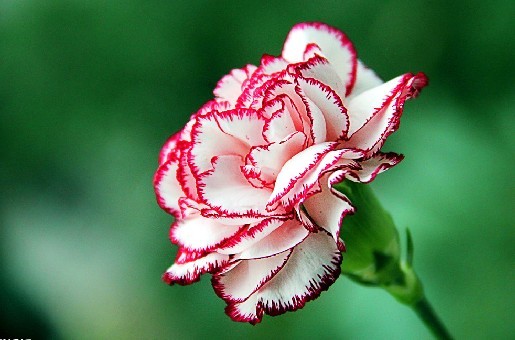
Little tips for growing potted carnations
4. Methods to encourage carnations to branch more and bloom more
To encourage branching, remove the top when the plant height is 15-20 cm. Generally keep 6-7 lower side buds, then pinch again later, finally giving the plant 12-14 side branches. When budding, keep only one bud at the top of each branch, and remove all lower axillary side buds and side shoots. The second pinching must be done before mid-August. After the first flowering, promptly cut off the flower stalks, keeping only two buds at the base of each branch. Through such repeated pinching, the plant shape can be made graceful, with abundant flowers and bright colors.
5. Carnation propagation methods
Carnations are most suitable for cutting propagation. There is no limit on the time for cuttings; except in overly hot weather, they can be propagated in all other seasons. Among these, cuttings taken in early February have the highest survival rate.
The flower language of carnations
Carnations represent great maternal love. They carry the meaning of "Mother, I love you." It is the flower of mothers: representing deep family affection; kind and selfless maternal love; warm blessings; carnations of different colors have different flower languages and symbolic meanings.
White carnation flower language: represents pure love. My love is forever.
Pink carnation flower language: expresses wishing mother to remain young and beautiful forever
Red carnation flower language: expresses wishing mother health and longevity
Yellow carnation flower language: expresses gratitude to mother
Beige-red carnation flower language: sorrow
Dark red carnation flower language: passionate love
Peach-red carnation flower language: loving you
Variegated carnation flower language: rejecting your love
Purple carnation flower language: willfulness, unpredictability
Blotched carnation flower language: refusal, I cannot be with you
Striped carnation flower language: sorry
The effects and functions of carnations
1. Carnations have the effects of beautifying the face, whitening the skin, and removing spots and wrinkles, and can be used to regulate female endocrine disorders.
2. Carnations contain various trace elements needed by the human body, can improve blood circulation, promote the body's metabolism, and have the effects of strengthening the kidneys and enriching essence, treating consumptive disease, cough, and diabetes.
3. Carnations have the effects of clearing the heart and removing dryness, and reducing inflammation and irritability. They have obvious effects in treating headaches and toothaches.
4. Carnations can calm the nerves and quench thirst, promote body fluid and moisten the throat, strengthen the stomach and relieve indigestion, regulate blood lipids, and aid weight loss.
How to grow potted carnations (little tips for home cultivation)
[How to grow carnations]The elegant carnation always reminds people of maternal love. As Mother's Day approaches, follow Tubatu's editor to learn how to grow potted carnations! Next year, give a bouquet of carnations you grew yourself to your dear mother - just think, what a heartwarming thing that would be!Are carnations easy to grow? Friends who have never grown carnations all share this worry, so let's get straight to the point and share a few little tips from the carnation cultivation methods: 1. Pot selection tips: choose a tall pot with a large inner diameter. 2. Watering principle: water thoroughly when you water, and don't water if the pot surface is not dry. 3. Pay attention to light, and avoid drought and waterlogging. 4. In midsummer carnations enter a semi-dormant state, so avoid harsh sun exposure... Next, let's learn about the points to note when growing carnations.
>>>>Click to learn more about carnation varieties
1. To prevent carnation leaves from withering, control light and temperature well:Some flower growers report that during the growing process, phenomena such as leaf withering appear. This problem is mainly caused by temperature and light conditions not being controlled well. When the temperature is above 30 degrees, wilting symptoms are easily caused. The most suitable environmental temperature for carnation growth is 13-25 degrees, and light conditions should be controlled at 6-8 hours per day. This can ensure normal growth of potted car nations. Liking strong light is an important characteristic of carnations. Whether it is indoor overwintering, potted summering, or greenhouse forcing cultivation, sufficient light is needed, and they should all be placed in a sunny position exposed to direct light.
Variegated carnation
2. To avoid root rot in carnations, master the watering principle well:Why do some potted carnations develop root rot? Potted plants share a common trait: they like an environment with good ventilation, breathability, and drainage. Excessive watering easily causes root rot, so the number of waterings must be controlled well. Avoid water accumulation. During the rainy season, pay attention to loosening the soil and draining water. Apart from timely watering during the peak growing and flowering season, water less at ordinary times, just enough to keep the soil moist. If conditions permit, the air humidity can be kept at around 75%. (Friends who have an air humidifier at home should find this not hard to control) Once again, a reminder of the carnation watering principle: don't water if the pot surface is not dry, water thoroughly when you water, and avoid waterlogging.
3. If you want carnations to grow healthily, pay attention to fertilizing:If you are a friend who chooses to grow carnation plants. Pay attention to choosing a clayey soil that drains well, is rich in humus, has good fertilizer retention, and is slightly alkaline. Before planting, first apply enough base fertilizer containing potassium, calcium, nitrogen, and phosphorus at the bottom of the pot (or apply sufficient baked fertilizer and bone meal). During the growing period, liquid fertilizer must also be applied continuously; generally, apply a thin, well-rotted fertilizer solution once every 10 days or so , and apply one topdressing after harvesting flowers. Do not fertilize during the high-temperature period in summer, otherwise the plants are prone to withering and dying.
4. Methods to encourage carnations to branch more and bloom more:To encourage branching, remove the top when the plant height is 15-20 cm. Generally keep 6-7 lower side buds, then pinch again later, finally giving the plant 12-14 side branches. When budding, keep only one bud at the top of each branch, and remove all lower axillary side buds and side shoots. The second pinching must be done before mid-August. After the first flowering, promptly cut off the flower stalks, keeping only two buds at the base of each branch. Through such repeated pinching, the plant shape can be made graceful, with abundant flowers and bright colors.
5. Carnation propagation methods:Carnations are most suitable for cutting propagation. There is no limit on the time for cuttings; except in overly hot weather, they can be propagated in all other seasons. Among these, cuttings taken in early February have the highest survival rate .
>>>>Click to view detailed carnation propagation methods
Striped carnation
Carnation flower language and the symbolic meanings of carnations
Carnations represent great maternal love. They carry the meaning of "Mother, I love you." It is the flower of mothers: representing deep family affection; kind and selfless maternal love; warm blessings ; carnations of different colors have different flower languages and symbolic meanings.
White carnation flower language: represents pure love. Sweet and lovely, innocent. A gift that brings women good luck, purity, pure friendship, my living love, my love is forever, faith , elegant love, true affection, respect.
Pink carnation flower language: expresses wishing mother to remain young and beautiful forever; others: represents that I will never forget you beauty, youth, passion.
Red carnation flower language: expresses wishing mother health and longevity. Others: my heart aches for you, appreciation, worship, infatuation, family affection, passion.
Yellow carnation flower language : expresses gratitude to mother. Others: you disappoint me , abandonment , contempt , long-lasting friendship .
Beige-red carnation flower language: sorrow
Dark red carnation flower language: passionate love
Peach-red carnation flower language : loving you
Variegated carnation flower language: rejecting your love
Purple carnation flower language: willfulness , unpredictability
Blotched carnation flower language: refusal, I cannot be with you
Striped carnation flower language: sorry
>>>>Click to view carnation flower counts and flower languages
Multicolored carnation
The effects and functions of carnations:
1. Carnations have the effects of beautifying the face, whitening the skin, and removing spots and wrinkles, and can be used to regulate female endocrine disorders.
2. Carnations contain various trace elements needed by the human body, can improve blood circulation, promote the body's metabolism, and have the effects of strengthening the kidneys and enriching essence, treating consumptive disease, cough, and diabetes.
3. Carnations have the effects of clearing the heart and removing dryness, and reducing inflammation and irritability. They have obvious effects in treating headaches and toothaches.
4. Carnations can calm the nerves and quench thirst, promote body fluid and moisten the throat, strengthen the stomach and relieve indigestion, regulate blood lipids, and aid weight loss.
Notes on carnations: Please place in a cool, dry indoor place, and prevent children from taking them on their own.
When brewing carnations, suitable pairings are: forget-me-not, stock, rose king, peony flowers, wintersweet.
Introduction to the brewing and drinking method of carnations: take 3-4 carnation flowers, brew in boiling water for three minutes, and it is ready.
Readers of this article are also interested in:
Methods for preserving carnations and extending their vase life
Pest and disease control for carnations
Illustrated simple carnation folding tutorial Handmade carnation step-by-step diagrams
The complete collection of carnation flower languages What is the carnation flower language (the most complete in history)
The functions of carnations Let you fully understand carnations
How to grow a bonsai ficus? Decoding bonsai ficus care tips
How to grow potted carnations
Are carnations easy to grow? Friends who have never grown carnations all share this worry, so let's get straight to the point and share a few little tips from the carnation cultivation methods: 1. Pot selection tips: choose a tall pot with a large inner diameter. 2. Watering principle: water thoroughly when you water, and don't water if the pot surface is not dry. 3. Pay attention to light, and avoid drought and waterlogging. 4. In midsummer carnations enter a semi-dormant state, so avoid harsh sun exposure... Next, let's learn about the points to note when growing carnations.1. To prevent carnation leaves from withering, control light and temperature well: Some flower growers report that during the growing process, phenomena such as leaf withering appear. This problem is mainly caused by temperature and light conditions not being controlled well. When the temperature is above 30 degrees, wilting symptoms are easily caused. The most suitable environmental temperature for carnation growth is 13-25 degrees, and light conditions should be controlled at 6-8 hours per day. This can ensure normal growth of potted car nations. Liking strong light is an important characteristic of carnations. Whether it is indoor overwintering, potted summering, or greenhouse forcing cultivation, sufficient light is needed, and they should all be placed in a sunny position exposed to direct light.
2. To avoid root rot in carnations, master the watering principle well: Why do some potted carnations develop root rot? Potted plants share a common trait: they like an environment with good ventilation, breathability, and drainage. Excessive watering easily causes root rot, so the number of waterings must be controlled well. Avoid water accumulation. During the rainy season, pay attention to loosening the soil and draining water. Apart from timely watering during the peak growing and flowering season, water less at ordinary times, just enough to keep the soil moist. If conditions permit, the air humidity can be kept at around 75%. (Friends who have an air humidifier at home should find this not hard to control) Once again, a reminder of the carnation watering principle: don't water if the pot surface is not dry, water thoroughly when you water, and avoid waterlogging.
3. If you want carnations to grow healthily, pay attention to fertilizing: If you are a friend who chooses to grow carnation plants. Pay attention to choosing a clayey soil that drains well, is rich in humus, has good fertilizer retention, and is slightly alkaline. Before planting, first apply enough base fertilizer containing potassium, calcium, nitrogen, and phosphorus at the bottom of the pot (or apply sufficient baked fertilizer and bone meal). During the growing period, liquid fertilizer must also be applied continuously; generally, apply a thin, well-rotted fertilizer solution once every 10 days or so, and apply one topdressing after harvesting flowers. Do not fertilize during the high-temperature period in summer, otherwise the plants are prone to withering and dying.
4. Methods to encourage carnations to branch more and bloom more: To encourage branching, remove the top when the plant height is 15-20 cm. Generally keep 6-7 lower side buds, then pinch again later, finally giving the plant 12-14 side branches. When budding, keep only one bud at the top of each branch, and remove all lower axillary side buds and side shoots. The second pinching must be done before mid-August. After the first flowering, promptly cut off the flower stalks, keeping only two buds at the base of each branch. Through such repeated pinching, the plant shape can be made graceful, with abundant flowers and bright colors.
5. Carnation propagation methods: Carnations are most suitable for cutting propagation. There is no limit on the time for cuttings; except in overly hot weather, they can be propagated in all other seasons. Among these, cuttings taken in early February have the highest survival rate.
The effects and functions of carnations:
1. Carnations have the effects of beautifying the face, whitening the skin, and removing spots and wrinkles, and can be used to regulate female endocrine disorders.
2. Carnations contain various trace elements needed by the human body, can improve blood circulation, promote the body's metabolism, and have the effects of strengthening the kidneys and enriching essence, treating consumptive disease, cough, and diabetes.
3. Carnations have the effects of clearing the heart and removing dryness, and reducing inflammation and irritability. They have obvious effects in treating headaches and toothaches.
4. Carnations can calm the nerves and quench thirst, promote body fluid and moisten the throat, strengthen the stomach and relieve indigestion, regulate blood lipids, and aid weight loss.
Notes on carnations: Please place in a cool, dry indoor place, and prevent children from taking them on their own.
When brewing carnations, suitable pairings are: forget-me-not, stock, rose king, peony flowers, wintersweet.
Introduction to the brewing and drinking method of carnations: take 3-4 carnation flowers, brew in boiling water for three minutes, and it is ready.