-
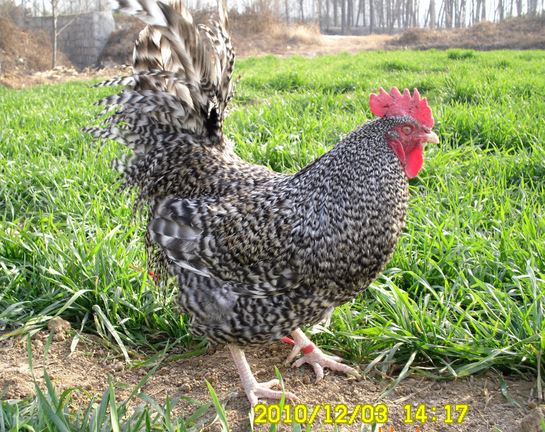
How much does a Barred Plymouth Rock chick cost? Analysis of breeding methods and profit prospects
The Barred Plymouth Rock has a large, oval body; an adult chicken weighs at most just four or five jin. Its eggshells are mostly light brown, but whether it is the meat or the eggs, both are far more nutritious than ordinary broiler chickens, and the meat is relatively fresh, tender and tasty. The Barred Plymouth Rock is also a native chicken breed of our country, so it is quite suitable for free-range raising in rural areas.
-

Detailed Explanation of Tea Plant Clonal Breeding Techniques and Methods
A breeding method that combines single-plant selection with vegetative propagation to develop new varieties. Tea varieties developed through clonal breeding are called tea clonal varieties or tea vegetative propagation line varieties. They can reflect the heredity of the mother tree, maintain the excellent traits of improved tea varieties, have fast propagation speed and a short propagation cycle, and can be propagated through cutting seedling raising at the seedling stage, with a relatively high propagation coefficient. Since the promotion and success of short-stem tea cuttings, tea clonal breeding has been the selection method of "single-plant selection -- cutting propagation." The breeding method
-
Tea plant sexual-line breeding methods and key technical points
A breeding method in which sexual progeny of tea plants are produced through the union of male and female gametes and, after selection, new cultivars are developed. The cultivars developed are called sexual-line cultivars. The methods are: 1. Selection of superior individual plants or types: according to the breeding objectives, carry out individual plant selection or group selection from the original material nursery or production tea gardens; 2. Seed collection and seedling raising: for the initially selected individual plants or groups, separately reserve and collect seeds, and raise seedlings separately by line, carrying out identification of seedling-stage traits and cultivar purity; 3. Family or group comparative trials: arrange comparative trials of the selected families or groups together with control
-
Tea plant breeding yield identification methods and technical key points
A method for measuring the breeding yield of tea plants (individuals, lines or strains). The direct measurement of yield is calculated based on the harvested amount of buds and leaves per unit land area of the tea plant. ① Annual picking calculation method: according to a certain picking standard, pick in stages and batches by plant or plot, then separately count the total yield of each season within a year. In black tea and green tea regions, picking is generally done at the standard of one bud and two or three leaves; in dark tea regions and oolong tea regions, picking is done at the standard of 4-5 leaves at the resting shoot. In the later stages of breeding, yield performance must be measured to identify production potential.
-
Detailed Explanation of Tea Plant Hybrid Breeding Techniques and Methods
A breeding method in which tea plant parents with different genetic characteristics are crossed sexually to produce variation in the hybrid population, which is then subjected to selection to develop new tea plant varieties. The selection and matching of hybrid parents determines the success or failure of hybrid breeding and the level of breeding achieved. The general principles are: 1) The parental traits should complement each other's strengths and weaknesses, and the superior traits should be outstanding; 2) The parents' adaptability to local environmental conditions, especially the material selected as the female parent, should have strong adaptive capacity; 3) The flowering periods of both parents should be relatively consistent, and the female parent's seed-setting
-
Detailed Explanation of Radiation Breeding Techniques and Methods for Tea Plants
A mutation breeding method in which tea plants are induced to mutate through radiation exposure, and new varieties are developed through selection and cultivation. Compared with traditional breeding methods, radiation breeding can generally increase the mutation frequency by about 1000 times. It is relatively effective for changing one or two traits, and has characteristics such as breaking old linkages and transplanting chromosome segments, overcoming incompatibility in distant hybridization, changing self-incompatibility in cross-pollinated plants to self-compatibility, and producing mutation types that rarely exist in nature. Radiation includes ionizing radiation and thermal
条件筛选