-

Detailed Explanation of Schisandra Breeding Techniques and Methods
Schisandra is a plant of the Magnoliaceae family and a valuable medicinal material, with effects of astringing the lungs, nourishing the kidneys, stopping sweating, stopping diarrhea, and securing essence. Schisandra prefers humid environments (but is not tolerant of low-dust waterlogging), is cold-resistant, needs moderate shade, and is suitable for humus soil or loose, fertile loam. It has strong adaptability and can be planted in both northern and southern China. It often grows wild in mixed coniferous and broad-leaved forests, mountain gullies, along stream banks, among small trees and shrubs, or at forest edges and open areas within forests. Breeding methods for superior varieties: 1. Seed propagation. After autumn, collect the fruits, remove the fruit
-
Breeding Methods and Feeding Techniques for the Ganoderma Turtle
The Ganoderma turtle, also called the twelve-ridged turtle, is small in size, reaching a maximum of only 200-250 grams. It is a Class II nationally protected animal and a specialty of China. The Ganoderma turtle resembles the Ganoderma herb in shape, hence its name. Its mouth is hook-shaped and curved. Its eyes are large and protruding, with light yellow longitudinal stripes running from the side of the snout along the eye to the side of the neck. The Ganoderma turtle has strong adaptability, tolerates hunger, has strong vitality, and a long lifespan. Its meat is tender, has no off-flavor, and is rich in nutrients, making it an ideal nourishing food. The Ganoderma turtle has effects such as replenishing yin and blood, boosting essence and qi, and helping with weakness. Therefore, the Ganoderma turtle is extremely valuable and deeply
-
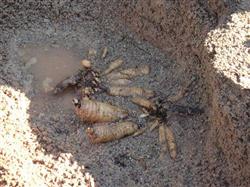
Differences Between Sexual Hybrid Breeding of Gastrodia and Traditional Varieties, and Management Methods
Explaining the principles and technical methods of mulching for increased yield: the principle of mulching for increased yield. Gastrodia is a plant that prefers cool, humid conditions. In nature, it is mainly distributed under forest canopies or in shrublands, mostly growing on gentle slopes at 10-30°C. During its growth period, it likes moisture but fears waterlogging; it likes warmth, with the most suitable temperature being 20-2...
条件筛选