-

Detailed Explanation of the Key Techniques for Pruning and Shaping Chinese Hackberry (Celtis sinensis) Bonsai
Chinese hackberry is commonly found growing wild beside hillside streams and valleys in the hilly and low-mountain areas of the Yangtze River basin and regions to its south. Ancient, curiously shaped old sprout-origin stumps that have been cut back for many years can be collected and grown on to develop their root system. Through pruning, root development is encouraged and new shoots are stimulated, after which the tree is shaped and cultivated; after 12 years, it is then potted up and worked on further.
-
What are the cultivation methods for Chinese hackberry (Celtis sinensis) bonsai?
Chinese hackberry (Celtis sinensis) is widely distributed across many regions nationwide, including the Huai River basin, the Yellow River basin, south of the Qinling Mountains, Guangdong, and Guangxi, and mostly grows scattered at village entrances, by riversides, at field corners, and on hillsides in plains and low mountain areas. Because Chinese hackberry material is widely available and highly adaptable, easy to propagate from seed, long-lived, with a rugged tree form, and aged, ancient, and uniquely elegant
-
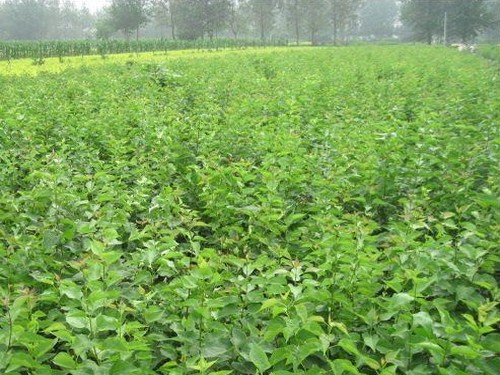
Detailed Guide to Seed Propagation Techniques for Elderberry: Mastering the Key Points of Seedling Cultivation
Elderberry, also known as Gongdao Lao, is a deciduous shrub to small tree of the genus Sambucus in the honeysuckle family (Caprifoliaceae), widely distributed across both northern and southern parts of China, and is a perennial clumping shrub. The flowers are white, and the fruits are bright red like fire, covering the entire tree and persisting. It has strong adaptability, is drought-tolerant, tolerant of poor soil, and can withstand low temperatures of -50°C.
-
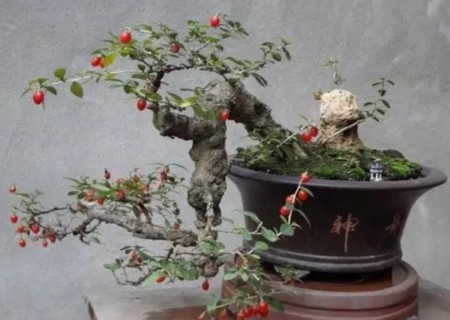
Methods and Techniques for Pruning and Shaping Goji Berry Bonsai
The goji berry (Lycium chinense) stump bonsai has an elegant posture, with drooping branches and purple flowers, and in autumn red berries cover the branches, giving an excellent ornamental effect. If leaf picking is carried out once in early summer, it can produce fresh emerald-green new leaves for better viewing. Pick the leaves once more in early autumn so that flower buds and leaf buds emerge at the same time
-
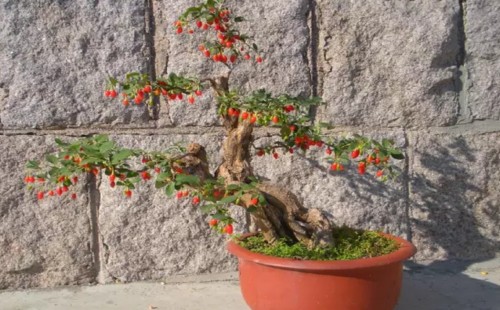
A Detailed Guide to the Timing and Methods of Leaf Removal for Goji Berry Bonsai
Leaf removal on bonsai trees is an important means of prompting species that sprout and leaf out only a few times a year to send out new growth. It keeps the bonsai tree constantly covered in fresh, tender green leaves, making it full of vitality and greatly enhancing its ornamental value. The same is true for goji berry bonsai, which often relies on leaf removal to encourage new growth.
-
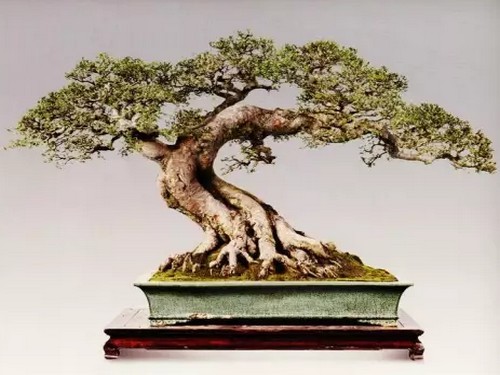
Sourcing Methods and Cultivation Techniques for Chinese Hackberry Bonsai
The Chinese hackberry (Celtis sinensis) has an elegantly antique and unrestrained posture, with rough, mottled bark that does not crack, a tall and straight trunk, and gracefully spreading branches. In spring, new leaves first emerge, covering the branches in tender green; in autumn, the foliage turns deep yellow, making it highly ornamental. In winter, when the leaves have almost entirely fallen, it can be appreciated as a bare tree. Taking its old stumps, with exposed roots and bent trunks, gnarled and antique, green leaves trailing along the branches, layered and towering in verdant beauty, it is richly evocative of wild mountain forests.
-
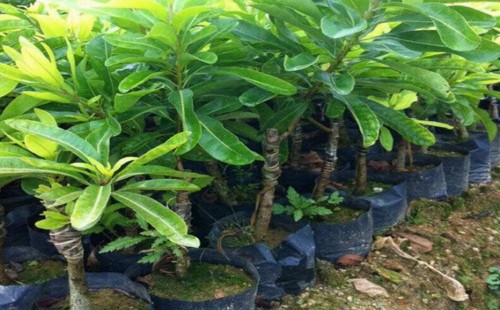
What soil is suitable for planting bayberry? Detailed explanation of soil requirements
The bayberry fruit is both edible and can be used as medicine; it can not only be planted in the ground, but also grown in pots. Moreover, as long as the growing environment is suitable, it often grows with lush branches and leaves, and a rounded, neat crown, and after entering summer it will bear abundant red fruits, sweet and tempting, very lovely. So
-
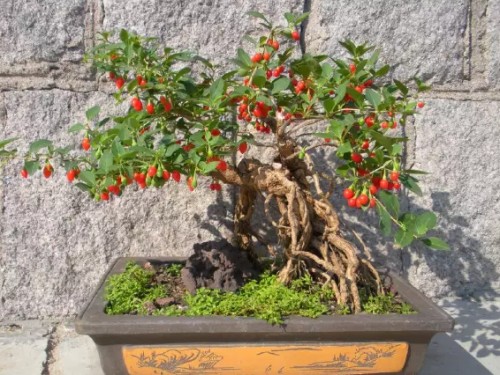
Reasons for Yellowing and Leaf Drop in Goji Berry (Lycium chinense) Bonsai and Their Solutions
Goji berry is a nourishing Chinese herbal medicine. The plant has strong suckering ability, and people have grown it as potted specimens for appreciation since ancient times. Ordinarily, the drooping goji branches look very elegant, its flowers are purple, and after autumn arrives red fruits adorn the branches; it looks great whenever viewed. The goji berry has strong branching ability, and new branches grow vigorously
-
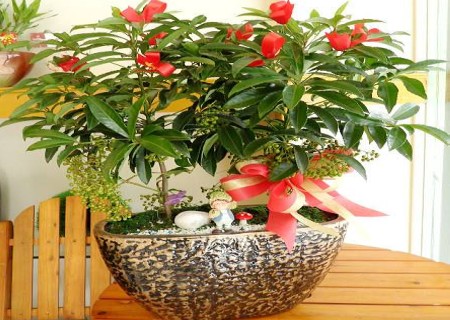
What are the cultivation methods for potted Ardisia crenata (coralberry)?
Ardisia crenata is locally known in southern Fujian as "mountain longan" and is a newly developed flowering plant that is easy to grow and whose fruit is edible. Also known as "wealth fruit," after autumn its red berries can remain on the branches for as long as 16 months, so many people like to buy potted plants at New Year's Day and in spring to place on windowsills and desks.
-
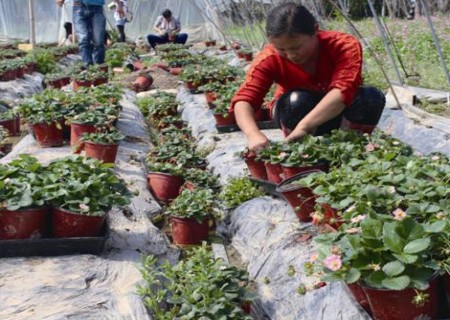
How to Weed a Strawberry Patch: Practical Methods and Tips
Preventing weed damage has always been an important issue in strawberry production. Because strawberry patches receive heavy fertilization and frequent irrigation, weeds grow abundantly; they not only compete with the strawberries for water and nutrients, but also block airflow and light, degrading the microclimate of the strawberry patch and causing serious pest and disease problems. Weed damage can cause yield losses of about 15%.
条件筛选