-

A brief introduction to new mulberry and silkworm varieties, explained in one article
1. Nongsang No. 12: A new mulberry variety bred by the Sericulture Research Institute of the Zhejiang Academy of Agricultural Sciences in 1984 through artificial sexual hybridization. Main traits: compact crown, many shoots, long and straight branches, thick leaf flesh, dark green leaf color, sprouting earlier than Heye Bai, fast growth, strong adaptability. Regional trial results: leaf yield per mu 1867 kg, 18.73% higher than the control Heye Bai, significantly higher than the control; cocoon shell weight per 10,000 silkworms 7 kg, 8.03% higher than the control Heye Bai, extremely significantly higher than the control; resistance to yellowing-type
-
Warm weather gradually arrives in the third month of spring; prepare mulberry and silkworms without delay
The sluggish cocoon price market in 2007 affected silkworm farmers' enthusiasm for planting mulberry and raising silkworms to a certain extent. For farmers in the key sericulture townships of Chun'an County, planting mulberry and raising silkworms is still the main source of household income. Therefore, the author reminds the broad community of silkworm farmers to treat the sluggish cocoon market rationally and not to easily waver in their enthusiasm for raising silkworms. At present, it is necessary to seize the favorable opportunity to order enough good spring silkworm eggs, do a good job in mulberry field fertilization and management, and strive to make a comeback in the Year of the Rat. Relevant provincial experts believe that the sharp
-
Mock Strawberry
Mock strawberry, also known as ground bayberry, belongs to the genus Duchesnea in the rose family (Rosaceae) and is a perennial low-growing herb. The whole plant is covered with white hairs, and the stems are slender, creeping, and root at every node. The leaves are alternate and palmately compound. The flowers are yellow and borne on long stalks. The fruit is bright red, with a raised central portion that is soft like a sponge. The whole plant is collected in summer and autumn and dried in the sun. A decoction of the whole plant, 15-50 g, taken as a water decoction, can treat cancer.
-
What are the key points of mulberry leaf feeding techniques in young silkworm co-rearing?
In the process of young silkworm co-rearing, mastering feeding techniques and ensuring proper nutrition is the key to ensuring young silkworms develop robustly and uniformly. Carefully select mulberry leaves according to the leaf standards for each instar, selecting in the field and selecting on the tree. Choose non-toxic, pollution-free, insect-free, appropriately mature leaves from the upper new shoots. Before leaf preparation, perform a second careful selection, removing leaves that are too old, too tender, wilted, or secondarily contaminated and thus below standard. Planned preparation and storage of leaves for young silkworms During leaf preparation and storage, keeping mulberry leaves fresh and with sufficient moisture is very important. Low-temperature running-water leaf storage
-
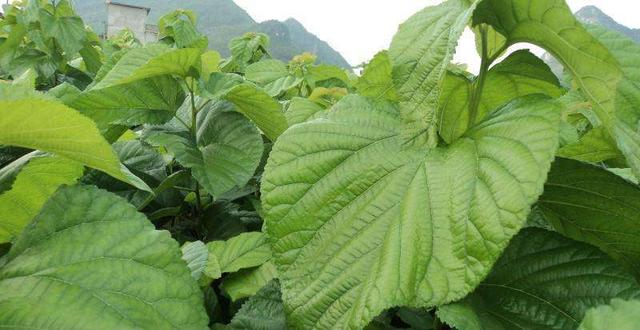
Is It Feasible to Grow Mulberry Trees to Feed Pigs? Raising Pigs That Eat Mulberry Leaves Is More Profitable
Growing Mulberry Trees to Feed Pigs? Raising Pigs That Eat Mulberry Leaves Is More Profitable!
-
Symptoms and Control of Powdery Mildew, a Common Strawberry Disease
As is well known, the strawberry is a fruit and vegetable plant that is both ornamental and edible. Thanks to advanced cultivation techniques in recent years, this plant that grows on the ground can now grow independently in flower pots. With proper care and management, it can still bloom and bear fruit, but there is always a "but."
-
What are the propagation methods for purple-leaf barberry?
Purple-leaf barberry, also known as red-leaf barberry, turns tender red in early spring, becomes deep purplish-red in midsummer, and returns to blood-red in autumn, but when light is insufficient, parts of the purple-leaf barberry fade to green. It is commonly propagated by sowing, cuttings, division and layering.
-
What are the propagation methods for strawberry begonia?
Strawberry begonia has fairly strong adaptability and tolerates shade. Growing strawberry begonia by hand is not very difficult, and propagating it is not very difficult either, but if you want to increase the survival rate, you need to pay attention to the propagation method. Generally, strawberry begonia is mostly propagated by division, and sowing can also be used.
-
How to Propagate Elderberry? Detailed Explanation of Cuttage and Seed Sowing Methods
Elderberry can generally be propagated by cuttage, division, and seed sowing, and since cuttage and seed sowing are easier to carry out, these two methods are more commonly used. So how exactly should elderberry cuttage and seed sowing propagation be carried out
-
Can bayberry with bugs still be eaten?
Many friends may have noticed that after soaking the bayberries they bought at home in salt water, bugs appear crawling on the bayberries, which is how the saying that bayberries have bugs came about. But do the bugs in the bayberry flesh actually harm people? Let me analyze it for you.
条件筛选