-

Cottonseed protein: What is soybean meal? Can cottonseed protein replace soybean meal in pig concentrate?
Can cottonseed protein replace soybean meal in pig concentrate??
-
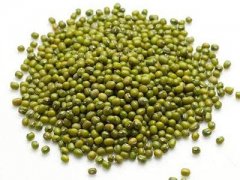
How to Store Mung Beans So They Don't Sprout or Get Bugs
Mung beans and adzuki beans are treasures among grains, so how should these two grains be stored? Mung beans and adzuki beans discolor easily because their seed coats contain a lot of tannins and polyphenol oxidase, which readily oxidize and discolor under the influence of air, light, moisture and temperature. The higher the moisture, the higher the temperature
-
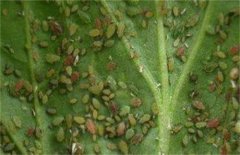
Control Methods for Yam Bean Beetle and Blue-Winged Leaf Beetle
How should the control methods for yam bean beetle and yam blue-winged leaf beetle be carried out? Do you know? Let's take a look together. The yam bean beetle pest occurs from May to August, with only 1 generation per year. The yam blue-winged leaf beetle also has 1
-
How to prevent and control soybean root rot? These methods you need to master
1. Choose disease-resistant varieties. 2. Rotate with non-host crops such as corn, foxtail millet, and sweet potato. 3. Apply farmyard manure, potassium fertilizer, phosphate fertilizer, etc. when sowing. 4. Apply metalaxyl granules when sowing so that soybean roots can absorb them to prevent root infection. 5. Before sowing, dress seeds with 35% metalaxyl powder at 0.3% of seed weight. 6. Strengthen field management, carry out timely deep plowing and intertillage hilling and weeding, and drain standing water promptly after rain to prevent excessive humidity. 7. When diseased plants are found, pull them out promptly, thoroughly remove the diseased plant residues, and apply quicklime to the planting holes and
-
Control Methods for Fusarium Root Rot in Soybean
Symptoms: Fusarium root rot is one of the common root rots in soybean. It mainly occurs at the seedling stage. The roots and stem base of diseased plants develop elliptical brown, elongated to irregular sunken spots, which later expand into large patches encircling the main root, and some damage the lateral roots. The fungus mainly damages the cortex, causing diseased seedlings to emerge very slowly, cotyledons to lose green color, and lateral roots and fibrous roots to be few; in the later stage the roots turn black and the epidermis rots, the diseased plants turn yellow and become stunted, and the lower leaves drop early. The diseased plants generally do not die, but they set fewer pods and the seeds are small. Control methods should adopt comprehensive measures with prevention as the priority. (1) Select resistant
-
How to prevent and control soybean root rot? Detailed prevention and control techniques for Heilongjiang
Root rot occurs commonly in the soybean-producing areas of Heilongjiang Province. In the field, the usual rate of diseased plants is 30%-40%; in low-lying land and continuous-cropping land, the rate of diseased plants can reach more than 70%, and the highest seedling death rate is more than 15%. The eastern region is more severely affected than the western region, with the most severe occurrence in the moist-soil areas of the east. In an ordinary year, the rate of diseased plants in the early growth period of soybean (before the flowering stage) is about 75%, and the disease index is 35%-50%; in rainy years, the disease index can reach more than 60%. The occurrence of soybean root rot mainly depends on the bacteria in the soil
-
What to Do When Soybean Aphids Strike? Detailed Control Measures
Soybean aphid is one of the major pests of soybean, with adults and nymphs piercing and sucking sap on the top leaves, tender leaves and tender stems of soybean plants. In severe cases they cover the stems and leaves, and can also attack tender pods, causing stunted plants, reduced fruiting branches and pod numbers, and lower 1000-grain weight; severe infestation at the seedling stage can kill the entire plant. In outbreak years, if not controlled in time, yield losses range from 20-30% in mild cases to more than 50% in severe cases. It is distributed in all major soybean-producing areas of China, with heavier damage in parts of the three northeastern provinces, Henan, Shandong and other provinces. Large
-
Soybean aphid outbreak forecast issued, growers need to take timely preventive measures
Based on the survey results from all forecasting stations across the province, combined with a comprehensive analysis of crop growth and meteorological conditions, soybean aphids are expected to occur at a moderate level overall across the province this year, with some cities and counties that have received less rainfall and had high early-season aphid populations reaching moderate-to-severe occurrence. The peak period of soybean aphid damage will be from mid-July to early August. 1. Occurrence is earlier than in normal years. According to monitoring by all forecasting and plant protection stations across the province, the first aphid sighting was on June 10, later than last year but still about 10 days earlier than in normal years. 2. Meteorological conditions are unfavorable for soybean aphid
-
Detailed Explanation of Key Soybean Aphid Control Techniques
The soybean aphid belongs to the order Homoptera, family Aphididae, and is a major pest in the soybean-producing areas of Huachuan County. In the past two years, its occurrence period has advanced, and the damage has also worsened. The soybean aphid is tender-growth-tropic; adults and nymphs gather on the terminal leaves, tender leaves and tender stems of plants to pierce and suck sap, and in severe cases they cover the stems and leaves, and can also attack tender pods. When plants are severely damaged, the leaves curl, the root system develops poorly and turns yellow, the plants are stunted, branching and pod setting decrease, and the 1000-grain weight drops. If an outbreak at the seedling stage is not controlled in time, the yield is reduced by 20%-30% in mild cases, and by more than 50% in severe cases.
-
A Comprehensive Guide to Scientific Control Methods for Soybean Aphids
Soybean aphids are commonly known as "ni chong" (greasy bugs) or "mi chong" (honey bugs). They mostly gather on the growing points, top leaves and backs of young tender leaves of soybean plants, piercing and sucking sap to cause damage. This results in leaf curling, plant stunting and reduced yield, and they can also transmit viral diseases, causing yield loss and quality decline. This pest begins to appear in soybean fields in mid-to-late June, and causes severe damage during hot, dry weather. Soybean aphids have a very strong reproductive capacity; a single female can produce 50-60 offspring, and under suitable conditions, young aphids can give birth after about 4-5 days, and can reproduce 15
条件筛选