-

Bare-Root Hydroponic Growing Methods and Precautions for Phalaenopsis Orchids
I believe that whether you are a new flower enthusiast or a veteran grower, anyone who has kept "Phalaenopsis" orchids has encountered root rot and hollow roots. The cause of hollow roots is that the root has lacked water for a long time, then after exhausting itself it becomes shriveled. As for root rot, it is mostly because the ventilation environment is not good enough while the growing medium retains water too well, which then leads to long-term water accumulation.
-
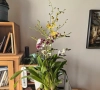
How to keep a Phalaenopsis alive when it has few roots? Care tips for bare-root seedlings
If you have just gotten a bare-root Phalaenopsis, don't worry. Master these three root-growing methods, and even beginners can grow a mass of roots. 1. Soaking method 1. On the first day, put clean water in a container and soak the roots completely for 12-24 hours. 2. On the second day, pour out the water and gently wipe the moisture from the surface of the roots with a paper towel. Notes: In summer, let it dry in a ventilated place for 5-7 days, and the roots
-

How to Plant Bare-Root Roses for a High Survival Rate
Rose flowers are a common flower in daily life, and because of their diverse varieties and beautiful colors they are deeply loved by people, and are currently widely planted in gardens, parks and along roadsides, so how do you plant bare-root roses? 1. Soil requirements Roses like to grow in neutral or slightly acidic soil with good air permeability and strong water- and fertilizer-retention capacity, so when choosing soil, try to choose fertile neutral or slightly acidic sandy loam for planting. If you mix your own soil, you can use garden soil, leaf mold, peat and perlite in a 2:1:1:0.5 ratio to mix into nutrient soil for planting.
-
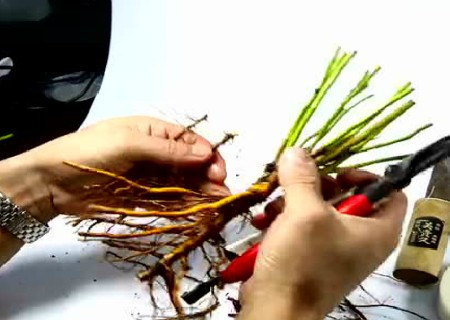
Rose root grafting technique - a root grafting method for bare-root rose grafting
Speaking of root grafting, we need to first talk about grafting. Why? Because root grafting falls under the "scion grafting" category of the two grafting methods, "scion grafting" and "bud grafting." Grafting is one of the artificial vegetative propagation methods for plants. That is, grafting a branch or bud of one plant onto the stem or root of another plant.
-
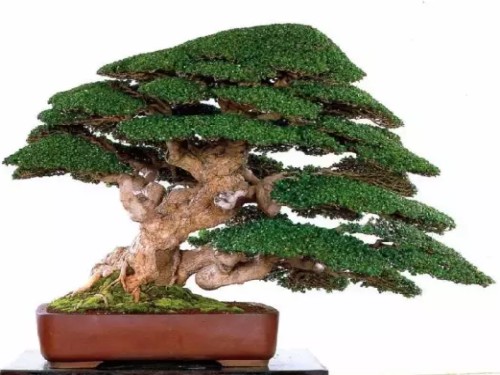
Detailed Explanation of Key Techniques for Bare-Root Cultivation of Bonsai Tree Stumps
With the further development of urban landscaping and home courtyard beautification, the shaping and landscaping of tree stumps has become increasingly popular. Besides the bonsai that people can often move around, they always linger over the shaped landscapes featuring tree stumps in public green spaces and home courtyards, which shows people's mentality of revering nature.
-
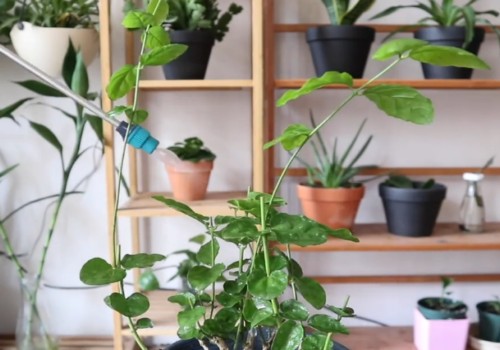
Care methods for jasmine after bare-root planting and successful establishment
Jasmine is a plant with strong vitality. Even when planted with bare roots, as long as you follow a scientific approach, it can still be grown successfully. However, because bare-root planting carries high risks, even after the plant has successfully adjusted to the pot, you still need to pay attention to care and management. Otherwise, the plant can easily show poor growth, or even die, and all your previous efforts will be wasted.
-
A Bold Exploration of a New Technique for Transplanting Bare-Root Cotton Seedlings
Xinchang Town in Shishou City is located on the north bank of the Yangtze River, bordering Jiangling County. It is the largest town for early melons in Hubei Province and the birthplace of early chili pepper seedling cultivation in Hunan and Hubei. It was once the township in Hubei Province with the largest area, the highest benefits, and the best influence for intercropping cotton with melons and peppers. On this land where melons delight guests and peppers reflect the colors of spring, the year-round cotton planting area is about 24,000 mu. In recent years, under the promotion and guidance of agricultural technical service departments, some cotton farmers have been willing to accept new technologies and have actively and boldly explored new methods of cotton seedling cultivation. On the basis of substrate seedling cultivation and water-floating seedling cultivation in the previous two years, this year they
-

How to acclimate large bare-root rose plants? Methods and precautions
At this time of year, large field-grown bare-root plants are sold quite often. Compared with tiny rooted cuttings, many gardening enthusiasts do not know how to handle large plants. This article focuses on handling bare-root plants. Large bare-root plants come in two types: those with a soil ball and fully bare-root plants. As long as the survival rate is well managed, large bare-root plants still do very well.
-
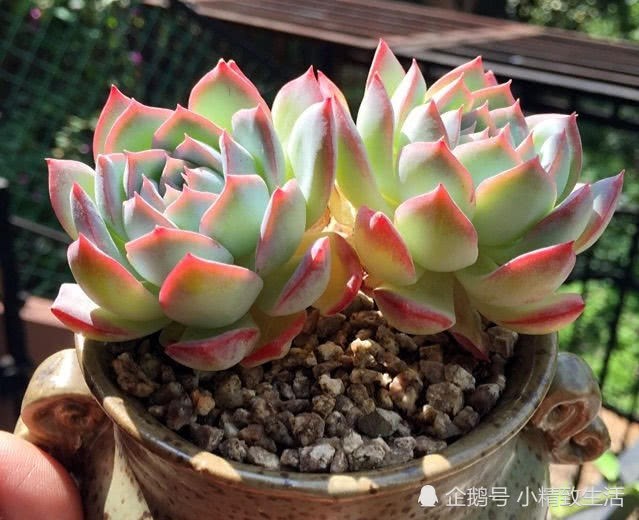
Buying bare-root succulents online in autumn and potting them up: do these 6 things well and they will establish quickly
The cool autumn has arrived, and the good season for succulents has begun. At this time, succulent lovers, who have been holding back all summer, can finally go all out and buy, buy, buy. And because online shopping offers a complete range of varieties and low prices, buying bare-root su...
-
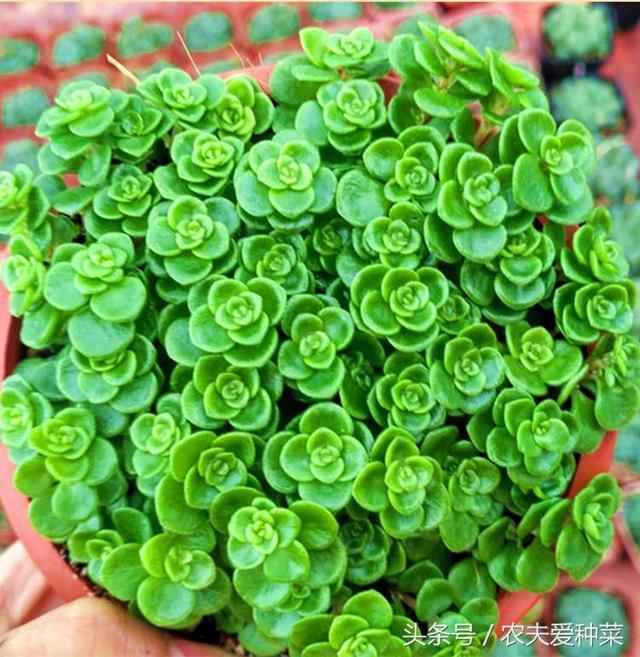
This flower barely needs watering and quickly fills its pot, and its branches root as soon as they touch soil, making it perfect for lazy gardeners.
Round-leaf stonecrop (Sedum makinoi) is a succulent plant in the Crassulaceae family, genus Sedum, also called round-leaf sedum. It is a very common little pot-protecting plant; plant one clump and it quickly fills the pot, with fleshy leaves that stay emerald green all year round, making a very pleasing potted display. Round-leaf stonecrop...
条件筛选